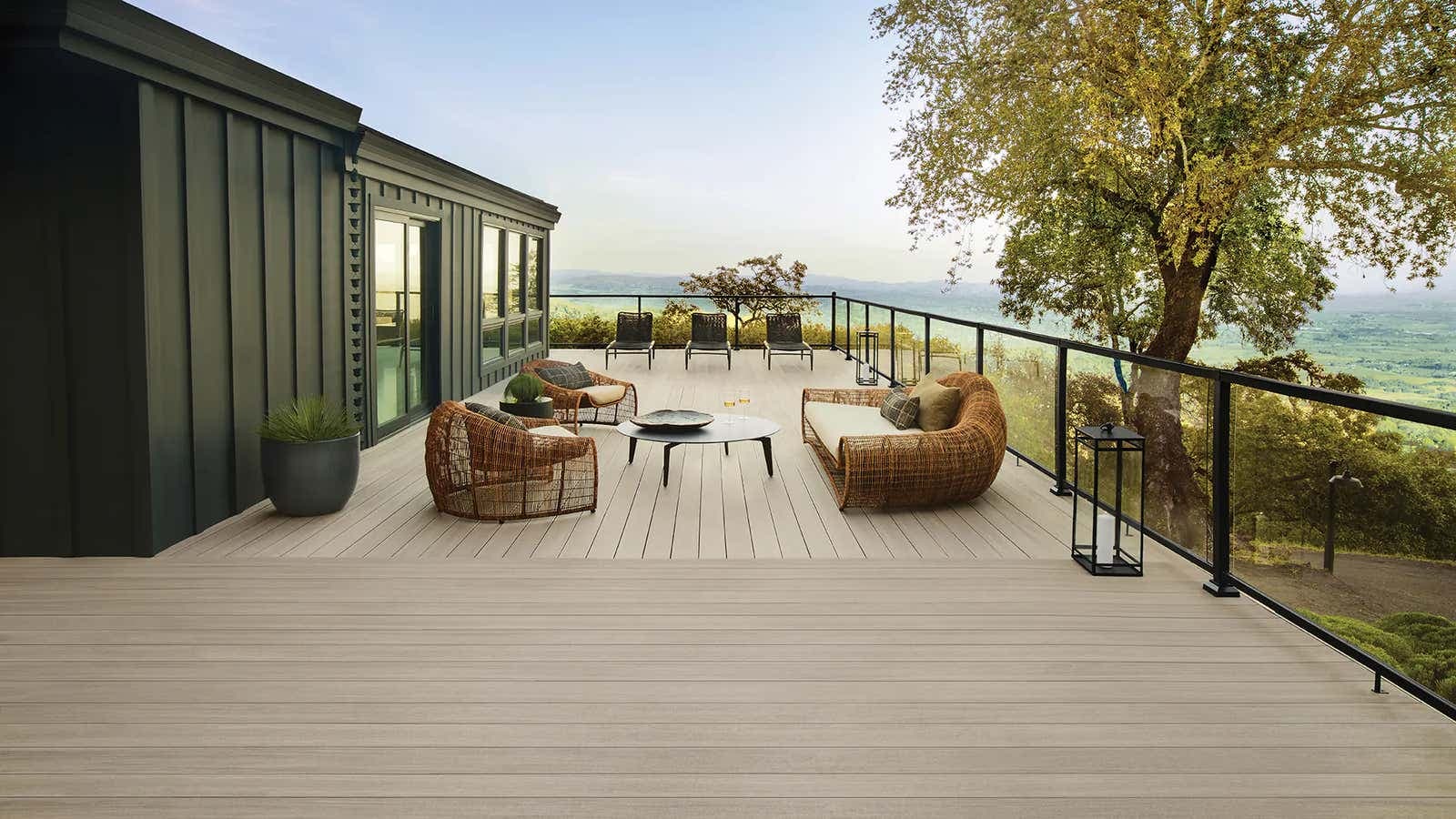
Understanding TimberTech Decking Lines
TimberTech provides a range of decking options, each engineered for specific performance and aesthetic goals. The primary distinction lies between their full PVC and capped composite technologies.
TimberTech Azek is a full polymer (PVC) board, containing zero wood fiber. This makes it impervious to moisture, a key advantage for wet environments. TimberTech Pro and Edge are both capped composite lines, meaning they have a protective polymer cap around a wood-plastic core. The Pro line features four-sided capping and multi-tonal grain, while the Edge line offers three-sided capping and a more straightforward aesthetic at an entry-level price point.
All three lines are designed for realistic wood-look aesthetics, with varying grain patterns and color options. While they share similar fastening systems and fascia programs, their core material differences lead to variations in long-term care.
Initial Purchase Cost Considerations
The initial purchase cost of TimberTech decking varies significantly by line. Generally, Azek PVC is positioned as the premium option, followed by Pro, and then Edge as the entry-level choice. This pricing reflects the material composition, manufacturing complexity, and performance characteristics.
When budgeting for the initial purchase, consider not only the deck boards themselves but also complementary items like fascia, trim, and the chosen fastening system (hidden clips or Cortex plugs). These components are consistent across the TimberTech lines, simplifying the accessory selection process once your primary board line is chosen.
The total material cost will depend on your deck's dimensions, board lengths required, and any specific design elements like picture-framing or diagonal layouts, which might affect material yield and waste.
Ownership Tasks: Azek Advanced PVC Decking
TimberTech Azek, being a full PVC product, is designed for minimal maintenance. This characteristic contributes significantly to reduced long-term ownership tasks.
Typical ownership tasks for Azek PVC decking primarily involve routine cleaning to remove dirt, pollen, and debris. This can often be accomplished with soap and water or a compatible deck cleaner. Unlike wood, Azek PVC does not require sanding, staining, or sealing. The material is also designed to resist fading and staining, further reducing the need for corrective treatments over time.
While Azek PVC boards may run cooler underfoot than standard composite, they still require attention to cleaning to maintain their appearance.
Ownership Tasks: Pro and Edge Capped Composite Decking
TimberTech Pro and Edge decking lines are capped composites, offering a balance of wood-look aesthetics and reduced maintenance compared to traditional wood. The polymer cap provides protection against moisture, fading, and staining, but the wood-plastic core means they behave differently from full PVC.
For Pro and Edge, ownership tasks primarily involve routine cleaning to prevent buildup of dirt, mold, and mildew. While the capping offers resistance, neglecting cleaning can still lead to surface discoloration. These lines do not require annual staining or sealing like natural wood, which is a significant time and cost saving.
It's important to use cleaning products that are compatible with capped composite decking to avoid damaging the surface.
Worked Example: A 200 Sq Ft Deck Project
Let's consider a hypothetical 200 square foot rectangular deck (e.g., 10 ft x 20 ft) to illustrate the material quantity and initial cost comparison. For simplicity, we'll estimate material needs based on coverage and standard board lengths, acknowledging that precise quantities require a detailed cut plan.
A 200 sq ft deck would require approximately 440 linear feet of 1" x 5.5" decking boards (200 sq ft / (5.5 inches / 12 inches/ft) = 436.36 linear feet). Given that TimberTech boards are available in 12, 16, and 20 ft lengths, a typical order might involve a mix to minimize waste. For example, using twenty-two 20-foot boards would provide 440 linear feet.
Build this part of the estimate from the current supplier quote. Record the exact product, quoted unit, quantity, compatible accessories and delivery costs separately so assumptions do not become advertised prices.
The long-term ownership tasks, as detailed above, would then influence the ongoing time and expense. Azek's lower maintenance requirements would mean less time spent on cleaning and no need for staining/sealing, while Pro and Edge would require consistent cleaning schedules to maintain their appearance and warranty performance.
Before you order
- What is your total budget, considering both initial purchase and long-term maintenance?
- How much time are you willing to dedicate to annual deck cleaning and care?
- Will the deck be exposed to significant moisture (e.g., pool surround, ground contact)?
- What aesthetic quality and realism of wood grain are most important for your project?
- What warranty coverage is essential for your peace of mind?
- Have you considered the cost of complementary items like fascia, trim, and fasteners?
- Are you able to order physical samples to confirm color and texture before committing?
Confirm installation details, approved uses and warranty terms in the current instructions for the exact product and profile. Your installer should verify the substrate, structure and applicable project requirements.
Questions to help you decide
What is the primary difference in maintenance between TimberTech Azek and TimberTech Pro/Edge?
The primary difference is due to material composition. TimberTech Azek, being full PVC, is impervious to moisture and requires only routine cleaning with soap and water. Neither composite line requires sanding, staining, or sealing like traditional wood.
Do TimberTech products require special cleaning products?
While routine cleaning often involves mild soap and water, it's important to use cleaning products specifically recommended or approved for TimberTech decking to ensure compatibility with the material's surface and to avoid voiding any warranties. Always consult the manufacturer's care guide for specific instructions.
How do I get an accurate cost estimate for my TimberTech decking project?
To get an accurate cost estimate, you will need detailed project dimensions, your preferred TimberTech line (Azek, Pro, or Edge), the specific profile (grooved or square edge), and your ZIP code for material quotes. This allows for precise calculation of board quantities, accessories, and potential delivery considerations. Contact us with your project details to request a comprehensive material quote.
Ready to Plan Your TimberTech Deck?
Provide your project dimensions, desired TimberTech profile, and ZIP code to request a material quote. We can confirm current availability and service options for your chosen decking line.
Request a material quote →