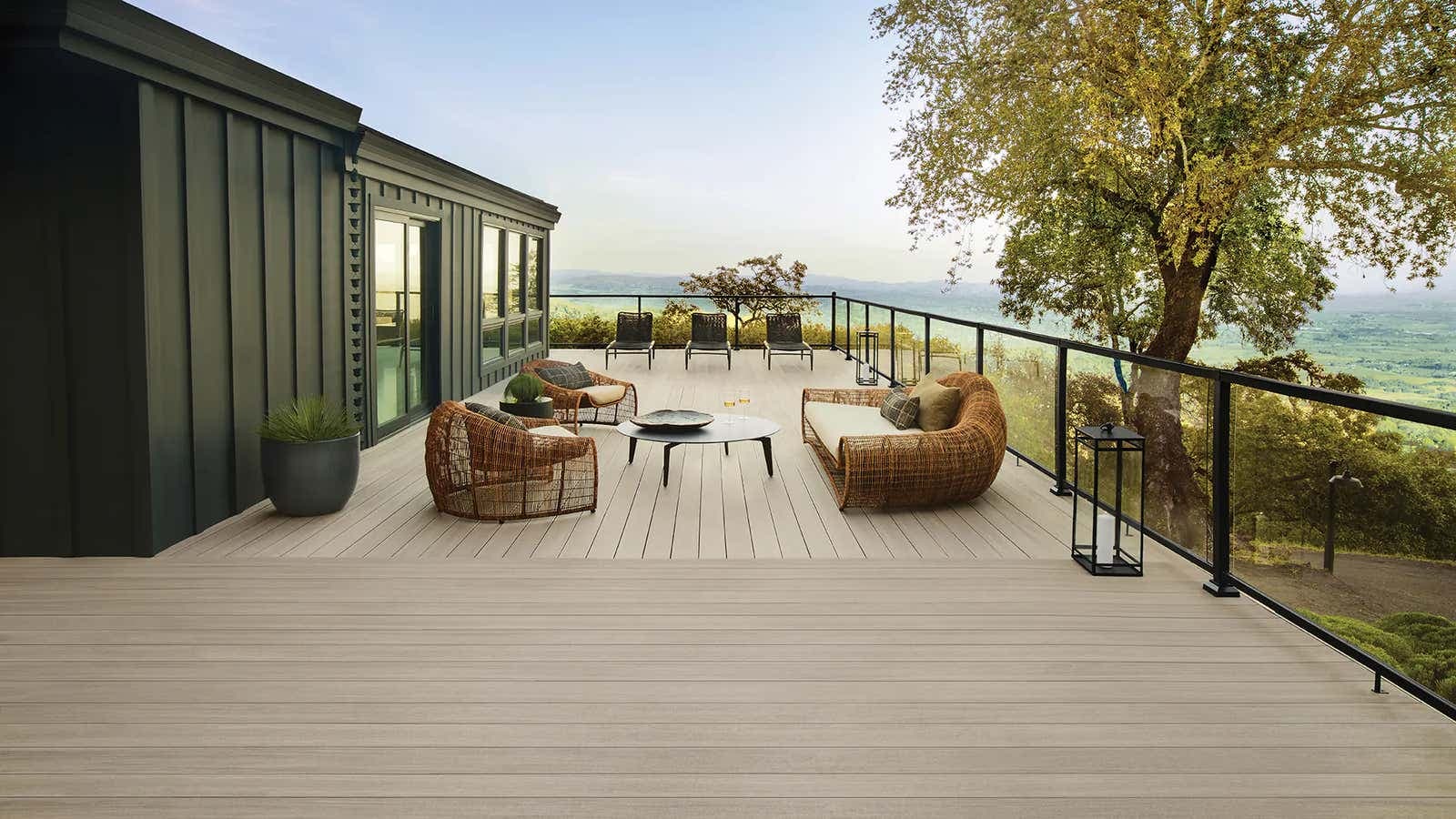
Understanding Covered Porch Conditions
A covered porch, by definition, is protected from direct overhead rain and intense sun, but it is still an outdoor environment. This means the decking will experience varying levels of moisture, humidity, and temperature fluctuations. While direct UV exposure is reduced, indirect light and splashes can still affect the material. These conditions differ from a fully exposed deck or an indoor floor, requiring a decking material that can withstand both occasional moisture and the natural expansion and contraction associated with outdoor use.
Unlike interior flooring, covered porch decking needs to handle potential dampness from humidity, spills, or wind-driven rain. It should also be resistant to common outdoor issues like mold and mildew, even in shaded, less-ventilated areas. TimberTech's capped composite and full PVC lines are engineered to address these challenges, offering options that resist moisture absorption and are designed for outdoor durability.
TimberTech Material Choices for Covered Porches
TimberTech offers two primary technologies: capped composite and advanced PVC. Each has distinct characteristics that make them suitable for a covered porch.
TimberTech Azek is a full PVC decking line, meaning it contains zero wood fiber. This makes it impervious to moisture absorption. For covered porches where humidity might be high, or where occasional wind-driven rain could reach the deck surface, Azek's moisture resistance can be a key advantage. It is also designed to stay cooler underfoot compared to standard composite, which can be beneficial if the porch still receives some sun exposure or is frequently used barefoot. The Azek line is known for its realistic grain patterns and low sheen.
TimberTech Pro and Edge are capped composite decking lines. These boards feature a protective cap on three or four sides, shielding the wood-plastic core from moisture and staining. While not entirely impervious like full PVC, capped composite offers substantial resistance to the elements. They provide a wood-look aesthetic with reduced maintenance compared to natural wood. The Pro line includes Mold Guard protection, which can be particularly useful in covered, potentially humid environments where mold and mildew might otherwise be a concern.
Both technologies utilize the same fastening systems and fascia programs, simplifying coordination across different areas of a project if you choose to combine materials.
Coordinating Exposed and Sheltered Sections
Many homes feature a covered porch as part of a larger outdoor living area that may include an open deck or patio. Achieving a cohesive look when transitioning between these spaces is crucial. TimberTech offers a consistent aesthetic across its lines, allowing you to select materials that complement each other.
Consider using the same TimberTech color and board profile for both covered and exposed sections to maintain visual continuity. If the exposed deck experiences significant sun and rain, and the covered porch is more sheltered, you might choose TimberTech Azek for the exposed area due to its higher moisture resistance and cooler surface, while using a TimberTech Pro or Edge product for the covered porch. The consistent grain patterns and color palettes across the TimberTech brand help ensure a unified design, even if the underlying material technology differs.
Alternatively, if your budget allows, using TimberTech Azek for both exposed and covered areas ensures maximum performance and consistency across all outdoor living spaces, especially in regions with high humidity or frequent precipitation.
Design Considerations for Covered Porches
When planning your covered porch with TimberTech decking, several design elements warrant attention beyond material choice.
Thresholds and Transitions: Pay close attention to how the decking meets the interior flooring of your home. Ensure a smooth, safe transition, often involving a slight step down from the interior to the porch. Coordinate the elevation with your contractor to avoid trip hazards and manage water runoff.
Furniture and Layout: Covered porches are often furnished with outdoor seating, dining sets, or even swings. The decking needs to support these loads. Consider the weight distribution of heavy items and ensure the sub-structure is adequate. Plan your furniture arrangement to allow for comfortable movement and easy cleaning of the deck surface.
Ventilation: Even covered porches benefit from proper ventilation to prevent moisture buildup and maintain air circulation beneath the deck. Ensure there's adequate space between the decking and the ground, and consider skirting designs that allow for airflow while deterring pests. Good ventilation contributes to the longevity of the deck structure and helps keep the decking surface dry.
Lighting and Aesthetics: Integrate lighting into your porch design, whether it's overhead fixtures, sconces, or subtle deck lighting. TimberTech's range of colors and realistic grain patterns can be enhanced by thoughtful lighting, creating a welcoming atmosphere. Consider how the decking color will appear under different lighting conditions, both natural and artificial.
Worked Example: A 10' x 20' Covered Porch
Let's consider a hypothetical 10-foot by 20-foot covered porch that will use TimberTech Azek decking in the "Coastline" color. The homeowner desires a classic straight-board installation.
Board Dimensions: TimberTech Azek boards are typically 1 inch thick by 5.5 inches wide and available in 12, 16, and 20-foot lengths. For a 20-foot long porch, 20-foot boards are ideal to minimize seams.
Calculating Boards Needed for Width: The porch is 10 feet (120 inches) wide. Each board is 5.5 inches wide. Rounding up, we would need 22 boards to cover the width.
Total Boards: Since the porch is 20 feet long and we're using 20-foot boards, we need 22 boards. This calculation does not account for waste due to cuts or potential damage during installation. It's generally advisable to add 5-10% for waste, depending on the complexity of the project.
Fascia Boards: If the porch edge requires fascia, measure the perimeter. For a 10'x20' porch, the exposed edges would be 10' + 20' + 10' = 40 lineal feet. TimberTech fascia boards are also available in various lengths, typically 12-foot, 16-foot, and 20-foot. For 40 lineal feet, you might purchase two 20-foot boards or three 16-foot boards, depending on availability and minimizing seams.
This example provides a basic material estimate. Always consult with a professional and confirm exact board dimensions, spacing requirements, and waste factors for your specific project before ordering.
Before you order
- Determine if the porch will be fully covered or partially exposed.
- Assess the expected moisture levels and ventilation for the porch area.
- Choose between TimberTech Azek (full PVC) for maximum moisture resistance or TimberTech Pro/Edge (capped composite) for a durable wood-look.
- Select a color and grain pattern that complements your home's exterior and any adjacent outdoor spaces.
- Plan for thresholds and transitions to interior spaces or other outdoor areas.
- Consider the layout of furniture and potential heavy loads on the decking.
- Ensure adequate sub-structure and ventilation beneath the deck.
- Calculate the required quantity of decking boards, accounting for waste.
- Identify fascia and trim needs for a finished appearance.
- Confirm fastening system compatibility with your chosen TimberTech line.
Confirm installation details, approved uses and warranty terms in the current instructions for the exact product and profile. Your installer should verify the substrate, structure and applicable project requirements.
Questions to help you decide
Can TimberTech decking be installed directly on concrete for a covered porch?
TimberTech decking generally requires a proper sub-structure for adequate ventilation and drainage. While some specific applications might allow for low-clearance installation, it is crucial to follow the manufacturer's installation guidelines for joist spacing and ventilation, even on a covered porch. Installing directly on concrete without proper airflow can trap moisture and compromise the deck's longevity.
Will TimberTech decking fade under a covered porch?
TimberTech decking is engineered with fade-resistant technology. While a covered porch significantly reduces direct UV exposure compared to an open deck, indirect sunlight and ambient light can still affect materials over time. TimberTech's capped composite and full PVC lines are designed to resist fading, maintaining their color and appearance for many years. The Azek line, being full PVC, offers high resistance to environmental factors.
How do I clean TimberTech decking on a covered porch?
Cleaning TimberTech decking on a covered porch is similar to cleaning an exposed deck, though it may require less frequent deep cleaning due to reduced direct exposure to dirt and debris. Regular sweeping or blowing off leaves and dust is recommended. For deeper cleaning, use a soft-bristle brush and a mild soap-and-water solution, or a cleaner specifically approved for TimberTech products. Always rinse thoroughly with water. Avoid abrasive cleaners or high-pressure washers, which can damage the surface.
Ready to Plan Your TimberTech Covered Porch?
Request a material quote with your project dimensions, desired TimberTech profile, and ZIP code. We can confirm current availability and service options for your decking needs.
Request a material quote →