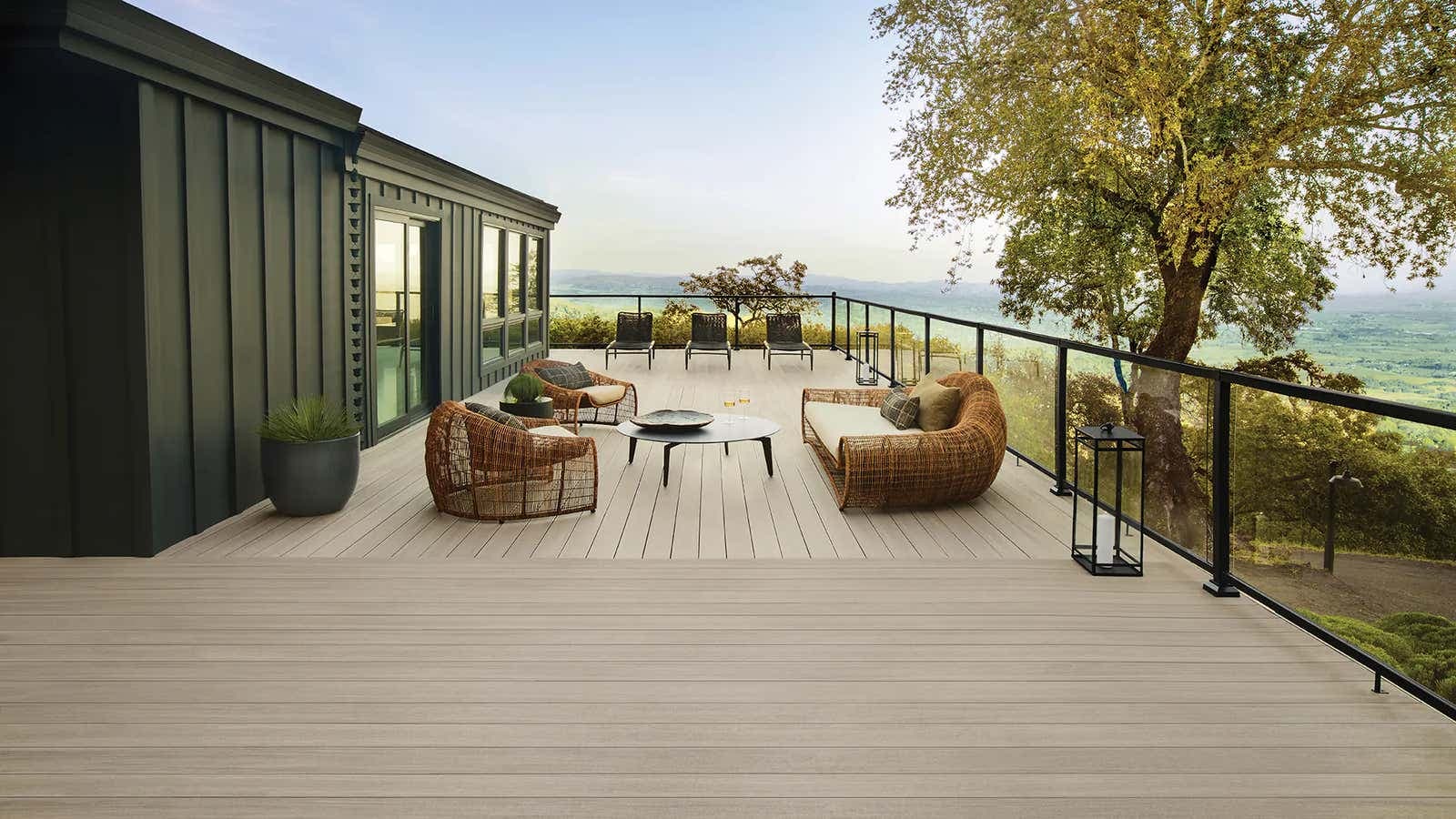
Understanding Courtyard Constraints
Courtyards are defined by their enclosed nature, which can impact several aspects of deck planning. Common constraints include limited square footage, proximity to surrounding structures, and reduced airflow. These factors directly influence material choice, deck height, and the overall design.
For example, a courtyard may experience prolonged shade, affecting how quickly the deck surface dries after rain. It might also have existing hardscaping or drainage systems that need to be integrated or modified. Careful measurement and assessment of the site's unique characteristics are the first steps in a successful courtyard deck project.
Choosing the Right TimberTech Material for Courtyards
TimberTech offers two primary material technologies: capped composite and advanced PVC. Each has distinct properties that make them suitable for different courtyard scenarios.
TimberTech Azek, a full PVC decking, contains zero wood fiber, making it impervious to moisture. This characteristic can be particularly beneficial in courtyards where drainage might be challenging or where the deck is frequently exposed to moisture from surrounding landscaping or sprinklers. Azek boards are also noted for staying cooler underfoot, which could be a consideration if your courtyard receives intense, albeit brief, sun exposure. This line is often specified for applications like pool surrounds and docks, suggesting its suitability for wet conditions.
TimberTech Pro and Edge are capped composite options. These boards feature a protective cap on all four sides (Pro) or three sides (Edge) that resists moisture and staining. While not entirely impervious to moisture like PVC, they offer substantial protection against the elements and are a durable choice for general courtyard use. The multi-tonal grain and low-sheen finish of these composite lines can provide a realistic wood-look aesthetic. The choice between Azek PVC and a capped composite will largely depend on the specific moisture conditions of your courtyard and your aesthetic preferences.
All TimberTech lines utilize similar fastening systems and fascia programs, simplifying the overall installation process regardless of the chosen material. This consistency can be an advantage when coordinating different elements of your courtyard design.
Designing for Space and Flow
In a courtyard, maximizing usable space and ensuring smooth flow are critical. Consider the primary function of your deck: is it for dining, lounging, or a combination? This will inform the layout and placement of furniture.
For smaller courtyards, a simple, uncluttered design often works best. Rectangular or square layouts can make the most of limited dimensions. Think about incorporating built-in seating or planters to save space and create a cohesive look. When planning the board layout, consider how board lengths (available in 12, 16, and 20 ft) can minimize seams and reduce waste, especially in compact areas.
Managing Shade and Moisture
Courtyards are often shaded by surrounding buildings, which can impact deck drying times. Adequate ventilation beneath the deck is crucial to prevent moisture buildup and potential issues. Ensure there is sufficient airflow around and under the deck structure. This might involve careful planning of the deck height and perimeter design.
For courtyards with significant shade or consistent moisture, the TimberTech Azek PVC line may be a more resilient option due to its zero moisture absorption. If using a composite deck, proper spacing between boards is essential to allow water to drain and the deck to dry. Always refer to the specific product guide for recommended board spacing to ensure proper performance and longevity.
Consider the direction of water runoff from surrounding structures or hardscaping. The deck should be designed to facilitate drainage away from the house and other vulnerable areas. This might involve a slight slope in the deck surface or integrating a sub-deck drainage system.
Worked Example: A Compact Courtyard Deck
Let's consider a hypothetical courtyard measuring 10 feet by 12 feet, intended for a small dining area. The homeowner wants a low-maintenance deck that can withstand occasional rain and shaded conditions. They prefer a rich, multi-tonal wood look.
Given the moisture potential and desire for a realistic appearance, TimberTech Pro capped composite in 'Dark Hickory' is selected. This line offers a four-sided cap and multi-tonal grain. The deck will be elevated approximately 6 inches above grade to ensure proper ventilation and allow for a slight slope for drainage.
For a 10 ft x 12 ft area, using 12-foot TimberTech Pro boards running parallel to the 10-foot dimension would require roughly 12 boards (120 inches / 5.5 inches board width ≈ 21.8 boards, so 22 boards for full coverage and cuts). Running them parallel to the 12-foot dimension would require 24 boards (144 inches / 5.5 inches board width ≈ 26.1 boards, so 27 boards). Let's assume the homeowner prefers the longer run of boards to minimize seams visually, so boards will run 12 feet long. For the 10-foot width, we need approximately 22 boards (120 inches / 5.5 inches per board). The actual purchase quantity for 12-foot boards would be 22 boards. A picture frame border using square-edge boards would define the perimeter, while grooved boards with hidden fasteners would be used for the main deck surface. Fascia boards in a matching 'Dark Hickory' would finish the perimeter.
This example illustrates how material choice and layout are tailored to specific courtyard conditions and aesthetic preferences. The consistent fastening systems and fascia options across TimberTech lines simplify the project planning.
Complementary Products for Courtyard Decks
Beyond the decking boards, several other products can enhance your TimberTech courtyard deck. Fascia boards, available in matching colors, provide a finished look to the deck's perimeter and stair risers. Consider using a hidden fastening system for a clean, screw-free surface appearance. For areas that require face fastening, Cortex plugs offer a discreet solution.
Under-deck drainage systems can be particularly valuable in courtyards to divert water away from the space below, keeping it dry for storage or creating a usable lower patio. While not directly a TimberTech product, integrating such a system early in the design phase can significantly improve the functionality of your courtyard.
Finally, don't overlook lighting. Integrated deck lighting can transform a courtyard into an inviting evening space, highlighting pathways and architectural features. Consult with a lighting specialist to choose fixtures compatible with your deck design and local electrical codes.
Before you order
- Assess existing courtyard drainage and moisture patterns.
- Measure the exact dimensions of the courtyard and desired deck area.
- Determine the primary function of the deck (dining, lounging, pathway).
- Evaluate shade exposure throughout the day and year.
- Choose between TimberTech Azek (PVC) for maximum moisture resistance or TimberTech Pro/Edge (capped composite) for a wood-look aesthetic.
- Select desired board color and profile (grooved for hidden fasteners, square-edge for borders/stairs).
- Plan board layout to minimize seams and optimize material usage.
- Confirm joist spacing requirements based on board orientation (straight vs. diagonal).
- Consider incorporating a picture frame border and matching fascia.
- Investigate options for under-deck ventilation or drainage systems.
- Plan for any built-in seating, planters, or lighting elements.
- Identify any necessary permits or local building code requirements.
Confirm installation details, approved uses and warranty terms in the current instructions for the exact product and profile. Your installer should verify the substrate, structure and applicable project requirements.
Questions to help you decide
What is the main difference between TimberTech Azek and TimberTech Pro for a courtyard deck?
TimberTech Azek is a full PVC decking with zero wood fiber, making it impervious to moisture and suitable for very wet or shaded conditions where drying is slow. It also tends to stay cooler underfoot. TimberTech Pro is a four-sided capped composite that offers a realistic wood look and strong resistance to stains and fading, ideal for general courtyard use with good drainage.
How do I ensure proper drainage for a courtyard deck?
Proper drainage for a courtyard deck involves several factors. First, ensure adequate ventilation beneath the deck structure to promote drying. Second, maintain proper spacing between deck boards as recommended by the manufacturer to allow water to pass through. Third, consider designing a slight slope in the deck surface, away from any adjacent structures, to facilitate runoff. In some cases, an under-deck drainage system may be beneficial to direct water away.
Can I use TimberTech decking for a ground-level courtyard deck?
TimberTech Azek PVC decking is suitable for ground-contact applications due to its moisture immunity. For TimberTech Pro or Edge capped composite decking, ensure there is sufficient ventilation and drainage beneath the deck to prevent moisture buildup. Always consult the manufacturer's installation guidelines for specific requirements regarding ground-level installations and adequate airflow.
Start Planning Your TimberTech Courtyard Deck
Ready to transform your courtyard? Request a material quote with your project dimensions, exact TimberTech profile, and ZIP code. We can confirm current availability and service options for your area.
Request a material quote →