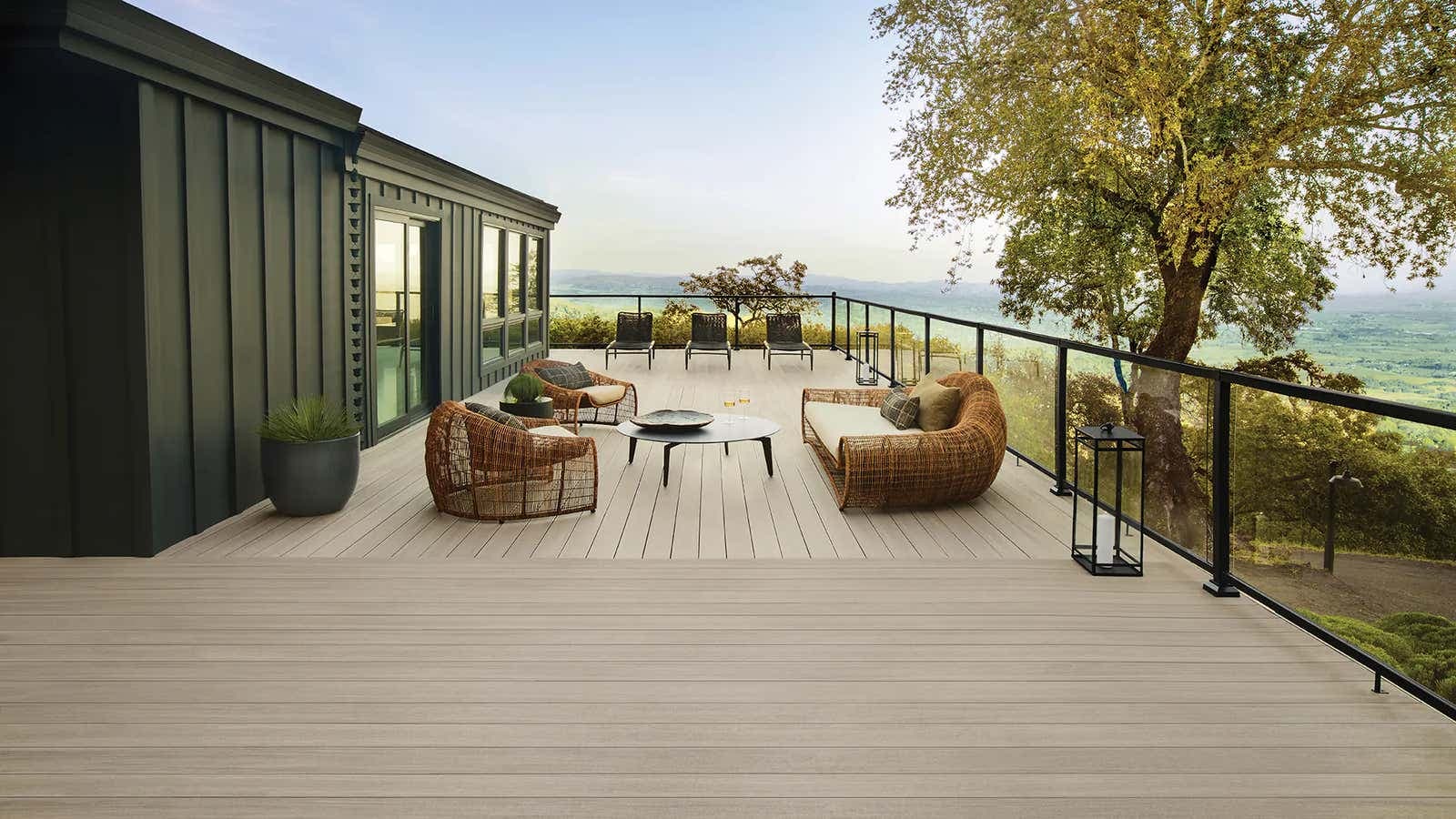
Standard TimberTech Board Widths
The most common and widely available TimberTech decking board profile is 1 inch by 5.5 inches. This dimension is considered a standard in the industry and is available across various TimberTech lines, including Azek, Pro, and Edge. This consistent sizing simplifies planning and ensures compatibility with standard fastening systems and substructure layouts.
The 5.5-inch width offers a balanced visual appearance that works well for most deck sizes and styles. It provides a classic plank look that is neither too narrow nor too wide, making it a versatile choice for residential and commercial applications. These boards are typically offered in grooved profiles for hidden fasteners or square-edged for face-fastening applications.
Considering Visual Impact: Narrow vs. Standard Widths
While the 5.5-inch width is standard, some TimberTech lines may offer narrower options, or designers might choose to create the illusion of narrower boards through specific installation patterns. Narrower boards can make a smaller deck appear larger and more expansive, drawing the eye along the length of the planks. They can also create a more intricate, detailed surface, often favored in contemporary designs or for decks with complex shapes.
Conversely, using standard 5.5-inch boards can provide a more robust and traditional appearance. For larger decks, these widths can help reduce the visual clutter of too many seams and create a sense of solidity. The choice between narrower or standard widths is a design decision that should align with the overall architectural style of your home and landscape.
Worked Example: Designing with Standard Widths for a 10x12-foot Deck
Let's consider a hypothetical 10-foot by 12-foot deck. If we plan a straight layout with boards running along the 12-foot length, we would need to cover a 10-foot width with 5.5-inch wide boards.
To cover 10 feet (120 inches), we divide 120 inches by 5.625 inches/board: 120 / 5.625 = 21.33 boards. Since we cannot purchase partial boards, we would need 22 full boards to cover the width. The last board would need to be ripped to size. If the offcut is less than a certain usable width (e.g., 2 inches), it may be considered waste. This calculation helps in estimating the number of boards and potential cuts.
For the length, if boards are 12 feet long, each board covers the entire length. If using 16-foot or 20-foot boards, these would allow for fewer butt joints and a cleaner look, or could be cut down with offcuts potentially used for other parts of the deck, such as stairs or smaller sections, depending on the project plan. This example highlights the need to account for board and gap dimensions precisely when calculating quantities.
Impact on Material Quantity and Waste
The chosen board width directly affects the number of boards required for a given deck area. Narrower boards will mean you need more individual boards to cover the same surface area compared to wider boards. This can influence not only the purchase quantity but also the installation time, as more boards mean more fasteners and more cuts.
Consider the dimensions of your deck relative to the board width. If your deck's width is not a clean multiple of the board width plus gap, you will inevitably have to rip boards lengthwise. Planning for this can help minimize waste by allowing you to use the ripped sections for other areas, such as a picture frame border or smaller deck sections, if the dimensions allow. Always factor in an allowance for cuts and potential waste, typically 5-10%, depending on the complexity of your deck design.
Coordinating with Other Deck Components
When selecting board widths, also consider how they will integrate with other decking components like fascia, risers, and trim. TimberTech offers a coordinated system of products, often with matching colors and textures, to ensure a cohesive look. While fascia boards are typically wider to cover the rim joists, their visual relationship to the deck surface boards contributes to the overall finished appearance. Ensure that your chosen board width complements these elements.
For example, a deck with a wide, prominent fascia might visually balance well with standard-width deck boards, whereas a very sleek, minimalist design might benefit from a consistent visual line created by narrower-looking boards or a precise picture frame layout. Always confirm the available dimensions for all complementary products when planning your order.
Before you order
- What is the overall size and shape of your deck?
- What visual aesthetic are you aiming for (e.g., expansive, intricate, traditional)?
- Are you considering a specific board pattern (e.g., straight, diagonal, herringbone)?
- How does the chosen board width impact the number of boards needed?
- What are the implications for potential waste and cutting requirements?
- How will the board width coordinate with fascia, stair risers, and other trim pieces?
- Have you accounted for standard spacing between boards in your calculations?
- Are there any specific design features (e.g., picture frame border) that influence width choice?
- Have you reviewed the specific dimensions available for your chosen TimberTech line (Azek, Pro, Edge)?
- Do you have a plan for utilizing or discarding offcuts from ripped boards?
Confirm installation details, approved uses and warranty terms in the current instructions for the exact product and profile. Your installer should verify the substrate, structure and applicable project requirements.
Questions to help you decide
Are all TimberTech decking lines available in multiple widths?
While the 1-inch by 5.5-inch profile is standard across TimberTech Azek, Pro, and Edge lines, specific product lines or collections may offer additional widths. It's important to check the precise specifications for the particular TimberTech line and collection you are interested in, as availability can vary. Always confirm current offerings with a material supplier.
How does board width affect installation time?
Generally, using narrower boards means more individual boards will be laid, which can increase installation time due to more cuts and more fasteners required. Wider boards can cover an area more quickly with fewer pieces. However, the overall complexity of your deck design, such as diagonal layouts or intricate patterns, can have a greater impact on installation time than board width alone.
Can I mix different board widths on a single TimberTech deck?
While technically possible, mixing different board widths from the same TimberTech line requires careful planning to ensure consistent gapping, fastening, and a cohesive visual appeal. This approach is typically used for custom designs to create specific patterns or visual effects. It is critical to verify compatibility and plan your layout meticulously, as different widths might have slightly different fastening requirements or profiles.
Ready to Plan Your TimberTech Deck?
Request a material quote with your project dimensions, desired TimberTech profile, and ZIP code to confirm current availability and service options for your decking project.
Request a material quote →