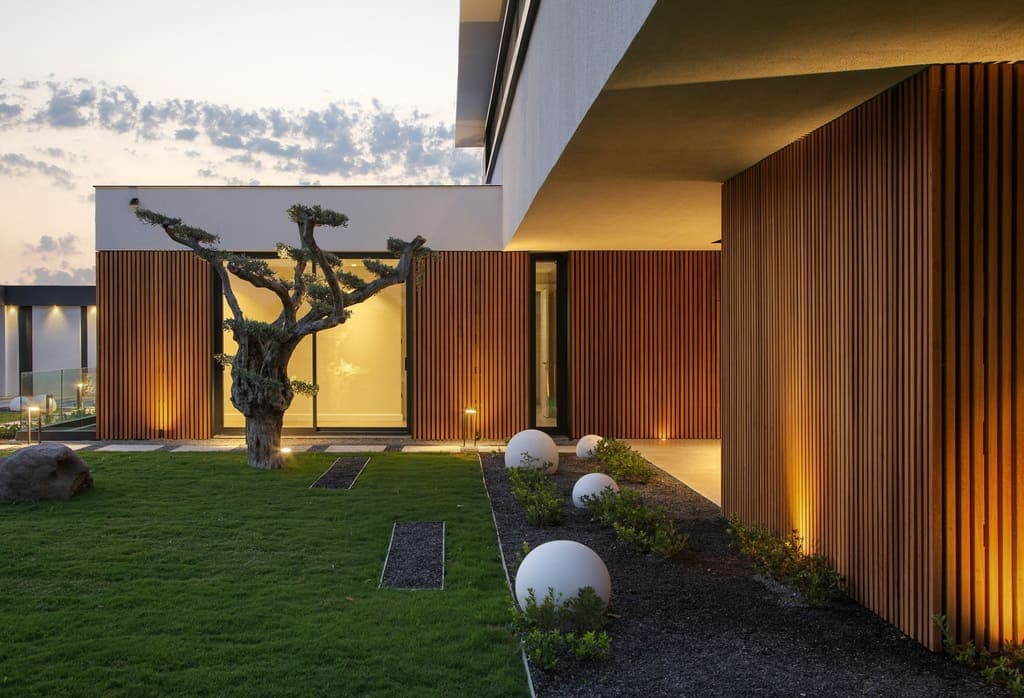
Why Consider Thermally Modified Ayous for a Privacy Screen?
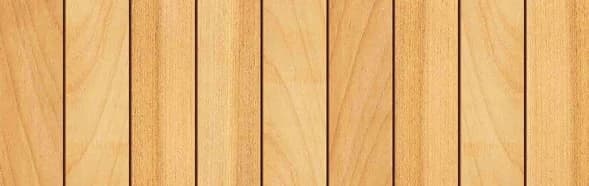
Thermally Modified Ayous is a lightweight wood known for its calm grain and consistent tan tone, making it a choice for visually clean architectural elements. Its thermal modification process enhances dimensional stability, which can be beneficial for outdoor applications where wood is exposed to varying environmental conditions. This improved stability means the wood is less prone to the seasonal movement, such as warping or twisting, that can affect untreated timber. Its low weight also simplifies handling during installation, particularly for vertical structures like privacy screens.
The wood's natural appearance can complement a variety of architectural styles, from modern minimalist to more traditional designs. For a privacy screen, its consistent color and grain provide a uniform backdrop or a subtle visual texture, depending on the chosen profile and spacing. It is often selected for walls, ceilings, and soffits, where its stability and appearance are valued. While a privacy screen is a distinct application, these inherent qualities of Thermally Modified Ayous align with the requirements for a stable, attractive, and manageable material.
You can find more details on Thermally Modified Ayous at our product page: /thermally-modified-wood/ayous
Key Characteristics of Thermally Modified Ayous
Thermally Modified Ayous is derived from Triplochiton scleroxylon, originating from West and Central Africa. The thermal modification process alters the wood's cellular structure, improving its resistance to moisture absorption and reducing its tendency to expand and contract with humidity changes. This makes it a more stable material for exterior use compared to untreated wood. Its natural tone is a signature tan, offering a consistent color throughout the material.
The product is described as lightweight, which is a significant advantage for structures that might be installed at height or require easier handling during construction. Its calm grain contributes to a clean, understated aesthetic, which can be particularly effective in designs where the material itself should not overwhelm the overall visual scheme. Larger nominal sizes like 1 × 8, 1 × 10, 2 × 2, 2 × 4, and 2 × 6 are also available for trim and molding applications, which might be adapted for screen framing or larger slats.
While Thermally Modified Ayous is well-suited for walls, ceilings, and soffits, its application in privacy screens leverages these same benefits of stability and appearance. However, any privacy screen must be designed with appropriate structural support to withstand environmental loads, such as wind, which is not an inherent property of the wood itself.
Design Considerations for a Privacy Screen
When designing a privacy screen with Thermally Modified Ayous, several factors should be addressed. The primary purpose of a privacy screen is to obscure sightlines, which dictates the spacing and orientation of the wood slats. Tighter spacing will offer more privacy but may restrict airflow and light, while wider spacing creates a more open, decorative element.
The orientation of the slats—horizontal, vertical, or even angled—will significantly impact the screen's appearance and the degree of privacy it provides from different angles. Horizontal slats can create a sense of width, while vertical slats can emphasize height. Angled slats can be particularly effective in blocking views from specific directions while allowing light and air from others.
Consider the overall size and height of the screen. Taller and wider screens will require more robust structural support to ensure stability, especially in areas prone to wind. The frame and mounting system are critical for the longevity and safety of the screen. These elements should be designed by a qualified professional to meet local building requirements and withstand anticipated loads. Thermally Modified Ayous, while stable, is not a structural material on its own for these types of loads.
For complementary materials, consider how the natural tan tone of Thermally Modified Ayous will interact with surrounding elements like masonry, metalwork, or landscaping. Materials such as powder-coated aluminum posts or galvanized steel anchors can provide the necessary structural integrity while offering a contemporary contrast to the wood.
Worked Example: Designing a 6-Foot by 8-Foot Privacy Screen
Let's outline a hypothetical privacy screen project using Thermally Modified Ayous. Imagine a need for a screen that is 6 feet tall and 8 feet wide to partially shield a patio area.
First, determine the actual dimensions of the 1 × 6 board. For this example, let's assume an actual dimension of 3/4 inch thick by 5.5 inches wide. For a 6-foot (72-inch) tall screen, we need to calculate how many boards are required.
Dividing the 72-inch height by the 6-inch module gives us 12 modules. This means 12 boards will be needed for the height. Since the screen is 8 feet (96 inches) wide, each board will be cut to 96 inches. To account for potential waste from cuts and to ensure enough material for any unforeseen issues, it's prudent to add a waste factor, typically 10-15%.
For the structural frame, two vertical posts, perhaps 4x4 treated lumber or metal posts, would be anchored securely into the ground or existing structure. Horizontal supports would be attached to these posts at intervals to provide attachment points for the Ayous slats.
Fasteners should be corrosion-resistant stainless steel to avoid staining the wood and ensure long-term durability. Each slat would be attached to the horizontal supports using appropriate screws, ensuring proper alignment and consistent gapping. The total lineal footage of Ayous needed would be 12 boards * 8 feet/board = 96 lineal feet. Adding a 10% waste factor, you would need approximately 106 lineal feet of 1x6 Thermally Modified Ayous.
Installation and Maintenance Considerations
Proper installation is crucial for the longevity and performance of a Thermally Modified Ayous privacy screen. Ensure that all structural components, such as posts and framing, are securely installed and capable of supporting the screen's weight and resisting wind loads. The Ayous slats themselves are not designed to be structural; they are cladding elements that require a robust substructure. Use corrosion-resistant fasteners, such as stainless steel screws, to attach the Ayous to the frame. Pre-drilling pilot holes can help prevent splitting, especially near board ends.
While Thermally Modified Ayous offers improved stability, wood will still experience some natural movement. Allow for small expansion gaps where boards meet other fixed elements. For maintenance, Thermally Modified Ayous will naturally weather to a silver-gray patina over time if left untreated. If maintaining the original tan tone is desired, a UV-inhibiting finish or stain can be applied. Regular cleaning with mild soap and water can help remove dirt and mildew. Avoid harsh chemicals or abrasive cleaners that could damage the wood surface.
Before you order
- Confirm the primary purpose: Is it for full visual blockage or partial screening?
- Determine desired aesthetic: Natural weathering or maintained original tone?
- Evaluate structural requirements: What are the wind loads and local code requirements for height and support?
- Choose slat orientation and spacing: Horizontal, vertical, or angled; tight or open gaps?
- Select appropriate profiles: 1x6 S4S E4E for slats, or larger dimensions for framing (if using wood)?
- Plan for substructure: What material will the frame be (metal, treated lumber) and how will it be anchored?
- Specify fasteners: Corrosion-resistant stainless steel is recommended.
- Calculate material quantities: Account for actual dimensions, waste factor, and offcuts.
- Consider long-term maintenance: Patina acceptance or finish reapplication?
- Consult a professional: For structural design, especially in high-wind areas or for tall screens.
Confirm installation details, approved uses and warranty terms in the current instructions for the exact product and profile. Your installer should verify the substrate, structure and applicable project requirements.
Questions to help you decide
Can Thermally Modified Ayous be painted or stained?
Yes, Thermally Modified Ayous can be painted or stained. If you wish to maintain its signature tan tone, a UV-inhibiting finish or stain is recommended to slow the natural weathering process to a silver-gray patina. Always follow the finish manufacturer's instructions for application and maintenance.
Does Thermally Modified Ayous require a specific type of fastener?
For exterior applications like privacy screens, it is recommended to use corrosion-resistant fasteners, such as stainless steel screws. This helps prevent staining of the wood and ensures the long-term integrity of the installation. Pre-drilling pilot holes is also advisable to prevent splitting.
Is Thermally Modified Ayous suitable for ground contact in a privacy screen?
Thermally Modified Ayous is not rated for ground contact. For any part of a privacy screen that will be in direct contact with the ground or consistently damp conditions, alternative materials such as treated lumber or metal should be used for the structural posts. Ensure adequate clearance between the Ayous slats and the ground to prevent moisture wicking.
Ready to Plan Your Privacy Screen with Thermally Modified Ayous?
To get started on your project, request a material quote with your project dimensions, desired profile, and ZIP code. This will help us confirm current availability and service options for Thermally Modified Ayous. Explore our full range of thermally modified wood at /thermally-modified-wood, or consider other cladding options at /siding-and-cladding.
Request a material quote →