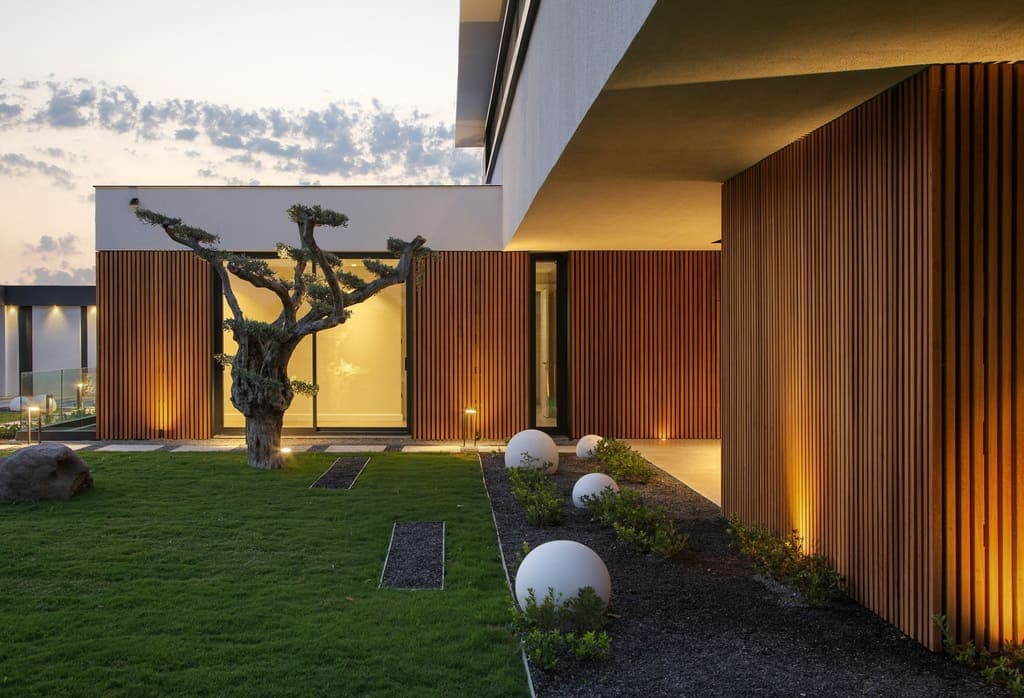
Understanding Thermally Modified Ayous's Natural Characteristics
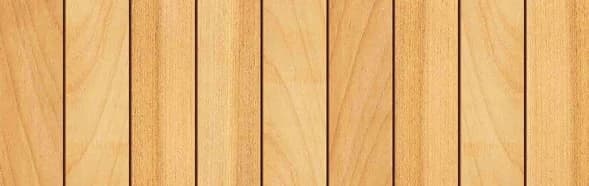
Thermally Modified Ayous, derived from the Triplochiton scleroxylon species native to West and Central Africa, is a real wood product. Its natural appearance is characterized by a light, consistent tan tone and a calm, subtle grain. This inherent uniformity makes it a strong candidate for a natural look, as it avoids the pronounced variations often found in other wood species.
The thermal modification process enhances the wood's dimensional stability, reducing its response to moisture fluctuations and minimizing seasonal movement. This improvement contributes to the longevity of its installed appearance, helping to maintain straight lines and consistent gaps over time. Its low weight also makes it easier to handle, particularly in overhead applications like soffits or high wall cladding.
When considering a natural look, it's important to appreciate that "natural" in this context refers to the wood's authentic grain and color, rather than an unfinished or weathered state. While Ayous can be left to weather, this guide focuses on preserving and enhancing its initial natural tan appearance.
Profiles for a Natural Aesthetic
The profile chosen for Thermally Modified Ayous can significantly influence the perceived naturalness of an elevation. Simple, clean profiles tend to highlight the wood's inherent beauty and grain, rather than drawing attention to complex patterns or shadow lines.
The S4S E4E (surfaced four sides, eased four edges) profile, available in nominal sizes such as 1 × 6, 1 × 8, or 1 × 10, offers a classic, straightforward appearance for siding and ceilings. Its smooth, flat surface allows the natural grain and tone of the Ayous to be the primary visual element. Both profiles are well-suited for applications where a clean, unadorned wood aesthetic is desired.
While other profiles like Fluted #5 are available for architectural walls, they introduce a more structured texture. For a truly natural look, the less elaborate S4S E4E or V-Joint profiles typically serve best, allowing the wood itself to be the focal point.
Finishing Choices: Preserving the Natural Tone
To maintain the natural tan tone of Thermally Modified Ayous, careful consideration of finishes is essential. Unfinished wood will eventually weather and gray when exposed to UV radiation and moisture. While this is a natural process, it departs from the initial warm tan.
For preserving the original color, transparent or translucent finishes with UV inhibitors are generally recommended. These finishes allow the wood's natural grain and color to show through while offering a degree of protection against the elements. Clear oils or stains specifically designed for thermally modified wood can enhance the wood's depth and provide a natural luster without obscuring its inherent characteristics. It is important to select finishes that are breathable and compatible with thermally modified timber, as some film-forming finishes may not perform optimally.
Avoid opaque paints or heavily pigmented stains if the goal is to showcase the authentic wood grain. These types of finishes will cover the natural appearance, transforming the look into a solid color rather than a wood aesthetic. Always consult the finish manufacturer's recommendations for application and maintenance on thermally modified wood.
Designing for a Cohesive Natural Look
Achieving a natural-look elevation extends beyond material selection and finishing; it also involves design choices. Consider how the Ayous will interact with other materials on the facade. Pairing it with natural stone, subtle stucco, or simple metal accents can reinforce an organic aesthetic. Avoid overly busy or contrasting material palettes that might diminish the wood's subtle beauty.
Horizontal or vertical orientations of the siding can both work. A horizontal layout can create a sense of breadth and calm, while a vertical layout can emphasize height and slenderness. In either case, consistent spacing and alignment are crucial for a clean, natural presentation. Planning for minimal visible fasteners can also contribute to a seamless, natural appearance, allowing the wood to be the uninterrupted focus.
Consider the interplay of light and shadow on the facade throughout the day. The subtle grain of Thermally Modified Ayous can appear differently under varying light conditions, adding to its natural charm. Thoughtful placement of the wood, especially in areas where it catches natural light, can highlight its texture and tone.
Worked Example: A Natural-Look Soffit
Consider a hypothetical project: a 20-foot by 3-foot soffit on a modern home, aiming for a clean, natural wood aesthetic. The goal is to use Thermally Modified Ayous S4S E4E profile with a transparent, UV-protective oil finish to maintain its natural tan color.
The soffit area is 60 square feet (20 ft * 3 ft). Using a nominal 1 × 6 S4S E4E profile, which has an actual coverage width of approximately 5.5 inches (0.458 feet), we can calculate the number of boards needed. To cover the 3-foot width, approximately 3 ft / 0.458 ft/board = 6.55 boards. Since we can't use partial boards across the width, we would plan for 7 boards to ensure full coverage. Each board would be 20 feet long. Therefore, 7 boards x 20 feet/board = 140 linear feet of 1x6 Thermally Modified Ayous.
To account for potential cuts, waste, and optimal board lengths, it's prudent to add a waste factor, typically 10-15%. For this project, adding 10% would mean 140 linear feet * 1.10 = 154 linear feet. If the material is available in standard lengths such as 10-foot or 12-foot, the exact number of boards would need to be calculated based on a cut plan to minimize waste. For example, using 12-foot lengths would require 13 boards (156 linear feet) to cover the 7 boards needed per 20-foot run, with some offcuts. The transparent oil finish would then be applied according to manufacturer instructions after installation to protect and enhance the natural wood tone.
Before you order
- Confirm the desired natural tone: Do you want to preserve the initial tan or allow it to weather?
- Select appropriate profiles: Are S4S E4E or V-Joint / Nickel Gap profiles suitable for your natural aesthetic?
- Choose a compatible finish: Will a clear, transparent, or translucent finish protect and highlight the natural grain?
- Plan for consistent installation: Will the installation method support uniform spacing and alignment?
- Consider complementary materials: Do adjacent materials enhance or detract from the wood's natural look?
- Account for light exposure: How will natural light interact with the Ayous surface throughout the day?
- Review maintenance expectations: Are you prepared for the maintenance required to sustain the chosen finish and appearance?
Confirm installation details, approved uses and warranty terms in the current instructions for the exact product and profile. Your installer should verify the substrate, structure and applicable project requirements.
Questions to help you decide
Will Thermally Modified Ayous naturally gray over time if left unfinished?
Yes, like most natural wood species, Thermally Modified Ayous will undergo a process of weathering and graying when exposed to UV radiation and moisture if left without a protective finish. This change is a natural part of the wood's aging process.
What kind of finish is best to maintain the original natural tan color?
To best maintain the original natural tan color of Thermally Modified Ayous, transparent or translucent finishes with UV inhibitors are recommended. These finishes allow the wood's grain to show through while providing some protection against UV degradation and moisture.
Can Thermally Modified Ayous be used for interior applications to achieve a natural look?
Yes, Thermally Modified Ayous is well-suited for interior applications such as feature walls and ceilings. Its calm grain and light tone contribute to a natural aesthetic indoors, and the thermal modification process enhances its stability, which is beneficial in various interior environments. For interior use, a finish may still be desired for protection or to enhance the wood's appearance.
Plan Your Natural-Look Elevation with Thermally Modified Ayous
Ready to bring the natural beauty of Thermally Modified Ayous to your project? Request a material quote today. Provide your project dimensions, desired profile, and ZIP code to confirm current availability and service options. Explore Thermally Modified Ayous at /thermally-modified-wood/ayous, and consider complementary products like other Siding and Cladding options at /siding-and-cladding, the full range of Thermally Modified Wood at /thermally-modified-wood, or specific brands like NORX at /brands/norx and MAXIMO Accoya at /products/maximo-accoya.
Request a material quote →