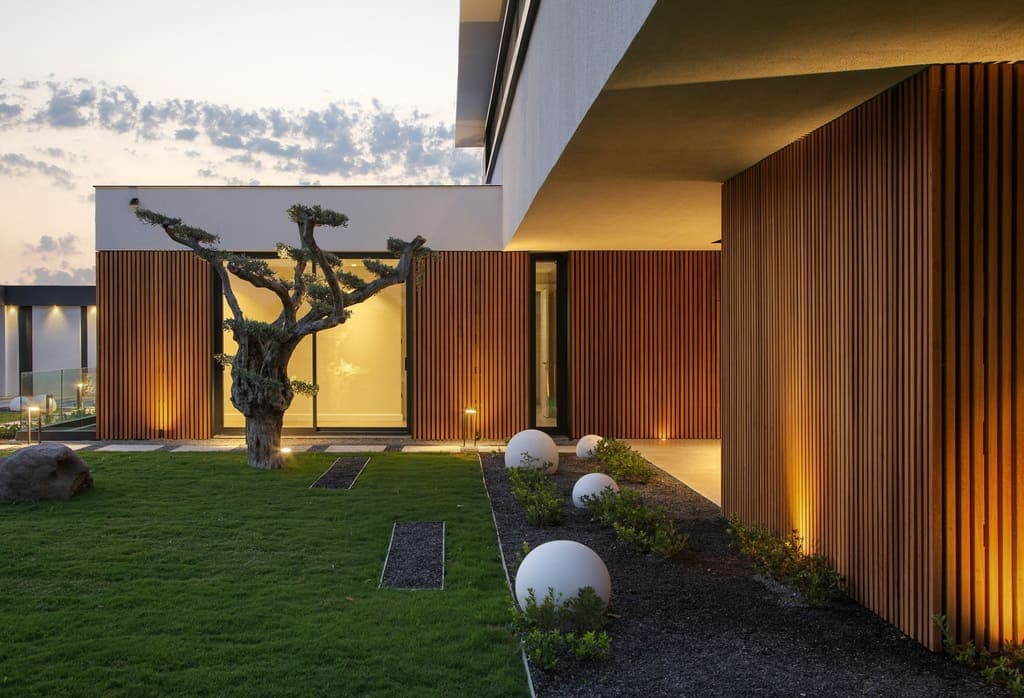
Understanding Thermally Modified Ayous for Hospitality
Thermally modified Ayous, derived from Triplochiton scleroxylon, originates from West and Central Africa. The thermal modification process enhances its properties, making it more stable and less prone to movement due to changes in humidity. This is a significant advantage in hospitality environments, where consistent indoor climates are typically maintained, but the material still needs to perform reliably.
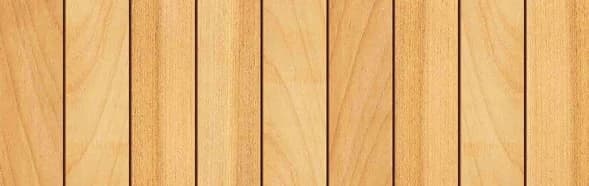
Its low weight simplifies installation, especially for larger wall areas or intricate designs, reducing labor demands and potential structural considerations. The wood's inherent calm grain contributes to a clean, understated aesthetic, allowing it to complement a wide range of interior styles without overwhelming the space. It delivers a signature tan tone, which can be further enhanced or protected with finishes.
Profiles for Hospitality Wall Applications
Thermally modified Ayous is available in several profiles suitable for hospitality walls, each offering a distinct visual effect:
S4S E4E (Surfaced Four Sides, Eased Four Edges): This profile provides a smooth, clean aesthetic. Nominal 1 × 6 sizing is common for siding and ceilings, and can be adapted for walls. Larger dimensions like 1 × 8, 1 × 10, 2 × 2, 2 × 4, and 2 × 6 are available for trim and molding, allowing for cohesive detailing.
V-Joint / Nickel Gap: These profiles create defined shadow lines between boards, adding depth and architectural interest.
Fluted #5: This architectural profile offers a textured surface, ideal for feature walls or areas where a more dynamic visual element is desired. The 1 × 6 nominal size is specifically suited for architectural walls and ceilings, providing a distinctive linear pattern.
The choice of profile should align with the desired aesthetic and the overall design language of the hospitality space, from minimalist modern to more traditional or textured environments. Custom milling options may also be available for unique project requirements.
A Hypothetical Project: Lobby Feature Wall
Consider a hypothetical hotel lobby measuring 20 feet wide by 15 feet deep, where one 20-foot wall is designated as a feature wall with thermally modified Ayous. The design calls for a vertical orientation using the V-Joint profile, 1x6 nominal dimensions. The wall height is 10 feet. The V-Joint profile boards are typically 5.5 inches wide for coverage.
To cover the 20-foot width (240 inches) with 5.5-inch wide boards, approximately 240 / 5.5 = 43.6 boards would be needed. Since boards must be purchased in full lengths, 44 boards would be a practical minimum. Each board needs to be 10 feet long. Therefore, 44 boards, each 10 feet in length, would be ordered. This calculation assumes minimal waste and no complex cuts around doors or windows for this illustrative example. For a real project, always factor in an additional percentage for cuts, waste, and unforeseen circumstances, typically 10-15%.
Installation Considerations for Interior Walls
For interior hospitality walls, installation typically involves fastening the thermally modified Ayous boards to a suitable substructure. Given its low weight, standard fastening methods are generally appropriate, but specific product documentation should always be consulted. Hidden fasteners can provide a clean, uninterrupted surface, especially with profiles like S4S E4E or V-Joint, where visible fasteners might detract from the aesthetic.
Ensuring the substructure is plumb and true is critical for achieving a professional finish, particularly with vertical applications where any irregularities will be magnified. Proper acclimatization of the wood to the interior environment before installation can help further minimize any potential movement after the project is complete. Consider the specific installation method, such as direct fastening or a furring strip system, based on the wall's existing condition and the desired depth of the finish.
Finishing and Maintenance for Hospitality Environments
Thermally modified Ayous has a natural tan tone. For interior hospitality applications, a clear protective finish can enhance its natural appearance and provide a layer of protection against wear and tear, common in high-traffic areas. Finishes can also deepen its color slightly or protect against UV exposure if the wall is in a brightly lit area.
Maintenance typically involves routine cleaning with a soft cloth and mild, pH-neutral cleaner. Avoid abrasive cleaners or harsh chemicals that could damage the finish or the wood itself. Regular inspection for any signs of wear or damage will allow for timely touch-ups, ensuring the wall maintains its aesthetic appeal over time. The inherent stability of thermally modified Ayous means it is less likely to warp or cup, contributing to a lower maintenance burden compared to some other wood species.
Before you order
- Determine the desired aesthetic: Do you prefer a smooth, linear, or textured look?
- Measure wall dimensions accurately: Length, height, and any obstructions.
- Calculate material quantity: Include waste factor for cuts and unforeseen issues.
- Consider fastening method: Hidden vs. visible, and substructure requirements.
- Plan for finishing: Clear coat for natural look or protective finish for durability.
- Outline maintenance routine: Cleaning and inspection schedule for longevity.
Confirm installation details, approved uses and warranty terms in the current instructions for the exact product and profile. Your installer should verify the substrate, structure and applicable project requirements.
Questions to help you decide
Why choose thermally modified Ayous over other woods for hospitality walls?
Thermally modified Ayous is particularly well-suited for hospitality walls due to its low weight, which eases installation, and its improved dimensional stability, which helps maintain straight lines and a consistent appearance over time. Its calm grain and natural tan tone offer a versatile aesthetic, and the thermal modification process enhances its durability for interior applications. Other woods may offer different aesthetics or performance characteristics, but Ayous provides a balance of workability, stability, and visual appeal.
Can thermally modified Ayous be used in high-humidity areas within a hospitality setting, like a spa?
While thermally modified Ayous has improved dimensional stability compared to untreated wood, its suitability for consistently high-humidity environments like spas should be carefully reviewed with specific product documentation and a professional installer. The thermal modification process reduces its moisture response, making it more robust than untreated wood, but extreme and prolonged humidity may still require additional considerations for sealing and ventilation. It is listed as suitable for saunas, which are high-heat, low-humidity environments, but not necessarily high-humidity without specific guidance.
What kind of finishes are recommended for thermally modified Ayous hospitality walls?
For interior hospitality walls, clear protective finishes are generally recommended to preserve the natural tan tone of thermally modified Ayous while providing a durable, cleanable surface. These finishes can include clear lacquers, varnishes, or oils designed for interior wood applications. The specific finish chosen should align with the desired sheen level, maintenance requirements, and the level of protection needed for the particular hospitality environment.
Request a Quote for Your Hospitality Wall Project
Ready to enhance your hospitality space with thermally modified Ayous? Provide your project dimensions, desired profile, and ZIP code to request a material quote. We can also help confirm current availability and service options for your location.
Request a material quote →