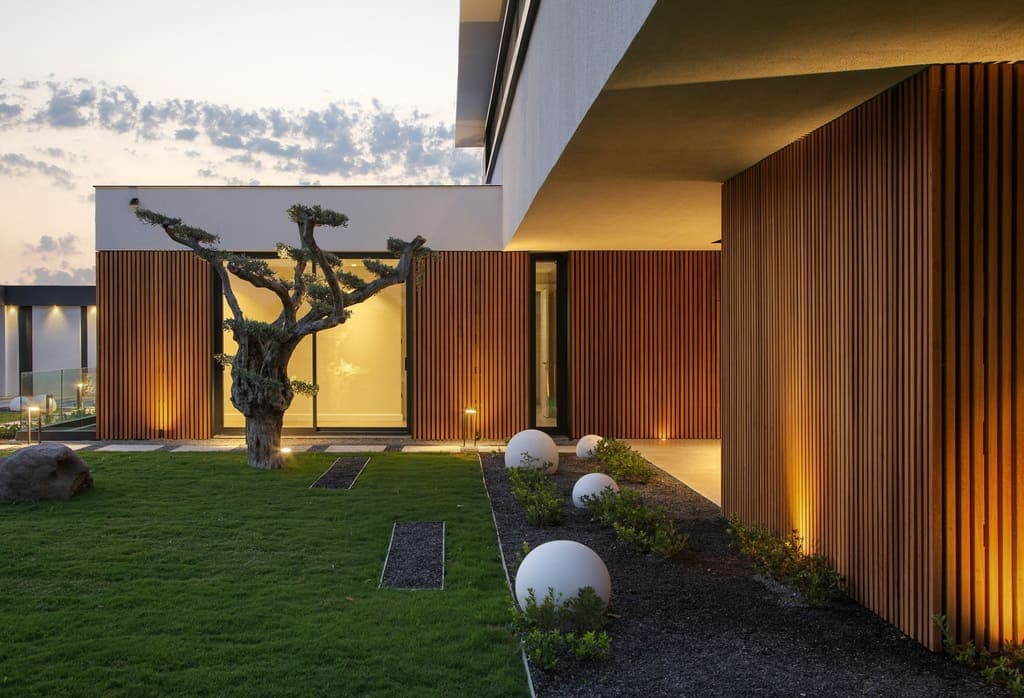
Understanding Thermally Modified Ayous in Cold Climates
Thermally Modified Ayous is a real wood product that undergoes a heat treatment process, which alters its cellular structure. This modification enhances its dimensional stability and reduces its response to moisture fluctuations, making it less prone to swelling and shrinking compared to untreated wood. This characteristic is particularly beneficial in cold climates where significant seasonal changes in humidity and temperature can stress building materials.
Despite its improved stability, Thermally Modified Ayous remains a wood product and will still experience some movement. Proper detailing, especially in conjunction with vapor barriers, insulation, and rainscreen systems, is crucial to prevent moisture accumulation and accommodate this inherent movement, ensuring long-term performance.
Moisture Management: The Rainscreen Principle
In cold climates, managing moisture is paramount to prevent issues like rot, mold, and freeze-thaw damage. A rainscreen assembly is often the preferred method for exterior walls, creating an air gap between the cladding (Thermally Modified Ayous) and the water-resistive barrier (WRB) on the sheathing.
This air gap allows any moisture that penetrates the cladding to drain away and promotes ventilation, helping the wall assembly dry out. This is critical for preventing moisture buildup behind the Ayous, especially when snow melts or ice thaws against the facade. Furring strips, typically 3/4 inch thick, are commonly used to create this ventilation space.
Accommodating Seasonal Movement
While thermally modified, Ayous will still expand and contract with changes in ambient humidity and temperature. In cold climates, these changes can be significant. It is essential to plan for these movements during installation to prevent buckling, warping, or cracking.
Install Ayous cladding with appropriate gaps between boards and at all transitions (corners, windows, doors). These gaps allow the wood to move freely without stress. The specific gap dimensions should align with manufacturer recommendations for the chosen profile, such as V-Joint / Nickel Gap or S4S E4E. Fasteners should allow for slight movement; face fastening is common, but concealed fastening systems also exist, which may require specific detailing to allow for movement.
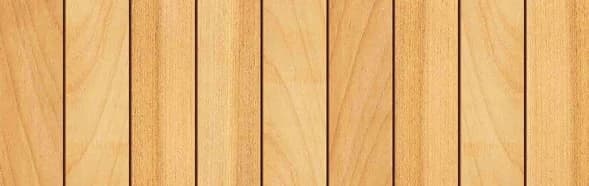
Example: Planning a Cold-Climate Ayous Wall Section
Consider a hypothetical 10-foot wide by 8-foot high wall section in a cold climate. The wall will be a rainscreen assembly.
First, apply a continuous water-resistive barrier (WRB) over the sheathing. Next, install vertical furring strips, typically 3/4 inch thick and 1.5 inches wide, spaced at 16 or 24 inches on center, over the WRB. These strips create the ventilation cavity.
When calculating coverage, account for the nickel gap profile, which introduces a small reveal between boards. For a 10-foot (120-inch) width, you would need approximately 21 boards (120 inches / 5.5 inches per board ≈ 21.8). Assuming an 8-foot length, this means 22 full 8-foot boards would be purchased to allow for cuts and waste. The actual number of purchased boards will depend on available lengths and a detailed cut plan to minimize waste.
Complementary Materials and Detailing
The success of Thermally Modified Ayous in a cold climate hinges on integrating it with a robust wall system. This includes proper insulation to maintain thermal performance, a continuous air barrier to prevent drafts, and a reliable WRB.
At corners, windows, and doors, use flashing and trim that are compatible with wood and allow for the thermal movement of the Ayous. Consider using [Trim and Moulding in Thermally Modified Ayous](/thermally-modified-wood/ayous) for a cohesive aesthetic. Ensure all fasteners are corrosion-resistant and appropriate for exterior wood applications.
For specific detailing around these elements, refer to general [Siding and Cladding](/siding-and-cladding) best practices and manufacturer installation guides for the chosen Ayous profile. Properly detailed soffits, potentially using [Thermally Modified Ayous for Soffits](/thermally-modified-wood/ayous), should integrate seamlessly with the wall cladding to prevent moisture intrusion at the roofline.
Before you order
- Have I accounted for a rainscreen assembly with adequate ventilation?
- Are all fasteners corrosion-resistant and suitable for exterior wood?
- Have I planned for appropriate expansion gaps at all board ends and transitions?
- Is there sufficient clearance from grade and hardscapes at the base of the wall?
- Are all window, door, and corner details properly flashed and sealed?
- Have I verified the specific installation instructions for the chosen Ayous profile (e.g., V-Joint, S4S E4E)?
- Is the wall assembly designed to manage vapor and air movement effectively in a cold climate?
Confirm installation details, approved uses and warranty terms in the current instructions for the exact product and profile. Your installer should verify the substrate, structure and applicable project requirements.
Questions to help you decide
Can Thermally Modified Ayous be installed directly onto exterior sheathing in a cold climate?
It is strongly recommended to install Thermally Modified Ayous over a rainscreen assembly with a ventilation gap in cold climates. Direct installation can trap moisture behind the cladding, leading to potential issues with the wood and the wall assembly, especially during freeze-thaw cycles. The air gap allows for drainage and drying.
What kind of fasteners should I use for Thermally Modified Ayous cladding?
Always use corrosion-resistant fasteners, such as stainless steel screws or nails, suitable for exterior wood applications. The specific type and length will depend on the thickness of the Ayous boards and the substrate. Consult the manufacturer's installation guidelines for the recommended fastening method for your chosen profile.
How does thermal modification help Ayous perform in cold climates?
Thermal modification significantly improves the dimensional stability of Ayous, meaning it's less prone to expanding and contracting due to changes in moisture content. This reduced movement helps the cladding resist warping, cupping, and cracking, which are common issues for untreated wood in environments with wide temperature and humidity swings, such as cold climates.
Request a Quote for Your Cold-Climate Ayous Project
Ready to plan your cold-climate wall project with Thermally Modified Ayous? Contact us to request a material quote. Please provide your project dimensions, desired Ayous profile, and ZIP code to confirm current availability and service options.
Request a material quote →