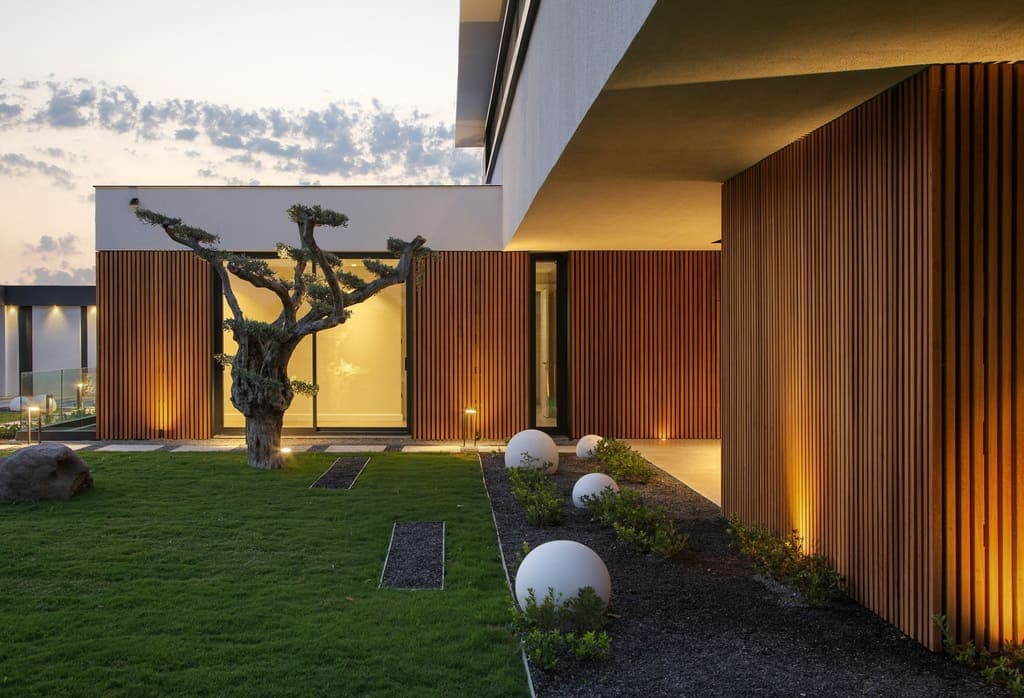
Understanding Thermally Modified Ayous Characteristics
Thermally Modified Ayous is derived from Ayous (Triplochiton scleroxylon), a species originating from West and Central Africa. The thermal modification process involves heating the wood to high temperatures in an oxygen-deprived environment. This process alters the wood's cellular structure, resulting in several key benefits relevant to coastal environments.
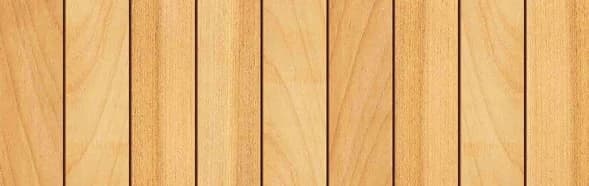
Specifically, thermal modification improves dimensional stability by reducing the wood's ability to absorb and release moisture. This translates to less expansion and contraction due to humidity fluctuations, a common challenge in coastal areas. The process also enhances the wood's natural resistance to decay and insect infestation, crucial for longevity in damp, exposed conditions. Ayous is also known for its low weight and calm grain, making it easier to handle during installation and contributing to a clean aesthetic. Its natural tone is a signature tan, which can be maintained with finishes or allowed to weather naturally.
Trim and molding are also available in S4S E4E profiles.
Coastal Exposure: Salt Air and Humidity
Coastal elevations are defined by their proximity to the ocean, which brings a constant presence of salt-laden air. Salt can accelerate corrosion of certain metals and, in some cases, affect the surface of wood materials over time. While Thermally Modified Ayous itself is not inherently corrosive, the choice of fasteners and other metal components is critical.
The improved dimensional stability of Thermally Modified Ayous helps it resist warping and cupping often caused by the high humidity and rapid moisture changes common in coastal zones. However, consistent exposure to moisture still necessitates proper detailing, such as adequate ventilation in rainscreen assemblies and sufficient clearance from grade to prevent prolonged wetting.
Wind Load and Fastening Considerations
Coastal areas frequently experience higher wind loads than inland regions. This necessitates robust fastening schedules and appropriate hardware to secure siding and cladding materials. While Thermally Modified Ayous is lightweight, its installation must account for potential uplift and shear forces.
The specific fastening pattern and type will depend on the chosen profile and local building codes for wind resistance. It is crucial to consult with a structural engineer or local building official to ensure the fastening system meets all requirements for your specific project location and anticipated wind conditions.
Drainage and Ventilation in Rainscreen Systems
For any exterior wood cladding in a coastal environment, incorporating a rainscreen assembly is highly recommended. A rainscreen creates a vented air gap behind the cladding, allowing moisture to drain away and promoting airflow. This helps to dry out the back of the siding, preventing moisture accumulation that could lead to issues over time, even with a stable material like Thermally Modified Ayous.
Proper detailing of flashing around windows, doors, and at corners is equally important to direct water away from the building envelope. Ensure that the design allows for continuous drainage and ventilation within the rainscreen cavity, especially at the base and top of the wall.
Worked Example: Coastal Siding Project Planning
Consider a hypothetical single-story coastal residence with a 20-foot wide by 10-foot high gable end wall facing the ocean. The design calls for a horizontal V-Joint / Nickel Gap profile of Thermally Modified Ayous. The total wall area is 200 square feet.
For this elevation, the following planning steps are critical:
It is assumed the actual coverage width is 5.25 inches per board.
3. **Rainscreen Design:** A minimum 3/4-inch furring strip system will be installed behind the Ayous siding to create a continuous rainscreen cavity. Insect screening will be included at the top and bottom of the cavity to prevent pest entry while maintaining airflow.
4. **Flashing Details:** All window and door openings will incorporate self-adhered flashing membranes, combined with metal head and sill flashings, to ensure a watertight seal.
Accounting for a typical 10-15% waste factor for cuts and defects, roughly 500-525 linear feet would be ordered. This would translate to purchasing full-length boards that minimize waste on a project-specific cut plan, rather than simply dividing the total linear footage by a standard board length.
This example highlights the need to integrate material selection with robust structural and moisture management strategies for coastal environments.
Before you order
- Confirm local building codes for wind loads and fastening requirements.
- Plan for a full rainscreen assembly with adequate drainage and ventilation.
- Detail all flashing around openings and at wall transitions.
- Consider the potential for natural weathering and specify finishes if a consistent color is desired.
- Ensure proper clearance from grade and other moisture sources.
- Verify the exact profile dimensions and coverage for accurate material takeoffs.
- Account for waste factor during material ordering, especially with complex cuts.
Confirm installation details, approved uses and warranty terms in the current instructions for the exact product and profile. Your installer should verify the substrate, structure and applicable project requirements.
Questions to help you decide
Can Thermally Modified Ayous be left unfinished in a coastal climate?
Yes, Thermally Modified Ayous can be left unfinished. Like all wood, it will naturally weather to a silver-gray patina over time when exposed to UV radiation and moisture. This weathering process is generally uniform. If a consistent color is preferred, a UV-inhibiting finish can be applied and maintained according to the manufacturer's recommendations.
What kind of maintenance does Thermally Modified Ayous require in a coastal setting?
Maintenance for Thermally Modified Ayous in a coastal setting primarily involves periodic cleaning to remove salt residue, dirt, and mildew. A gentle wash with water and a soft brush can typically suffice. If a finish is applied, it will require reapplication at intervals specified by the finish manufacturer. Regular inspection for any damage or areas where moisture may be accumulating is also recommended.
Is Thermally Modified Ayous resistant to marine borers or other specific coastal pests?
Thermal modification enhances the wood's resistance to decay and common wood-boring insects. However, it is not specifically rated for resistance against marine borers, which are organisms that attack wood submerged or in constant contact with saltwater. For applications involving direct saltwater immersion, alternative materials would be more appropriate. For above-grade coastal siding, its improved decay resistance is a significant advantage.
Ready to Plan Your Coastal Elevation with Thermally Modified Ayous?
Request a material quote for your project. Provide your project dimensions, desired Ayous profile, and ZIP code to confirm current availability and service options for your location.
Request a material quote →