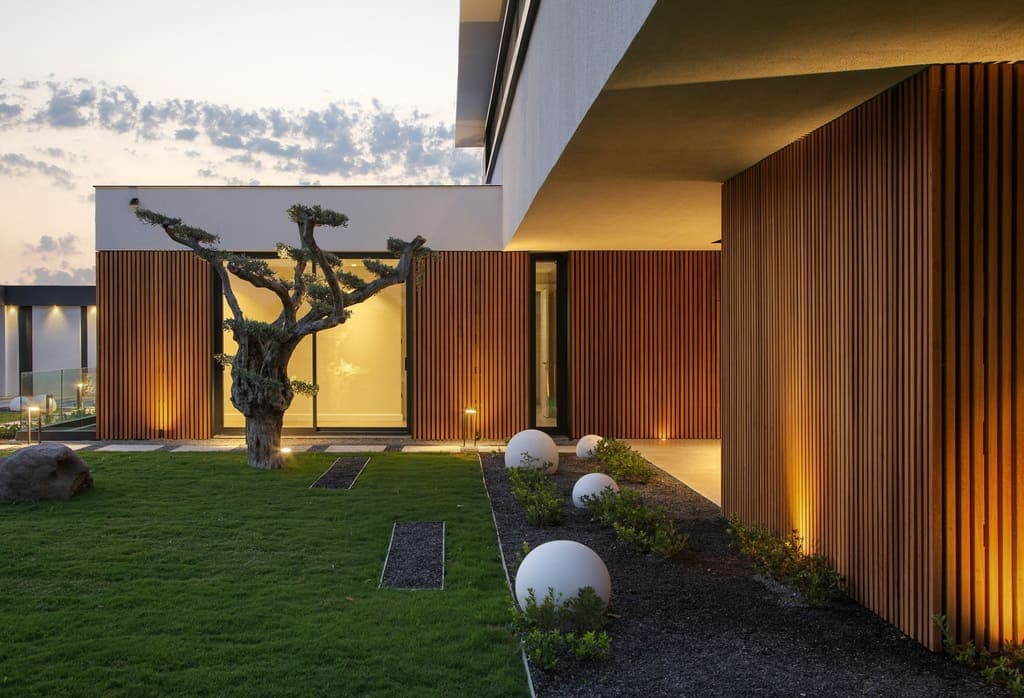
Understanding Thermally Modified Wood for Exterior Walls
Thermally modified wood undergoes a high-temperature treatment process that alters its cellular structure. This process enhances its stability, making it less prone to expansion and contraction due to changes in humidity. For covered patio walls, where materials are still exposed to ambient moisture and temperature fluctuations, this improved stability is a significant advantage.
The modification process also generally improves the material's resistance to decay. While covered patios offer protection from direct rain, airborne moisture and humidity are still factors in Wilmington's climate. Selecting thermally modified wood for wall applications can contribute to the longevity of the structure, provided it is installed correctly and maintained.
A key characteristic of thermally modified wood is its consistent color, often a rich, darker tone throughout the board. This uniform appearance can be appealing for visible wall surfaces, and it can also be stained or finished to achieve a desired aesthetic.
Selecting the Right Profile and Species
For covered patio walls, a variety of thermally modified wood profiles can be considered to achieve different visual effects. Common profiles include tongue-and-groove, shiplap, and square-edge boards. Tongue-and-groove and shiplap profiles offer a clean, interlocking appearance and can help create defined shadow lines, contributing to the architectural character of the patio.
Square-edge boards, when installed with a consistent gap, can create an open-joint or rainscreen-style appearance, adding a modern touch. The choice of profile influences both the aesthetic and the installation method, particularly regarding ventilation behind the cladding. Always verify that the chosen profile is approved for vertical wall applications.
Species commonly used for thermal modification include Ash and Poplar. For example, NORX Thermally Modified Ash offers a distinct grain and rich color, while NORX Thermally Modified Poplar provides a smoother texture. The choice of species can impact the final look and feel of your covered patio walls. It is important to confirm the specific species and their suitability for your intended application.
Considering Exposure and Finishing in Wilmington, NC
Even under a covered patio, walls in Wilmington, NC will experience humidity and indirect sunlight. The extent of protection offered by the patio roof is crucial. Walls closer to the open side of the patio will have more exposure to ambient moisture and UV radiation than those fully enclosed or deeper within the covered area. While thermally modified wood offers enhanced stability, applying a finish can help maintain its appearance and provide an additional layer of protection.
Finishes can range from clear sealers that enhance the natural color to stains that alter the hue. If an unfinished, weathered look is desired, the wood will naturally gray over time. This process is generally more uniform with thermally modified wood due to its altered structure. Regular cleaning and inspection are part of maintaining any outdoor wood surface, regardless of finish.
For areas with higher exposure, a finish with UV inhibitors can help slow down the natural graying process. Always follow the finish manufacturer's instructions for application and reapplication intervals.
Attachment Methods and Substructure
Proper attachment is essential for the long-term performance of thermally modified wood walls. Fasteners should be corrosion-resistant, such as stainless steel, to prevent staining and ensure durability in humid conditions. Depending on the chosen profile, fasteners can be face-fastened or hidden.
For face-fastened applications, pre-drilling can help prevent splitting, especially near board ends. Hidden fastening systems, often used with tongue-and-groove or shiplap profiles, create a cleaner aesthetic by concealing the fasteners. Always consult the manufacturer's recommendations for specific fastener types and spacing.
The substructure beneath the thermally modified wood cladding must be sound and provide adequate ventilation. Installing furring strips or a rainscreen system behind the cladding allows for air circulation, which helps manage moisture and can contribute to the longevity of the wall assembly. This is particularly important in a humid climate like Wilmington's.
Worked Example: Covered Patio Wall Section
Let's consider a hypothetical covered patio wall section measuring 10 feet wide by 8 feet high, using NORX Thermally Modified Ash shiplap siding with a nominal face width of 5.5 inches (actual coverage 5 inches per board).
The total area is 10 ft * 8 ft = 80 square feet.
To cover the 10-foot width, we need 10 ft * 12 inches/ft = 120 inches. Dividing by the 5-inch coverage per board gives 120 / 5 = 24 boards. Since boards are typically sold in standard lengths, we'll assume 8-foot lengths are available, minimizing cuts for height.
Therefore, we would need to purchase 24 boards, each 8 feet long. This calculation does not account for waste from cuts, minor defects, or future repairs, so it is prudent to add an additional 10-15% for waste factor.
For this example, with a 10% waste factor, you would consider ordering 24 * 1.10 = 26.4 boards, rounded up to 27 boards. This quantity ensures sufficient material for the project and accounts for typical installation needs. Always confirm actual board dimensions and recommended waste factors with your supplier.
Before you order
- Verify the specific thermally modified wood species and profile are approved for vertical exterior wall use.
- Assess the level of exposure to sun and moisture on your covered patio walls in Wilmington, NC.
- Decide on a finish (or no finish) based on desired appearance and maintenance commitment.
- Confirm the appropriate fastening method (face-fastened or hidden) and select corrosion-resistant fasteners.
- Plan for a substructure that allows for adequate ventilation behind the cladding.
- Measure project dimensions accurately and factor in waste for material ordering.
- Review local building practices or recommendations for exterior wall cladding in your area.
Confirm installation details, approved uses and warranty terms in the current instructions for the exact product and profile. Your installer should verify the substrate, structure and applicable project requirements.
This is a planning guide for projects in Wilmington, NC. Ask our team to confirm availability, delivery to your ZIP code and which branch can support your order.
Questions to help you decide
Can thermally modified wood be left unfinished on covered patio walls?
Yes, thermally modified wood can be left unfinished. It will naturally weather to a silver-gray patina over time. The thermal modification process generally makes this graying more uniform than with untreated wood. However, applying a finish can help maintain the original color longer and offer additional protection against environmental factors.
Is thermally modified wood suitable for all types of covered patios?
Thermally modified wood is generally well-suited for covered patio walls due to its enhanced stability and resistance to decay. However, the degree of 'covered' protection varies. For patios with minimal overhead cover or those highly exposed to wind-driven rain, you may need to consider additional finishes or more robust rainscreen assemblies to manage moisture effectively. Always assess your specific patio's exposure.
How does Wilmington, NC's climate affect thermally modified wood walls?
Wilmington, NC experiences high humidity and occasional heavy rainfall. While covered patio walls offer protection, the ambient humidity can still affect wood. The enhanced stability of thermally modified wood makes it less susceptible to warping or cupping in these conditions compared to untreated wood. Proper ventilation behind the cladding and corrosion-resistant fasteners are particularly important in this climate to ensure long-term performance.
Ready to Enhance Your Covered Patio Walls?
Request a material quote today. Provide your project dimensions, desired profile, and ZIP code to confirm current availability and service options for thermally modified wood.
Request a material quote →