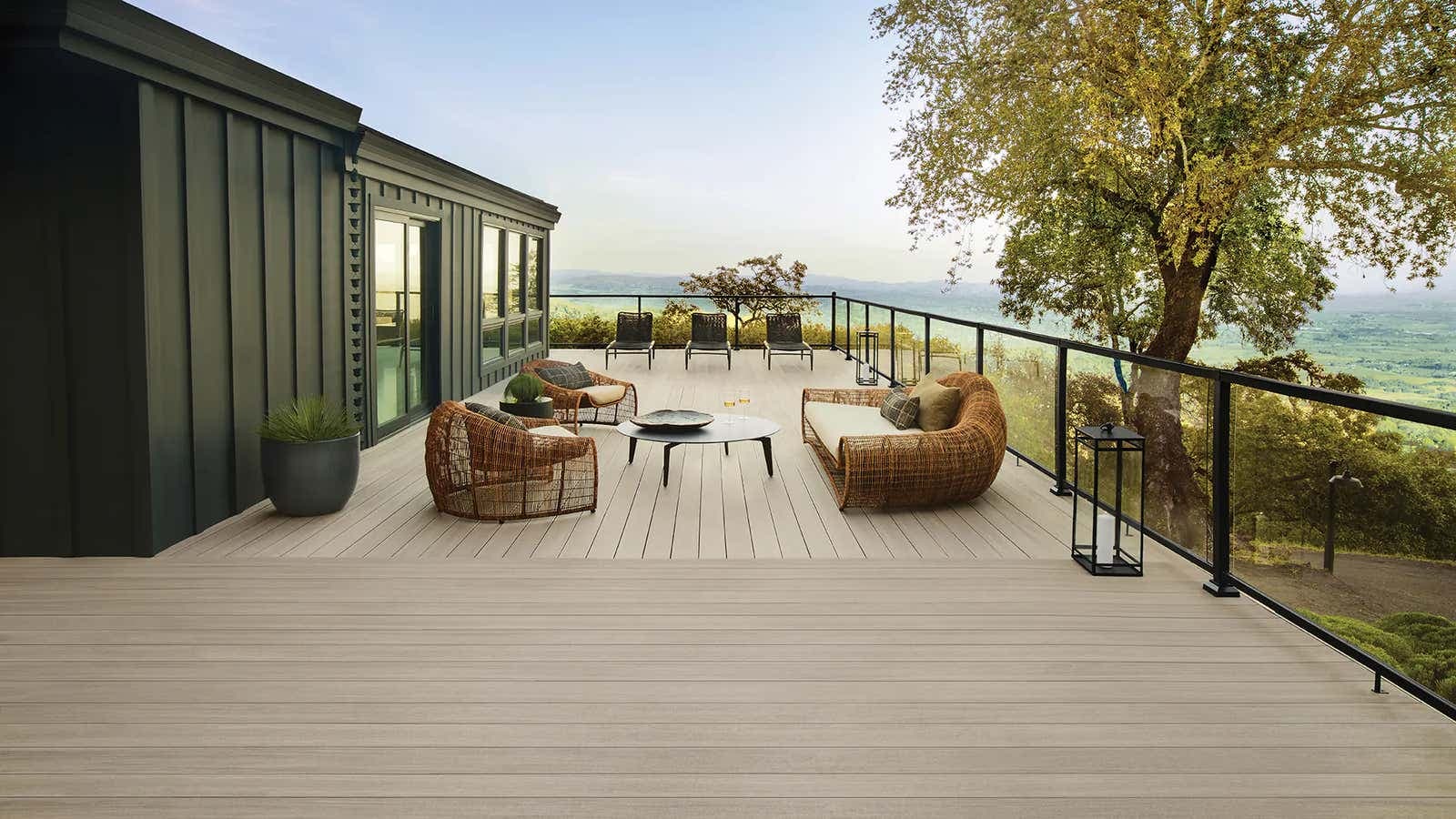
Maximizing Usable Space with Composite Decking
In compact outdoor settings, every inch counts. Composite decking, available in various board widths and lengths, allows for designs that can visually expand or define a small area. Wider boards might create a sense of openness, while narrower boards can add intricate detail without overwhelming the space. The consistent dimensions of composite boards also contribute to a clean, uncluttered look, which is beneficial for smaller footprints.
Consider the layout carefully. A diagonal installation can make a narrow space feel wider, while a straight lay can emphasize linearity. The uniform appearance of composite decking, with its consistent color and grain, helps maintain a cohesive visual flow, preventing a busy look that can make a small space feel even smaller. This consistency is a notable feature of composite materials compared to natural wood.
Choosing the Right Composite Profile for Small Decks
Composite decking comes in different profiles, including solid and hollow core boards, and various edge treatments. For compact spaces, the profile can influence both appearance and practicality. Solid boards often offer a more substantial feel, while hollow core boards can be lighter, which might be a consideration for elevated structures like balconies with load limitations. Always verify structural requirements with a qualified professional.
Edge profiles, such as grooved for hidden fasteners or square edge for face fastening, also play a role. Hidden fasteners create a smooth, uninterrupted surface, which can be desirable in a small space where every detail is visible. For perimeter boards, matching fascia or trim pieces are available to provide a finished look, crucial for a polished aesthetic in a contained area. These details ensure a seamless transition from the deck surface to its edges.
Color and Finish: Influencing Perception in Compact Areas
The color and finish of your composite decking can dramatically impact how large or inviting a compact outdoor space feels. Lighter colors tend to reflect more light, making a space appear more open and expansive. They can also feel cooler underfoot, a potential benefit in Wilmington's climate. Darker colors, while elegant, can absorb more heat and may make a small area feel cozier, or even smaller.
Many composite decking collections offer cooler-underfoot options designed to reduce heat retention. The consistent color and grain of composite boards, board after board, ensure a predictable aesthetic outcome, allowing you to confidently select a color that complements your home and personal style without unexpected variations. The finish, whether a subtle wood grain or a more pronounced texture, also contributes to the overall visual appeal.
Installation and Access Considerations for Wilmington Projects
Project access in Wilmington, especially for urban or historic properties, can be a factor for compact spaces. Composite decking typically arrives in standard lengths, and maneuvering longer boards into tight backyards or up to elevated balconies requires careful planning. Confirming delivery logistics and site access with your supplier before ordering is essential to avoid complications.
Installation methods are also important. While composite decking is known for its relatively straightforward installation, working in a confined space requires precision. Ensuring proper ventilation beneath the deck is critical, particularly in humid environments like Wilmington, to prevent moisture accumulation. Following manufacturer-specified gap requirements for board spacing is necessary for proper drainage and material performance.
Worked Example: A 10x8 Foot Balcony Deck
Let's consider a hypothetical 10-foot by 8-foot balcony in Wilmington, NC, requiring new composite decking. The total area is 80 square feet. Assuming 12-foot long composite boards with a 5.5-inch face width (0.458 feet), and accounting for a small waste factor and cuts:
For a straight lay, you would need approximately 10 feet / 0.458 feet/board = 21.8 boards to cover the 10-foot width. Rounding up, you'd need 22 full boards for the width. For the 8-foot length, you could use 12-foot boards cut to 8 feet, with a 4-foot offcut. If these offcuts are reusable, you could potentially get two 8-foot sections from three 12-foot boards, but a more conservative approach is to assume one 8-foot section per 12-foot board for initial calculation.
To cover the 8-foot length with 12-foot boards, you would need 8 feet of length. If we use 12-foot boards, you would need 22 boards (for the 10-foot width) x 1 (for the 8-foot length coverage from each board) = 22 boards. However, due to the 12-foot board length, you could cut each 12-foot board into an 8-foot section and a 4-foot section. The 4-foot sections might be reusable for end pieces or smaller areas. A safer purchase estimate, accounting for waste and potential non-reusable offcuts, might be 22 boards of 12-foot length. This allows for clean cuts and some margin for error. Always confirm exact dimensions and cutting plans with your installer.
The actual quantity purchased would be 22 individual 12-foot composite boards. This calculation assumes a simple straight lay and does not include any picture framing or intricate patterns, which would require additional board lengths and profiles. Always consult with your supplier and installer for a precise material takeoff based on your specific project design.
Before you order
- Measure your compact space precisely: length, width, and any obstructions.
- Consider board width: wider for perceived openness, narrower for intricate detail.
- Evaluate color options: lighter for expansive feel, darker for cozy ambiance.
- Choose a profile: solid for substantial feel, hollow for lighter weight (verify load limits).
- Select fastening method: hidden for smooth surface, face for traditional look.
- Plan for delivery and site access in Wilmington, NC.
- Confirm proper under-deck ventilation requirements with manufacturer guidelines.
- Account for fascia and trim pieces for a finished edge.
- Request a material quote with exact dimensions and desired profile.
- Consult with a professional for structural advice, especially for elevated decks.
Confirm installation details, approved uses and warranty terms in the current instructions for the exact product and profile. Your installer should verify the substrate, structure and applicable project requirements.
This is a planning guide for projects in Wilmington, NC. Ask our team to confirm availability, delivery to your ZIP code and which branch can support your order.
Questions to help you decide
Is composite decking suitable for small balconies?
Yes, composite decking can be an excellent choice for small balconies. Its consistent appearance and low maintenance are advantageous in compact spaces. However, it's crucial to confirm the structural load capacity of your balcony with a qualified professional before installation. Lighter-weight hollow core composite boards might be a consideration, but always prioritize safety and structural integrity.
How does composite decking handle coastal conditions in Wilmington, NC?
Many composite decking products are designed to perform well in coastal environments. The capped shell of many composite boards helps resist humidity and salt air, offering durability against the elements common in Wilmington. Regular cleaning with soap and water is typically recommended to remove salt residue and maintain appearance. Always check the specific product's specifications for its suitability in coastal applications.
What maintenance does composite decking require in a compact outdoor space?
One of the primary benefits of composite decking is its low maintenance. Generally, it requires only an annual wash with soap and water to keep it clean. Unlike natural wood, composite decking does not require oiling, sanding, or staining. This ease of care is particularly valuable in compact spaces where access for extensive maintenance might be more challenging.
Ready to Plan Your Compact Composite Decking Project?
To get started on your composite decking project in Wilmington, NC, request a material quote. Provide your project dimensions, desired composite profile, and project ZIP code to confirm current availability and service options.
Request a material quote →