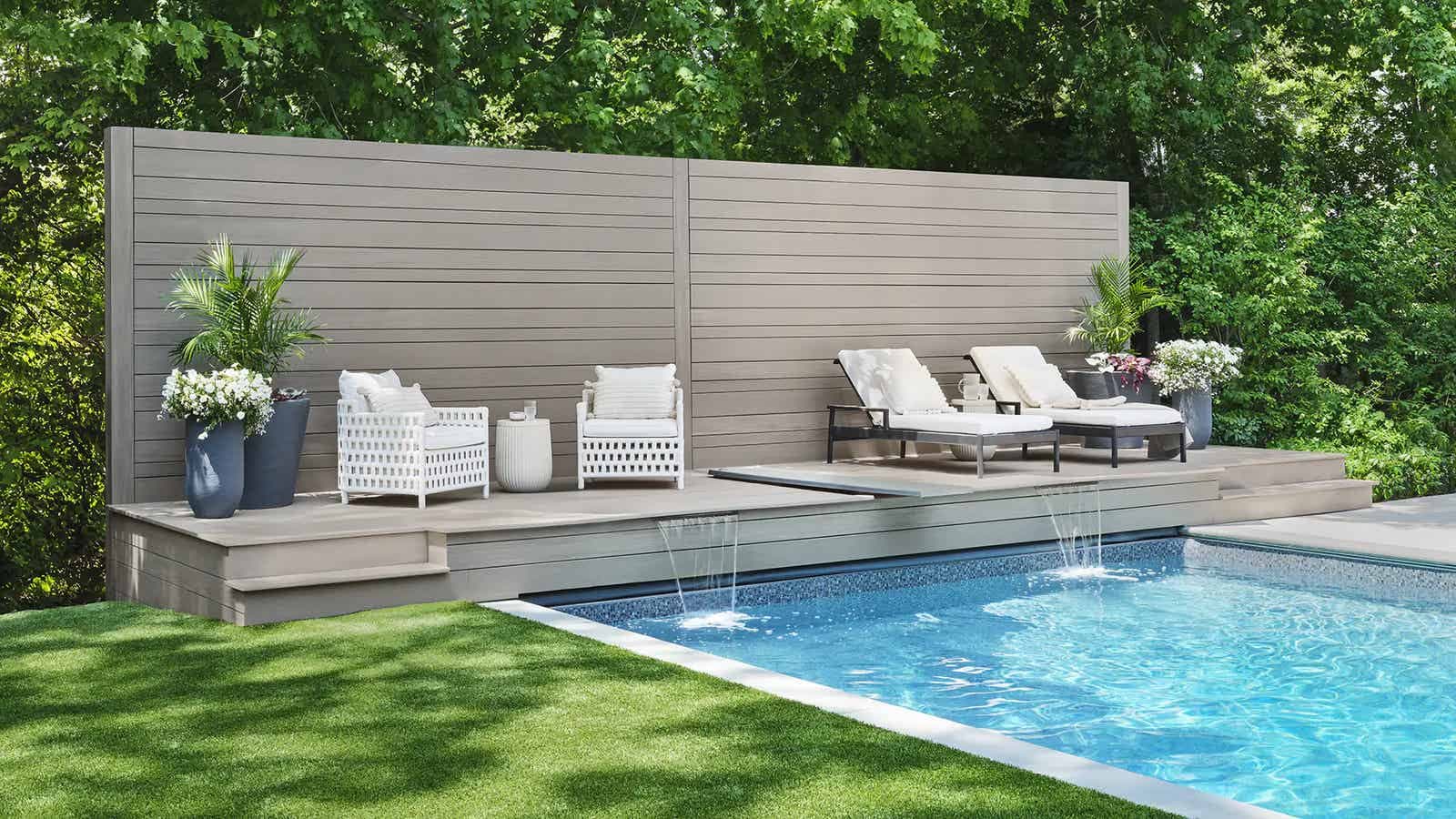
Why PVC Decking for Pool Terraces?
A pool terrace is a high-traffic, high-moisture area that demands a decking material capable of performing under challenging conditions. PVC decking is 100% synthetic, meaning it contains no wood fiber. This characteristic is particularly beneficial around pools where boards are frequently exposed to standing water, splash zones, and even salt spray if the pool is saltwater-based.
The absence of wood fiber in PVC decking means there is nothing to swell, stain, or rot when constantly wet. This makes it a robust choice compared to materials that might absorb moisture over time, leading to degradation. Manufacturers like Azek offer PVC decking that is waterproof to the core, a key feature for pool surrounds.
Beyond its moisture resistance, PVC decking is designed for low maintenance. Its capped polymer surface sheds grease and wine, and it can typically be cleaned with soap and water, which is a practical advantage for a frequently used outdoor space. Some lines, such as TimberTech Azek's Vintage, Landmark, and Harvest collections, also offer a range of aesthetic options with deep wood looks, allowing for design flexibility without compromising on performance.
Key Characteristics of PVC Decking for Wet Areas
When considering PVC decking for a pool terrace, several material characteristics are important to note:
Moisture Resistance: As a 100% synthetic material, PVC decking is inherently resistant to water absorption. This is crucial for preventing issues like rot, mold, and mildew, which can be common in continually damp environments.
Weight: PVC decking generally weighs less than hardwood and often less than composite decking. This can facilitate easier handling during installation, potentially reducing labor time and making it a viable option for elevated or rooftop applications if you have a pool on such a structure.
Fade and Stain Resistance: Many PVC decking products come with written coverage for fade and stain resistance. This is important for a pool area where exposure to sunlight and potential spills from drinks or sunscreen are common. Confirm specific manufacturer warranties for these coverages.
Heat Mitigation: While all decking materials absorb some heat from the sun, some PVC decking lines offer heat-mitigating color options. This can contribute to a more comfortable surface temperature underfoot, especially in sunny climates. It's advisable to review product specifications for heat absorption properties and consider lighter colors if heat is a significant concern.
Planning Your Pool Terrace Layout and Dimensions
Accurate measurements are the foundation of any successful decking project. Begin by clearly defining the perimeter of your pool terrace. Consider how the deck will integrate with existing structures, landscaping, and the pool's edge. Will there be steps, multiple levels, or specific areas for seating or a shower?
Measure the total length and width of the area you intend to deck. Account for any curves or irregular shapes around the pool. For curved sections, it's often helpful to create a template or use a flexible measuring tape to determine the linear footage needed for edge boards.
When calculating board quantities, remember that PVC decking boards are typically available in standard lengths. Plan your layout to minimize waste. For example, if you are using 12-foot boards and your deck is 10 feet wide, you will have a 2-foot offcut per board. Consider if these offcuts can be used for shorter sections, such as stairs or borders. Always add an allowance for cuts and potential errors, typically 5-10% extra material.
A hypothetical project: Imagine a rectangular pool terrace measuring 20 feet by 15 feet. It's more efficient to use 20-foot boards if available, or plan seams carefully. If boards are 12 feet long, you would need 20 feet / 12 feet = 1.67, so two boards per run, resulting in an 8-foot offcut. You would purchase 32 boards, each 16 feet long, covering 15 feet in width. For the 20-foot length, you'd need to consider how to manage seams. This example highlights the need for precise board dimensions and careful layout planning to optimize material use.
Installation Considerations for Poolside PVC Decking
Installing PVC decking around a pool requires attention to detail, particularly regarding proper ventilation and drainage. Even though PVC itself is waterproof, water can still accumulate underneath the deck if not properly managed, potentially leading to issues with the substructure or creating a damp environment.
Substructure: Ensure your deck frame is robust and designed to support the PVC decking. While PVC is lighter than some other materials, the substructure must still meet local building codes and support the intended load, including furniture and people.
Ventilation and Drainage: Adequate airflow beneath the deck is crucial. This helps to dry out any water that splashes or drains into the under-deck area, preventing moisture buildup. Confirm manufacturer recommendations for joist spacing and ventilation gaps. Proper grading of the ground beneath the deck, or the sub-surface of a concrete slab, is also important to direct water away from the structure.
Fasteners: PVC decking can be installed using hidden fasteners or face-fastened. Hidden fasteners create a smooth, uninterrupted surface, which can be desirable around a pool for aesthetics and comfort. Always use fasteners recommended by the decking manufacturer to ensure compatibility and proper installation.
Maintaining Your PVC Pool Terrace Deck
One of the primary advantages of PVC decking for a pool terrace is its low maintenance. However, regular cleaning is still important to keep the deck looking its best and to prevent the buildup of dirt, algae, or chemical residues from the pool.
Routine Cleaning: Typically, PVC decking can be cleaned with soap and water using a soft brush or a pressure washer on a low setting. Always check the manufacturer's specific cleaning guidelines for your chosen product to avoid damaging the surface.
Stain Removal: For more stubborn stains, such as those from suntan lotion, food, or drinks, follow the manufacturer's recommendations for specific cleaning agents. Avoid abrasive cleaners or harsh chemicals that could compromise the capped surface.
Winter Care: If your pool terrace is exposed to winter conditions, ensure any accumulated snow or ice is removed carefully to avoid damaging the deck surface. Avoid using metal shovels or ice picks directly on the decking. While PVC is durable, proper care extends its lifespan and appearance.
Complementary Products for Your Pool Terrace
To complete your pool terrace project, consider these complementary products:
Fascia and Trim Boards: These provide a finished edge around the perimeter of your deck and can be matched to your PVC decking for a cohesive look. Available in various sizes, they cover the exposed rim joists and create a clean transition. [Product Link: /decking/pvc]
Stair Treads and Risers: If your pool terrace includes steps, specific PVC stair treads and risers ensure a consistent aesthetic and material performance. These are designed for durability and slip resistance, important for wet areas. [Product Link: /decking/pvc]
Outdoor Lighting: Integrated LED lighting can enhance safety and ambiance around your pool terrace, especially for evening use. Consider post cap lights, stair riser lights, or in-deck lighting. [Product Link: /decking]
Under-Deck Drainage Systems: For elevated decks, an under-deck drainage system can divert water away, creating a dry space below for storage or additional outdoor living. This can protect the substructure and prolong its life. [Product Link: /decking/composite]
Before you order
- Have I accurately measured the total area of my pool terrace, including any irregular shapes or steps?
- Have I accounted for board lengths and potential waste, adding a 5-10% overage for cuts?
- Is my substructure adequate for PVC decking and compliant with local building codes?
- Have I planned for proper ventilation and drainage beneath the deck to prevent moisture buildup?
- Have I reviewed the manufacturer's specific installation guidelines for my chosen PVC decking product?
- Have I considered the aesthetic impact of color and finish, especially regarding heat absorption in direct sun?
- Do I understand the manufacturer's recommended cleaning and maintenance procedures?
- Have I selected appropriate fasteners (hidden or face-fastened) that are compatible with the PVC decking?
- Have I planned for fascia, trim, and stair components to create a finished look?
- Have I considered complementary products like outdoor lighting or under-deck drainage systems?
Confirm installation details, approved uses and warranty terms in the current instructions for the exact product and profile. Your installer should verify the substrate, structure and applicable project requirements.
This is a planning guide for projects in Wilmington, NC. Ask our team to confirm availability, delivery to your ZIP code and which branch can support your order.
Questions to help you decide
Is PVC decking slippery when wet?
Some manufacturers may offer specific lines or finishes that enhance slip resistance. It is always recommended to exercise caution on any wet surface, especially around a pool. Review the specific product details for any slip resistance ratings or features.
Can PVC decking be installed directly over an existing concrete patio?
Installing PVC decking directly over concrete often requires a sleeper system to create a gap for ventilation and drainage. This prevents moisture from being trapped between the decking and the concrete, which can lead to issues. The sleepers also provide a fastening surface for the deck boards. Always follow the manufacturer's installation instructions for specific requirements when installing over a solid surface.
How does PVC decking compare to composite decking for pool areas?
Both PVC and composite decking are low-maintenance alternatives to wood. The primary difference for pool areas is that PVC decking is 100% synthetic with no wood fibers, making it entirely waterproof to the core. Composite decking, while highly durable and moisture-resistant, contains wood fibers, which can theoretically absorb some moisture over time if the protective cap layer is compromised. For areas with constant standing water or submersion, PVC decking is often considered the more resilient option for preventing rot and swelling.
Ready to Plan Your PVC Pool Terrace Deck?
Request a material quote with your project dimensions, desired PVC decking profile, and ZIP code. We can help confirm current availability and service options for your area. Our team can assist with product details and ordering guidance.
Request a material quote →