Assessing Your Existing Deck Frame and Foundation
Before selecting any new decking material, a thorough inspection of your existing deck frame and foundation is essential. This step determines whether your current structure can safely support new hardwood decking and influences the type of installation possible. Look for any signs of rot, insect damage, or structural instability in the joists, beams, and ledger board. Pay close attention to connections to the house and the condition of support posts and footings.
Hardwood decking, especially dense species like Ipe or Cumaru, is heavier than many composite or softwood alternatives. Your existing frame must be robust enough to handle this additional weight. If there are any doubts about the frame's integrity, consult a qualified contractor or structural engineer. They can assess whether repairs, reinforcements, or even a partial rebuild of the substructure are necessary before proceeding with new decking.
Understanding Hardwood Decking Options
Lumber Plus offers a selection of Brazilian hardwood decking species, each with distinct characteristics suitable for outdoor applications. These include Ipe, Cumaru, Garapa, Tigerwood, Angelim, and Jatoba. While all are known for their durability, they vary in color, grain pattern, and density, which can influence both appearance and installation.
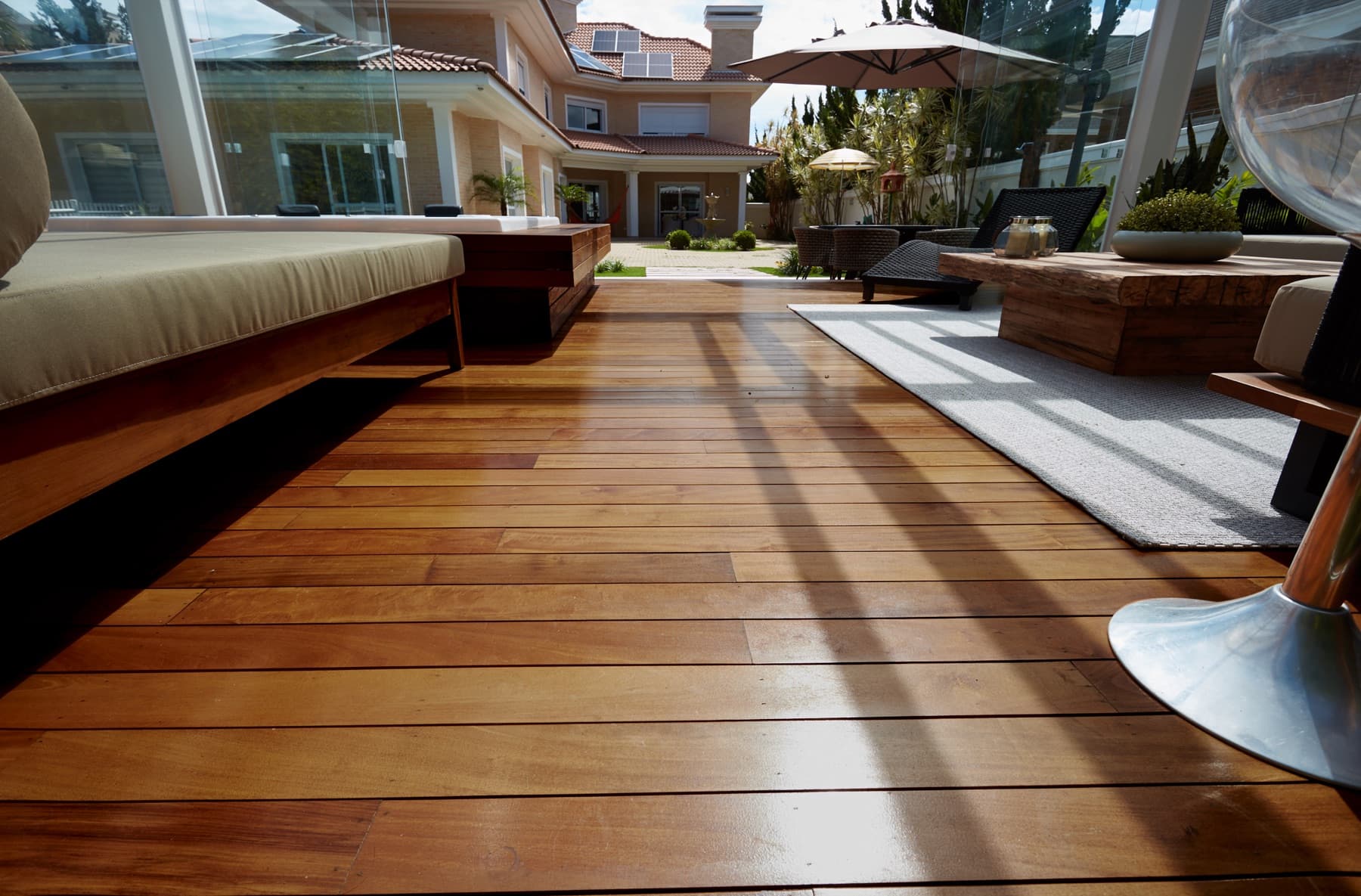
Ipe, also known as Brazilian walnut, is often considered the benchmark for hardwood decking due to its exceptional density and longevity. It typically presents reddish-brown to olive-brown tones and is highly resistant to rot, insects, and weather changes. Cumaru is another very durable option, similar in strength to Ipe but often with a slightly lighter, reddish-brown hue and sometimes a subtle cinnamon-vanilla scent when worked. Garapa offers a golden-toned aesthetic and is a good value pick, while Tigerwood is recognized for its dramatic striped grain.
These hardwoods are naturally dense, providing inherent resistance without chemical treatments. This density contributes to their long lifespan and ability to withstand challenging outdoor conditions, including coastal environments like Wilmington, NC. Consider the specific aesthetic you desire and the expected traffic on your deck when making your selection.
Considering Board Profiles and Fastening Methods
Hardwood decking is available in various profiles and lengths. Common profiles include standard rectangular boards, and some species may offer tongue-and-groove options. The choice of profile can impact the final appearance and the installation method. For renovation projects, ensure that the chosen board profile is compatible with your existing frame's joist spacing and any planned fastening systems.
Fastening methods for hardwood decking typically involve either face-fastening or hidden fasteners. Face-fastening, where screws are driven through the face of the board into the joists, provides a secure connection but leaves visible fasteners. Hidden fastening systems create a cleaner look by attaching boards from the sides or underside, concealing the fasteners. Due to the density of hardwoods, pre-drilling is almost always required for both methods to prevent splitting and ensure proper installation. Discuss these options with your installer to determine the best approach for your project and the specific hardwood you select.
Planning for Wilmington's Coastal Climate
Wilmington, NC, experiences a humid subtropical climate with warm, humid summers and mild winters. Proximity to the coast means decks are exposed to salt air and moisture. Hardwood decking species like Ipe and Cumaru are well-suited for such conditions, known for their natural resistance to moisture, rot, and marine borers. This makes them a robust choice for coastal applications.
Despite their inherent resilience, proper ventilation beneath the deck is crucial in humid environments. Ensure that the deck design allows for adequate airflow to prevent moisture buildup, which can still affect even the most durable materials over time. Regular cleaning to remove salt residue and debris can also contribute to the long-term performance and appearance of your hardwood deck in a coastal setting.
Worked Example: Replacing Decking on an Existing Frame
The current decking is softwood that has deteriorated, but the pressure-treated frame appears sound after inspection. You've decided on 5/4x6 Ipe decking (actual dimensions approximately 1 inch thick by 5.5 inches wide) for its durability and rich appearance.
First, calculate the total deck area: 12 ft x 16 ft = 192 square feet. Next, determine the number of boards needed. Since Ipe boards are 5.5 inches wide, approximately 2.18 boards are needed per linear foot of width (12 inches / 5.5 inches ≈ 2.18). For a 12-foot wide deck, you'd need about 26.16 boards (12 ft * 12 inches/ft / 5.5 inches/board). Rounding up for cuts and waste, assume 27 boards. If you plan to use 16-foot lengths, you would need 27 boards * 16 feet/board = 432 linear feet of decking. This calculation provides an estimate; always add 10-15% for waste, cuts, and potential board selection, bringing the estimate to roughly 475-500 linear feet. You would purchase full 16-foot boards, so 27 boards at 16 feet each would be 432 linear feet, and then add waste. This example assumes no significant offcuts can be reused due to specific board length requirements.
For hidden fasteners, you would also need to calculate the appropriate quantity based on the manufacturer's recommendations for the chosen system and joist spacing. This hypothetical example highlights the need for precise measurements and a waste factor when planning your material order. Always confirm exact product dimensions and consult installation guides for specific fastening requirements.
Before you order
- Inspect existing deck frame for rot, insect damage, and structural integrity.
- Verify joist spacing and assess if it is compatible with chosen hardwood decking profiles.
- Determine if the existing frame can support the weight of hardwood decking (consult a professional if unsure).
- Select hardwood species based on desired appearance, durability, and budget (e.g., Ipe, Cumaru, Garapa).
- Choose between face-fastening or hidden fastener systems and confirm compatibility with selected hardwood.
- Calculate total decking area and estimate linear footage, adding 10-15% for waste.
- Plan for adequate ventilation beneath the deck, especially for coastal conditions.
- Consider the aesthetic impact of natural weathering (silver-gray patina) versus maintaining original color with UV-blocking sealers.
- Confirm current availability of desired profiles and lengths from Lumber Plus.
Confirm installation details, approved uses and warranty terms in the current instructions for the exact product and profile. Your installer should verify the substrate, structure and applicable project requirements.
This is a planning guide for projects in Wilmington, NC. Ask our team to confirm availability, delivery to your ZIP code and which branch can support your order.
Questions to help you decide
How do I know if my existing deck frame is strong enough for hardwood decking?
Hardwood decking is denser and heavier than many other decking materials. It is crucial to have your existing deck frame thoroughly inspected by a qualified contractor or structural engineer. They can assess the condition of joists, beams, and footings and determine if any reinforcements or repairs are necessary to safely support the additional weight.
Will hardwood decking withstand Wilmington's coastal climate?
Yes, many hardwood species, such as Ipe and Cumaru, are exceptionally well-suited for coastal climates like Wilmington, NC. They possess natural resistance to moisture, salt air, rot, and insects. Proper installation, including adequate ventilation beneath the deck, will further enhance their performance and longevity in humid environments.
What maintenance does hardwood decking require in a coastal environment?
Hardwood decking is generally low maintenance. A yearly wash to remove dirt and salt residue is typically sufficient. If you prefer to maintain the wood's original rich color, an annual application of a UV-blocking oil or sealer is recommended. If left untreated, the wood will naturally weather to a silvery-gray patina, which does not affect its structural integrity.
Ready to Renovate Your Wilmington, NC Deck?
Request a material quote for your hardwood decking project. Provide your project dimensions, desired hardwood profile, and ZIP code to confirm current availability and service options.
Request a material quote →