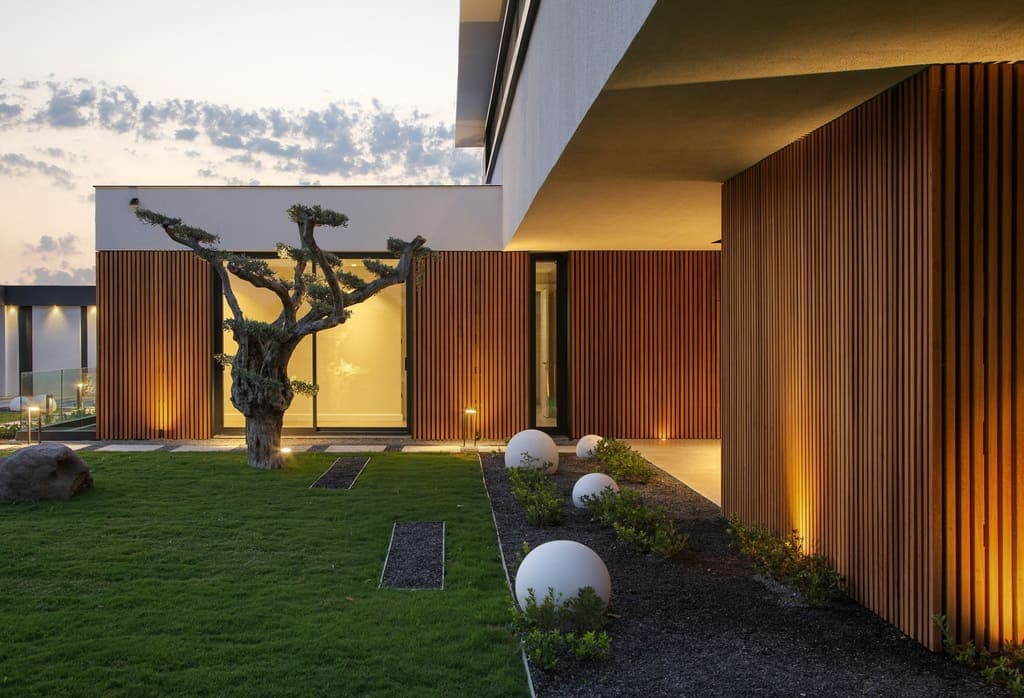
Understanding Thermally Modified Wood for Wall Applications
Thermally modified wood undergoes a high-temperature heat treatment process that alters its cellular structure. This process enhances the wood's dimensional stability, making it less prone to shrinking, swelling, and warping when exposed to fluctuations in temperature and humidity. For covered patio walls, where indirect exposure to weather is common, this stability is a key advantage.
The modification also imparts a darker, richer color to the wood, often resembling tropical hardwoods, and can improve its resistance to decay. While thermally modified wood can be used in fully exposed applications like siding, its application on covered patio walls allows for specific aesthetic and maintenance considerations to come into play. It is important to confirm that the chosen species and profile are approved for vertical wall use.
Selecting Species and Profiles for Covered Patio Walls
Thermally modified wood is available in various species, including Spruce and Pine. Each species may offer slightly different grain patterns and natural tones, which are then deepened by the thermal modification process. For covered patio walls, where visual appeal is paramount, consider how the wood's natural characteristics will complement your overall design.
Profiles typically include tongue-and-groove, shiplap, and square-edge options. Tongue-and-groove and shiplap profiles create a secure, interlocking fit, which can be beneficial for maintaining a consistent appearance and offering some protection against wind-driven moisture, even in a covered setting. Square-edge profiles can create a more contemporary look with visible gaps, often used with a rainscreen assembly for proper ventilation. Ensure the chosen profile is suitable for vertical installation and allows for adequate airflow behind the cladding, even in a covered scenario.
You can explore various options for [siding and cladding](/siding-and-cladding) to see different profiles and finishes, including specific products like [NORX](/brands/norx) which offers thermally modified wood.
Finishing and Appearance Considerations
One of the benefits of thermally modified wood for covered patio walls is the flexibility in finishing. While it can be left unfinished to weather to a silvery-gray patina over time, applying a finish can help preserve its original color and offer additional protection. In a covered patio setting, the weathering process will be slower and more uneven compared to fully exposed applications.
Clear penetrating oils or stains designed for exterior wood are common choices. These finishes can enhance the wood's natural color and provide a barrier against moisture and UV degradation, even if indirect. Consider a finish with UV inhibitors to slow down color change. Always test any finish on a scrap piece of wood to ensure the desired appearance.
For projects aiming for a distinctive look, products like [Maximo Accoya](/products/maximo-accoya) offer alternative high-performance wood options that may also be suitable for covered wall applications, with their own finishing recommendations.
Installation Best Practices for Covered Walls
Even on covered walls, proper installation is critical for long-term performance. A key consideration is ensuring adequate ventilation behind the wood cladding. This typically involves creating a rainscreen gap, even if minimal, between the back of the wood and the wall substrate. This gap allows any trapped moisture to dry and prevents condensation buildup, which is important in Washington, DC's humid summers.
Use appropriate fasteners, such as stainless steel screws or nails, to prevent staining and ensure secure attachment. Fastener type and spacing should follow manufacturer recommendations for the specific profile. Account for slight wood movement by allowing appropriate spacing where recommended, even with the enhanced stability of thermally modified wood. Ensure all cut ends are sealed with an end-grain sealer to protect against moisture absorption.
Worked Example: Covered Patio Wall for a Washington, DC Residence
Consider a hypothetical covered patio wall measuring 10 feet wide by 8 feet high, for a total area of 80 square feet. The homeowner desires a modern look with horizontal thermally modified Spruce, using a shiplap profile that is 5 inches wide (nominal) and 16 feet long.
First, calculate the actual coverage width per board, accounting for the shiplap overlap. If the effective coverage width is 4.5 inches (0.375 feet), then for a 10-foot wide wall, you would need 10 ft / 0.375 ft/board = 26.67 boards. Rounding up, you would need 27 boards if they were exactly 10 feet long.
Since the boards are 16 feet long, each board can yield one 10-foot piece and one 6-foot offcut. For an 8-foot high wall, you would need 8 ft / 0.375 ft/board = 21.33 boards for the height. Rounding up, we need 22 courses of boards. Each course is 10 feet long. So, you would need 22 pieces of 10-foot length.
Using 16-foot long boards, each board can provide one 10-foot piece and a 6-foot offcut. If the 6-foot offcuts are not usable elsewhere, you would need 22 full 16-foot boards to achieve 22 x 10-foot pieces. Always factor in waste for cuts and potential mistakes, typically an additional 5-10%.
Before you order
- Confirm species and profile are approved for vertical wall application.
- Evaluate desired aesthetic: natural weathering vs. finished appearance.
- Select an appropriate finish (oil/stain) with UV inhibitors if maintaining color.
- Plan for a rainscreen gap behind the cladding for ventilation.
- Choose appropriate stainless steel fasteners.
- Account for material waste during estimation (5-10%).
- Verify local building considerations for outdoor structures and materials.
- Confirm end-grain sealer application for all field cuts.
Confirm installation details, approved uses and warranty terms in the current instructions for the exact product and profile. Your installer should verify the substrate, structure and applicable project requirements.
This is a planning guide for projects in Washington, DC. Ask our team to confirm availability, delivery to your ZIP code and which branch can support your order.
Questions to help you decide
Can thermally modified wood be painted?
While thermally modified wood can be painted, it is more commonly finished with penetrating oils or stains that allow the wood's natural grain to show through. If painting is desired, ensure the paint is suitable for exterior wood and compatible with thermally modified wood, and always follow the manufacturer's recommendations for surface preparation and application.
How does Washington, DC's climate affect thermally modified wood on a covered patio?
Washington, DC experiences hot, humid summers and cold winters. The thermal modification process enhances the wood's dimensional stability, making it less reactive to these temperature and humidity swings. On a covered patio, the wood is protected from direct rain and intense sun, which can slow down the weathering process and extend the life of any applied finish compared to fully exposed applications. However, proper ventilation behind the wall is still crucial to manage humidity and prevent moisture buildup.
Is special maintenance required for thermally modified wood on covered patio walls?
Maintenance for thermally modified wood on covered patio walls is generally less intensive than for fully exposed siding. If left unfinished, it will weather to a silvery-gray, but at a slower rate due to protection. If a finish is applied, periodic cleaning and reapplication of the finish according to the product manufacturer's instructions will help maintain its appearance and protective qualities. Regular cleaning to remove dirt, pollen, and mildew is recommended to keep the walls looking their best.
Ready to Plan Your Covered Patio Walls?
Request a material quote for your project. Provide your project dimensions, desired profile, and ZIP code to confirm current availability and service options for thermally modified wood.
Request a material quote →