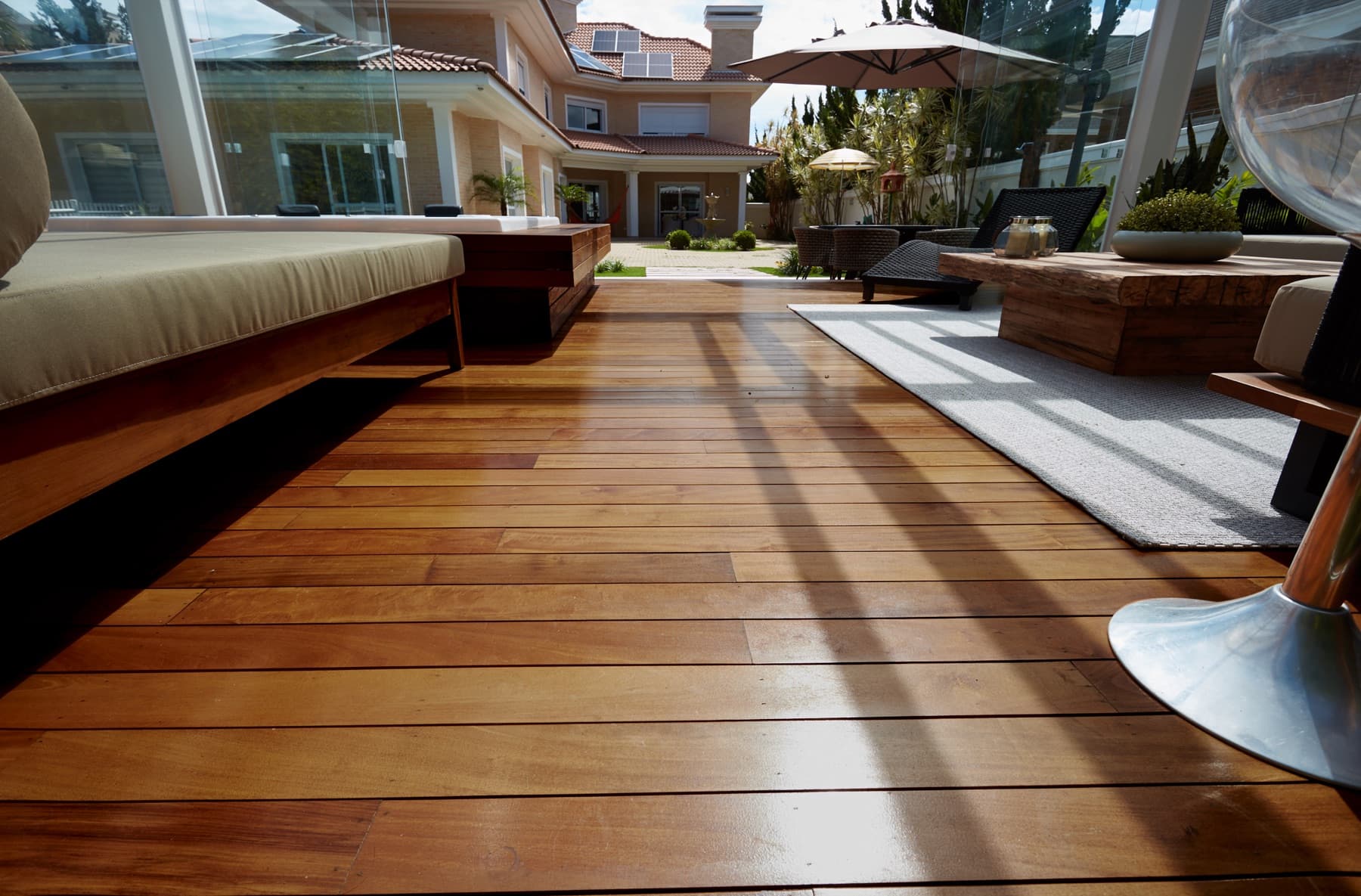
Assessing Your Existing Deck Frame for Hardwood Decking
Before selecting new decking boards, a comprehensive inspection of your existing deck frame is essential. The density and weight of hardwood decking species like Ipe and Cumaru require a structurally sound foundation. Check for any signs of rot, insect damage, or excessive deflection in joists, beams, and ledger boards. Pay close attention to connections and fasteners.
Ensure that the existing joist spacing aligns with the manufacturer's recommendations for your chosen hardwood decking. While many hardwood species are very strong, incorrect joist spacing can lead to issues over time. If the existing frame is compromised or unsuitable for the weight and stiffness of hardwood, consider a full frame replacement or reinforcement before proceeding with new decking.
Choosing Hardwood Species for Washington, DC's Climate
Washington, DC experiences a range of weather conditions, from humid summers to cold winters. Selecting a hardwood species that can withstand these environmental shifts is crucial for longevity. Ipe, often referred to as Brazilian walnut, is a premier choice due to its exceptional density and natural resistance to rot, insects, and weather changes. It is known for minimal movement post-installation.
Cumaru, another Brazilian hardwood, offers similar durability and resistance at a different price tier. Both Ipe and Cumaru resist warping and cracking even after moisture exposure, making them suitable for the varied climate. These hardwoods do not require chemical treatments for protection, relying on their natural properties to defend against the elements.
Consider the aesthetic you desire. Ipe presents a reddish-brown to olive-brown tone, which can silver to a driftwood grey if left untreated. Cumaru also offers rich, warm tones. Both can be oiled annually to maintain their original color or allowed to weather naturally without structural compromise.
Worked Example: Replacing Decking on a 10x12 Foot Frame
The homeowner wants to upgrade from pressure-treated lumber to Ipe hardwood decking.
For a 10x12 foot deck, the total surface area is 120 square feet. If using standard Ipe decking boards, such as 1x6 inch nominal dimensions (actual ~0.75x5.5 inches), you would calculate the linear footage needed. For a 12-foot length, you would need approximately 26 boards to cover the 10-foot width (10 feet * 12 inches/foot / 5.5 inches/board = ~21.8 boards, rounded up for cuts and waste). For the 12-foot length, this means 26 boards * 12 feet/board = 312 linear feet. Always add a waste factor, typically 10-15%, for cuts and potential board selection.
If you opt for an Ipe board with a 12-foot length, you would need roughly 26 boards. For a 10-foot section, you would need 22 boards (10 feet * 12 inches/foot / 5.5 inches/board = 21.8, rounded up to 22). This would translate to 22 boards * 12 feet long = 264 linear feet. Accounting for a 10% waste factor, you would order approximately 290 linear feet. This example assumes straight board installation and does not account for complex patterns or picture framing. Always confirm exact dimensions and calculate waste based on your specific layout.
Installation Considerations for Hardwood Decking
Hardwood decking, especially dense species like Ipe and Cumaru, requires specific installation techniques. Due to their hardness, pre-drilling is often necessary before fastening to prevent splitting. Specialized tools may also be required. While DIY installation is possible, professional installation is recommended to ensure proper fastening, spacing, and long-term performance.
Proper ventilation beneath the deck is critical, particularly in a climate with varying humidity. Adequate airflow helps prevent moisture buildup, which can affect the stability and longevity of any decking material. Ensure there is sufficient space between the decking and the ground, and consider installing skirting that allows for ventilation while deterring pests.
Board spacing is also important. Hardwood decking may expand and contract minimally with changes in humidity. Following manufacturer guidelines for gapping between boards is essential for drainage and air circulation.
Maintenance and Long-Term Care
One of the advantages of hardwood decking is its relatively low maintenance. A yearly wash to remove dirt and debris is generally sufficient. If you wish to preserve the original rich color of Ipe or Cumaru, an annual application of a UV-blocking sealer or oil is recommended. Without this, the wood will naturally weather to a beautiful silvery-gray patina, which does not impact its structural integrity.
For coastal or high-exposure areas, Ipe and Cumaru are considered marine-grade standards and are highly resistant to salt air and spray. Regular cleaning helps maintain their appearance and prevents the accumulation of organic matter.
Before you order
- Assess the structural integrity of your existing deck frame: Check joists, beams, and ledger for rot, damage, or deflection.
- Verify joist spacing: Ensure it meets the requirements for your chosen hardwood decking species.
- Measure accurately: Obtain precise dimensions of your deck area for material estimation.
- Select hardwood species: Consider Ipe or Cumaru for durability and resistance to Washington, DC's climate.
- Determine desired aesthetic: Decide if you prefer the natural weathered patina or will apply an annual UV-blocking oil.
- Plan for ventilation: Ensure adequate airflow beneath the deck to prevent moisture issues.
- Consider professional installation: Due to the density of hardwoods, specialized tools and techniques may be needed.
- Factor in waste: Add 10-15% to your material calculations for cuts and board selection.
Confirm installation details, approved uses and warranty terms in the current instructions for the exact product and profile. Your installer should verify the substrate, structure and applicable project requirements.
This is a planning guide for projects in Washington, DC. Ask our team to confirm availability, delivery to your ZIP code and which branch can support your order.
Questions to help you decide
Can I use my existing deck railing with new hardwood decking?
This depends on the condition and style of your existing railing. If the railing is structurally sound and aesthetically compatible with hardwood, it may be reused. However, ensure that any fasteners or connections are secure and that the railing meets current safety standards. Often, a full deck renovation includes updating the railing for a cohesive look and enhanced safety.
What is the typical lifespan of hardwood decking in Washington, DC?
With proper installation and minimal care, species like Ipe can last up to 75 years, and Cumaru over 25 years. Their natural density and resistance to rot, insects, and weather changes contribute to their exceptional longevity, often outperforming many composite materials. Regular cleaning can help maximize this lifespan.
Do I need to apply a sealer to hardwood decking immediately after installation?
No, it is not strictly necessary for structural integrity. Hardwood species like Ipe and Cumaru are naturally resistant to the elements. However, if you wish to maintain the original rich color of the wood, applying a UV-blocking sealer or oil shortly after installation, and then annually, will help preserve its appearance and prevent it from weathering to a silvery-gray patina. This is primarily an aesthetic choice.
Ready to Renovate Your Washington, DC Deck with Hardwood?
Request a material quote today. Provide your project dimensions, desired hardwood profile, and ZIP code to confirm current availability and service options. Our team can help you select the right materials for your renovation.
Request a material quote →