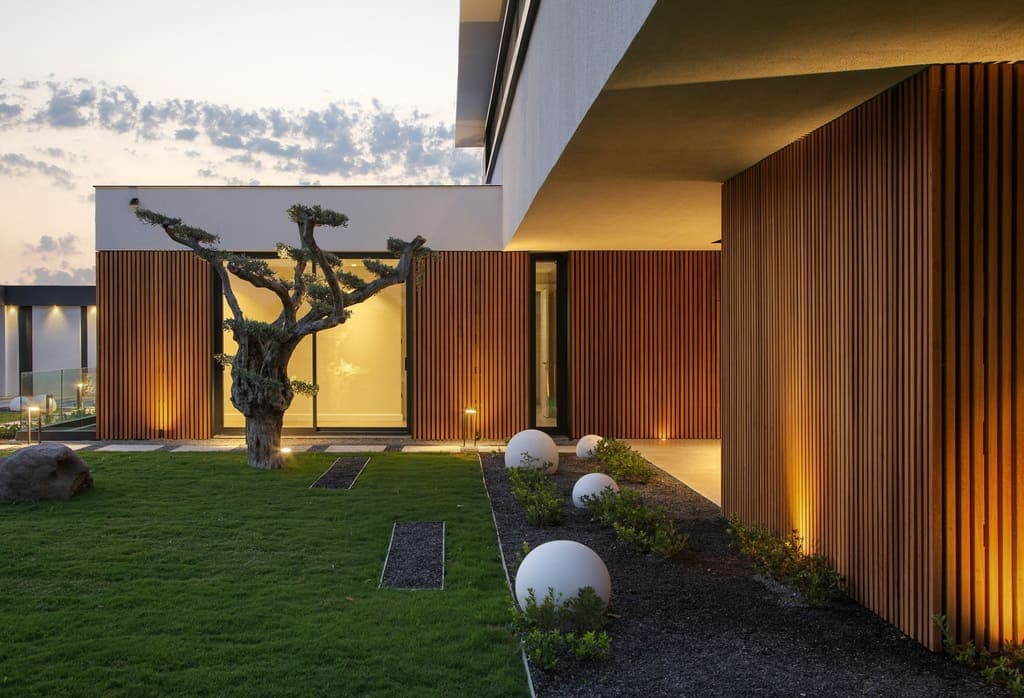
Understanding Thermally Modified Wood for Vertical Applications
Thermally modified wood undergoes a high-temperature heat treatment process that alters its cellular structure. This process reduces the wood's ability to absorb moisture, leading to increased dimensional stability. For vertical applications like covered patio walls, this means less expansion and contraction with changes in humidity, which can help maintain a consistent appearance and reduce stress on fasteners and finishes.
While thermally modified wood is enhanced for stability, it is still a natural wood product. Its suitability for specific applications, especially walls, depends on the species, profile, and the extent of protection from direct weather exposure. Covered patios offer a degree of protection, but understanding the local climate's humidity levels is still important for long-term performance.
Selecting the Right Species and Profile for Your Covered Patio Wall
Lumber Plus offers a range of thermally modified wood options, including NORX and Maximo. Each product line may feature different wood species, such as Ash or Pine, which vary in natural grain, color, and density. For a covered patio wall, consider profiles that complement the overall architectural style of your home. Common profiles include tongue-and-groove, shiplap, or square-edge boards, each creating a distinct visual effect.
Tongue-and-groove profiles, for example, offer a tight, interlocking fit that can create a smooth, continuous surface. Shiplap provides a more defined shadow line between boards, adding textural interest. The choice of profile also influences installation, as some are designed for concealed fastening, contributing to a cleaner aesthetic. Always verify that the chosen profile is approved for vertical wall applications.
Design Considerations for Covered Patio Walls in Tampa
When designing a covered patio wall in Tampa, FL, consider how the thermally modified wood will interact with other materials and the surrounding landscape. The natural tones of thermally modified wood can range from light honey to rich brown, offering versatility. These colors can be maintained with a UV-protective finish or allowed to weather naturally to a silver-gray patina over time.
Think about the orientation of the boards – horizontal applications can make a space feel wider, while vertical applications can emphasize height. Incorporate lighting to highlight the wood's texture in the evenings. Ensure adequate ventilation behind the wall cladding, especially in humid climates, to prevent moisture buildup. This typically involves a rainscreen assembly that allows for air circulation.
Fastening and Finishing for Durability
Proper fastening is crucial for the longevity of your thermally modified wood wall. Stainless steel fasteners are generally recommended to prevent corrosion and staining, especially in humid or coastal environments. Depending on the profile, you may use face fastening or concealed fastening systems. Always follow manufacturer guidelines for fastener type, spacing, and penetration.
While thermally modified wood is dimensionally stable, applying a finish can offer additional protection and aesthetic control. A clear or tinted UV-protective finish can help preserve the original color and provide a barrier against moisture and environmental elements. If you prefer the natural weathering process, be aware that the wood will gradually change color. Regular cleaning and maintenance, regardless of finish, will help keep your patio walls looking their best.
Hypothetical Project Example: Covered Patio Accent Wall
Imagine a covered patio in Tampa, FL, measuring 15 feet wide by 10 feet deep, with one accent wall to be clad in thermally modified wood. This wall is 15 feet long and 8 feet high, resulting in a surface area of 120 square feet. We select NORX Thermally Modified Ash, 1x6 (nominal size, actual coverage 5.125 inches) shiplap profile for its defined shadow lines and rich tone.
To calculate the material needed, we first convert the coverage width to feet: 5.125 inches / 12 inches/foot = 0.427 feet. The number of boards needed to cover the 8-foot height is 8 feet / 0.427 feet/board = 18.73 boards. Since boards are typically sold in full lengths, and we want to minimize waste, we'll consider standard lengths. If boards are available in 8-foot lengths, we would need 19 boards for each vertical section. For a 15-foot wall, if we use 8-foot lengths, we would need to cut and piece them. A more efficient approach for an 8-foot high wall would be to use 8-foot lengths directly.
Number of 8-foot long boards needed: 15 feet (wall length) / (5.125 inches actual coverage / 12 inches/foot) = 15 / 0.427 = 35.13 boards. Rounding up, we would need 36 boards of 8-foot length. This calculation provides the linear footage for coverage. It is always recommended to add 10-15% for cuts, waste, and future repairs. For this example, 36 boards * 8 feet/board = 288 linear feet. Adding 15% waste: 288 * 1.15 = 331.2 linear feet. If boards are sold in 8-foot increments, this would be 331.2 / 8 = 41.4 boards, rounded up to 42 boards. This ensures sufficient material for cuts and potential adjustments. For the substructure, a rainscreen system with vertical furring strips and appropriate flashing would be specified to ensure proper drainage and ventilation behind the cladding.
Before you order
- Confirm the thermally modified wood species and profile are approved for vertical wall applications.
- Assess the level of direct weather exposure on the patio walls (even covered patios can experience splash or wind-driven rain).
- Select appropriate fasteners (e.g., stainless steel) to resist corrosion in humid conditions.
- Decide on a finish: natural weathering or a UV-protective coating to maintain color.
- Plan for a rainscreen assembly with adequate ventilation and drainage behind the cladding.
- Consider the overall design aesthetic: horizontal vs. vertical orientation, shadow lines.
- Calculate material quantities, including waste factor (10-15% is a common recommendation).
Confirm installation details, approved uses and warranty terms in the current instructions for the exact product and profile. Your installer should verify the substrate, structure and applicable project requirements.
This is a planning guide for projects in Tampa, FL. Ask our team to confirm availability, delivery to your ZIP code and which branch can support your order.
Questions to help you decide
Can thermally modified wood be used in direct contact with the ground?
Thermally modified wood is enhanced for stability and resistance to moisture, but it is generally not recommended for direct ground contact. For applications where wood meets the ground, a barrier or appropriate structural separation should be used to prevent continuous moisture exposure and ensure longevity. Always refer to specific product guidelines for ground contact suitability.
Does thermally modified wood require a finish?
No, a finish is not strictly required for thermally modified wood. It can be left unfinished and will naturally weather to a silver-gray patina over time, similar to other natural wood products exposed to UV light. However, applying a UV-protective finish can help preserve the wood's original color and offer additional protection against environmental elements, extending its aesthetic life.
How does Tampa's humidity affect thermally modified wood?
Tampa's high humidity levels are a primary reason to consider thermally modified wood for outdoor applications. The thermal modification process significantly reduces the wood's hygroscopicity (its tendency to absorb and release moisture), leading to greater dimensional stability compared to untreated wood. This means less swelling and shrinking, which helps prevent issues like warping or checking in humid conditions, contributing to a more stable and long-lasting wall cladding.
Plan Your Thermally Modified Wood Project
Ready to enhance your covered patio walls with thermally modified wood? Request a material quote with your project dimensions, desired profile, and ZIP code to confirm current availability and service options. Our team can assist with product selection and quantity estimates.
Request a material quote →