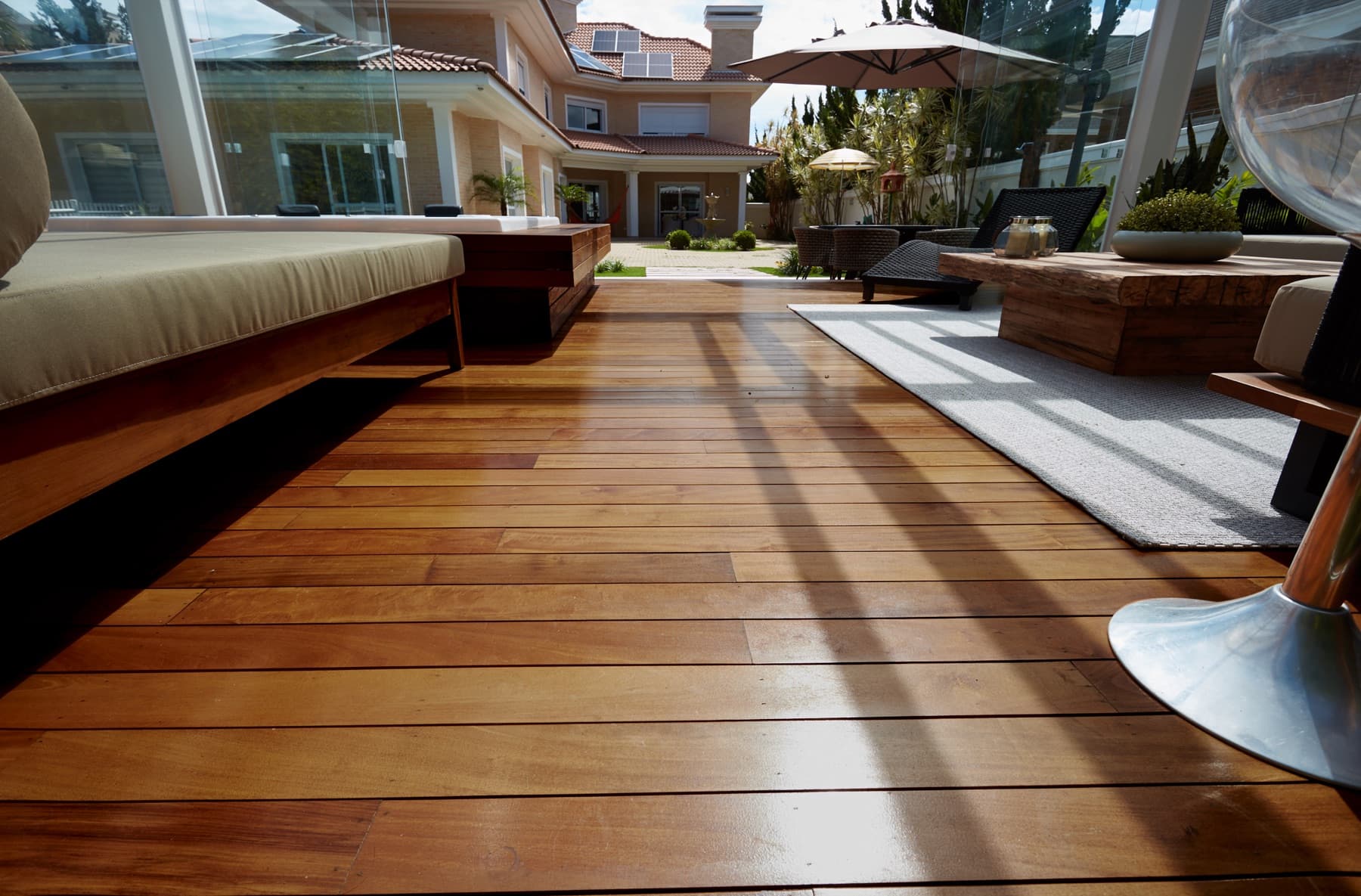
Evaluating Your Existing Deck Frame for Hardwood
Before selecting hardwood decking, a critical first step is to assess the condition and suitability of your existing deck frame. Hardwood, especially dense species like Ipe and Cumaru, is heavier than many other decking materials. This added weight requires the underlying structure to be robust and in excellent condition. Any signs of rot, insect damage, or structural weakness in joists, beams, or posts will need to be addressed before new decking can be installed. In Tampa, FL, the humid climate can accelerate wood decay, so a professional inspection is highly recommended.
Consider the spacing of your joists. Consult local building codes and manufacturer specifications for minimum requirements for your chosen hardwood species.
Comparing Hardwood Decking Species for Florida Climate
Several hardwood species are well-suited for outdoor use, with Ipe and Cumaru being prominent choices for their resilience. Ipe, also known as Brazilian walnut, is a dense and durable hardwood known for its reddish-brown to olive-brown tones and minimal movement post-installation. It is naturally resistant to weather changes, mold, and termites. Cumaru, another tropical hardwood, shares many of Ipe's durable qualities, offering stiffness, strength, and resistance to termites and weather changes. It also has a distinctive scent of cinnamon and vanilla when worked.
Both Ipe and Cumaru are recognized for their ability to withstand challenging outdoor conditions, including salt air and spray, making them suitable for coastal Florida applications. While Ipe is often considered the benchmark for durability, Cumaru provides a comparable option. Other species such as Garapa or Tigerwood offer different aesthetic profiles and characteristics, providing a range of choices depending on your design preferences and budget.
A key advantage of these hardwoods is their natural defense against rot, termites, and marine borers without chemical pressure treatment. They can be maintained with an annual wash and optional oiling to preserve their color, or allowed to weather to a silvery-gray patina without compromising structural integrity.
Material Takeoff for a Deck Renovation: A Worked Example
Let's consider a hypothetical deck renovation project in Tampa, FL, replacing the decking boards on an existing 12-foot by 16-foot rectangular deck.
First, calculate the total deck area: 12 feet * 16 feet = 192 square feet. The Ipe boards are 5.5 inches wide. To cover the 16-foot length, you'll need approximately (16 feet * 12 inches/foot) / 5.5 inches per board = 34.9 boards. Since you can't buy partial boards, you'll need 35 boards to cover the 16-foot length. For the 12-foot width, you'll need to determine how many 16-foot boards are required. Assuming minimal waste for cuts, a common approach is to calculate the linear footage needed. For a 12-foot wide section, and boards that are 5.5 inches wide, you will need 12 feet * 12 inches/foot / 5.5 inches/board = 26.18 boards. Since boards are typically sold in specific lengths (e.g., 8, 10, 12, 14, 16, 18, 20 feet), you would plan to use 16-foot boards to minimize butt joints across the deck's shorter dimension. You would need approximately 27 runs of 16-foot boards (26.18 rounded up to the nearest full board to account for potential cuts and waste).
Total linear footage: 27 boards * 16 feet/board = 432 linear feet. If the Ipe boards are available in 16-foot lengths, you would purchase 27 boards. Always add 10-15% for waste, cuts, and future repairs. So, 432 linear feet * 1.15 (15% waste) = 496.8 linear feet. Round up to the nearest full board length available, which might mean purchasing 31 boards of 16-foot length (31 * 16 = 496 linear feet). This example assumes a straightforward layout and standard board dimensions. Complex layouts, such as diagonal patterns or picture-frame borders, will require more detailed calculations and additional waste factor.
Considerations for Installation and Fastening
Due to the density of hardwoods like Ipe and Cumaru, specialized tools and techniques are often recommended for installation. Pre-drilling is typically necessary for fasteners to prevent splitting, and high-quality, corrosion-resistant fasteners are essential, especially in the humid, potentially salty environment of Tampa, FL. Hidden fastening systems can provide a clean, fastener-free surface appearance, while face-fastening offers a more traditional look with visible fasteners.
Proper board spacing is also critical for hardwood decking. Wood naturally expands and contracts with changes in moisture and temperature. Adequate spacing between boards allows for this movement and ensures proper drainage and ventilation, which is particularly important in Florida's climate to prevent moisture buildup and potential mold growth. Always follow the manufacturer's specific guidelines for board spacing for the chosen hardwood species and profile.
Maintenance and Longevity in a Florida Environment
Hardwood decking, particularly Ipe and Cumaru, is known for its longevity and resistance to environmental factors. In Tampa, FL, where decks are exposed to sun, humidity, and occasional heavy rains, this natural resilience is a significant advantage. While hardwoods like Ipe are highly resistant to rot, insects, and mold, they do require some maintenance to preserve their appearance and maximize their lifespan.
If you prefer to maintain the rich, natural color of your hardwood deck, an annual application of a UV-blocking oil or sealer is recommended. Without treatment, the wood will naturally weather to a silvery-gray patina over time, which does not affect its structural integrity. Regular cleaning with a mild cleaner and water will help remove dirt, pollen, and mildew, which can accumulate in humid conditions. Ensure any cleaning products are compatible with your specific hardwood species.
Before you order
- Assess existing deck frame for structural integrity and joist spacing.
- Determine required board profile and dimensions based on frame and desired aesthetic.
- Calculate total linear footage needed, adding 10-15% for waste.
- Choose between Ipe, Cumaru, or other hardwoods based on budget, appearance, and durability requirements.
- Confirm availability of desired profiles and lengths with your supplier.
- Plan for appropriate fasteners (hidden or face-fastened) and necessary pre-drilling.
- Consider ventilation and drainage design, especially in humid climates.
- Decide on desired finish: natural silvering or maintained color with UV-blocking oil.
- Research compatible cleaning and maintenance products for your selected hardwood.
Confirm installation details, approved uses and warranty terms in the current instructions for the exact product and profile. Your installer should verify the substrate, structure and applicable project requirements.
This is a planning guide for projects in Tampa, FL. Ask our team to confirm availability, delivery to your ZIP code and which branch can support your order.
Questions to help you decide
Can I reuse my existing deck frame for hardwood decking?
You can, provided the frame is structurally sound, free from rot or insect damage, and the joist spacing is appropriate for the chosen hardwood decking. Hardwood is dense, so the frame must be capable of supporting the additional weight. A professional inspection is recommended to confirm suitability.
How do I prevent my hardwood deck from turning gray in the Tampa sun?
To retain the original rich color of hardwood decking like Ipe or Cumaru, you will need to apply a UV-blocking oil or sealer annually. If left untreated, the wood will naturally weather to a silvery-gray patina, which is a common and accepted aesthetic that does not compromise the wood's structural integrity.
Is hardwood decking suitable for coastal areas in Florida?
Yes, species like Ipe and Cumaru are highly suitable for coastal environments. They are naturally resistant to salt air, spray, and marine borers, making them a durable choice for decks in areas like Tampa, FL. Many boardwalks and marine structures utilize these hardwoods for their exceptional resilience.
Ready to Transform Your Tampa Deck with Hardwood?
Request a material quote today. Provide your project dimensions, desired hardwood profile, and ZIP code to confirm current availability and service options for your renovation project.
Request a material quote →