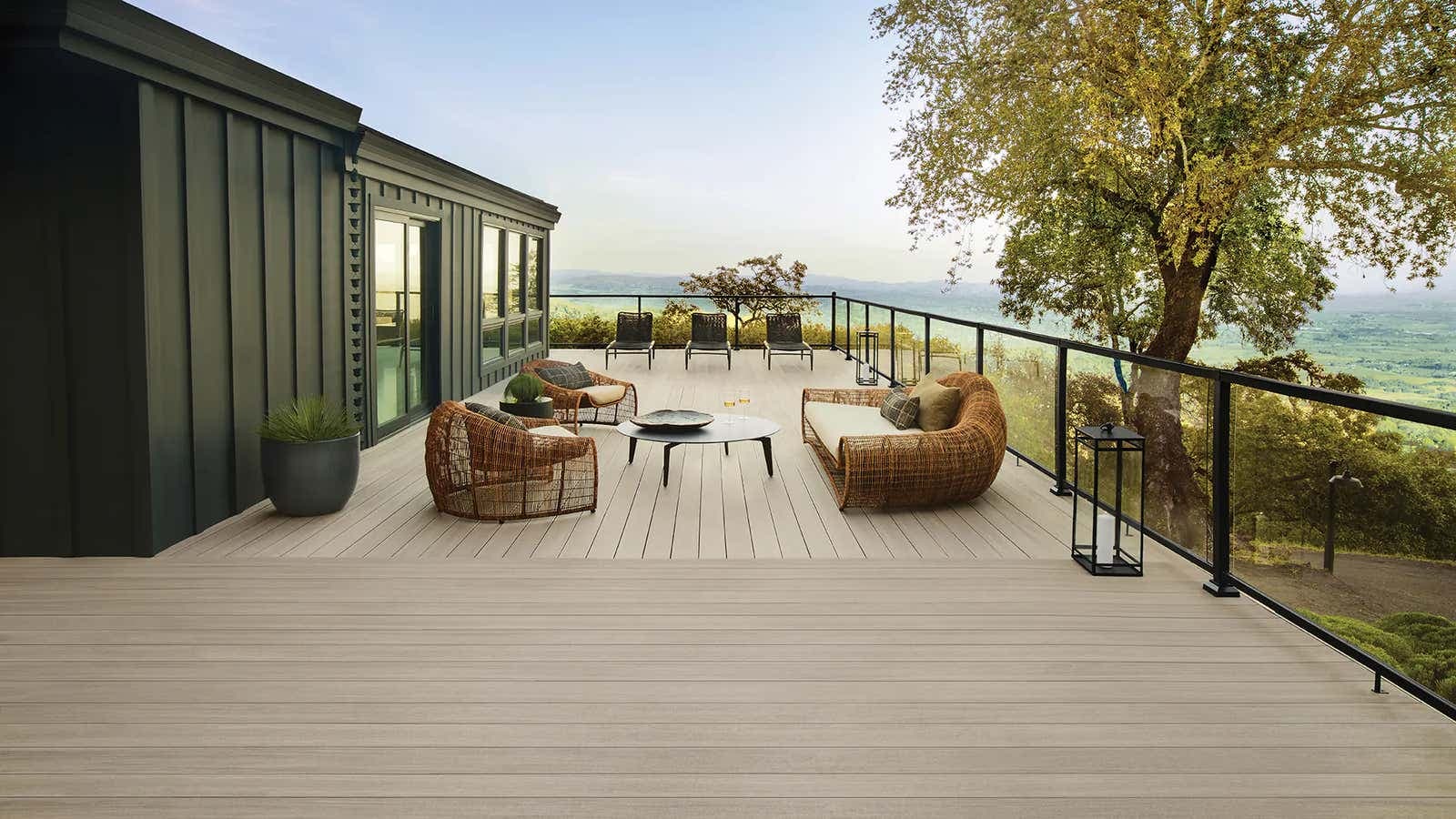
Understanding Composite Decking for Small Spaces
Composite decking is engineered from a blend of recycled wood fibers and plastic, offering a material that resists rot, splinters, and insect damage. For compact outdoor areas, its consistent dimensions and simplified installation can be a significant advantage.
Unlike traditional lumber, composite boards often come in standard lengths and profiles that can streamline planning and minimize waste, particularly when dealing with precise measurements common in smaller projects. Brands like Trex, TimberTech, and Fiberon offer a range of collections with various finishes and cap technologies that can enhance both appearance and performance.
Profiles and Dimensions for Limited Footprints
When working with compact spaces, the choice of decking profile and board dimensions can influence both the visual appeal and the structural requirements. Standard composite decking boards typically come in widths such as 5.5 inches or 7.25 inches, and various lengths.
For smaller areas, considering narrower boards can sometimes create the illusion of a larger space or allow for more intricate patterns. However, the primary consideration should be the structural support required for the chosen profile. Always verify the manufacturer's recommended joist spacing for the specific board profile to ensure adequate support and prevent deflection.
Support Systems for Compact Decks
The foundation of any deck, regardless of size, is its support system. For compact composite decks, this often involves a treated lumber substructure of joists and beams. In Tampa's humid climate, using ground-contact rated lumber for any components touching the ground, or above-ground rated for the superstructure, is a common practice.
For small patios or balconies, existing concrete slabs might serve as a base, but proper drainage and ventilation beneath the composite boards are still essential. Pedestal systems can be an option for creating a level surface over uneven concrete and facilitating airflow, but not all composite boards are designed for direct pedestal attachment. Always confirm compatibility with the specific decking product and pedestal system chosen.
Planning for Site Access and Installation in Tampa
One of the distinct challenges for compact outdoor spaces, especially in urban or residential areas like Tampa, is site access. Narrow side yards, gated entries, or multi-story balconies can limit the size of materials that can be easily transported to the project area. Planning for delivery and staging is critical.
Consider how full-length decking boards will be moved from the delivery point to the installation site. If access is severely restricted, it might be more practical to order shorter board lengths or plan for on-site cutting, if appropriate for the product and installation method. Confirming delivery options and any potential site limitations with your material supplier is an important step.
Worked Example: A 10' x 8' Balcony Deck
Let's consider a hypothetical 10-foot by 8-foot balcony in Tampa, accessible via a standard 3-foot wide doorway. The goal is to create a composite deck surface over an existing concrete slab, using 5.5-inch wide composite boards.
First, for the substructure, we'll assume a low-profile treated lumber frame is needed to level the surface and provide ventilation.
Accounting for cuts and potential waste, ordering 23-24 boards, each 8 feet long, would be a reasonable estimate. If 20-foot boards are available and access allows, cutting them into two 8-foot lengths (with a 4-foot offcut) could also be considered, but the 4-foot offcut might not be reusable for this specific deck. The exact quantity will depend on the chosen board length availability and cut plan.
Before you order
- Measure your compact space precisely, noting all obstructions and access points.
- Consider composite board width and length options that best fit your dimensions and access constraints.
- Verify the manufacturer's recommended joist spacing for your chosen composite decking profile.
- Plan your substructure: treated lumber frame, pedestals, or a combination.
- Assess site access for material delivery and staging. Can full-length boards be easily transported?
- Factor in ventilation and drainage requirements for the Tampa climate.
- Review available composite decking collections from brands like Trex, TimberTech, and Fiberon for suitable finishes and colors.
- Request a material quote with exact dimensions, preferred profile, and your project ZIP code.
Confirm installation details, approved uses and warranty terms in the current instructions for the exact product and profile. Your installer should verify the substrate, structure and applicable project requirements.
This is a planning guide for projects in Tampa, FL. Ask our team to confirm availability, delivery to your ZIP code and which branch can support your order.
Questions to help you decide
What are the best composite decking options for small balconies?
For small balconies, composite decking from brands like Trex, TimberTech, and Fiberon offers durable, low-maintenance options. The 'best' choice often depends on your aesthetic preference, desired finish, and the specific structural requirements of your balcony. Consider collections with a variety of colors and textures to complement your space. Always ensure the chosen decking is compatible with your balcony's load-bearing capacity and any required substructure.
How do I ensure proper drainage for a composite deck on a concrete patio?
Proper drainage under a composite deck built over a concrete patio is crucial, especially in Tampa's climate. You can achieve this by creating a slight slope in the concrete away from any structures, if possible. For the deck itself, use a substructure that elevates the composite boards off the concrete, allowing air circulation and water runoff. This can involve a treated lumber sleeper system or, if compatible with your decking, a pedestal system that creates a gap for drainage and airflow.
Is composite decking suitable for a sun-exposed compact area in Tampa?
Yes, composite decking is generally suitable for sun-exposed areas in Tampa. Many composite decking products, particularly those with capped shells, are engineered to resist fading and staining from UV exposure. Brands like Trex, TimberTech, and Fiberon offer collections with advanced capping technology designed to maintain color consistency over time. While some boards may feel warmer underfoot in direct sun, 'cooler-underfoot options' are available within certain collections. Always review the specific product's specifications for its performance characteristics in sunny conditions.
Ready to Plan Your Compact Composite Deck?
Submit your project dimensions, desired composite decking profile, and project ZIP code to request a material quote. We can help confirm current availability and service options for your Tampa, FL project. Explore our full range of composite decking options at our main composite decking page: /decking/composite. Also consider related decking materials such as general decking: /decking, hardwood decking: /decking/hardwood, Ipe hardwood decking: /decking/hardwood/ipe, and PVC decking: /decking/pvc.
Request a material quote →