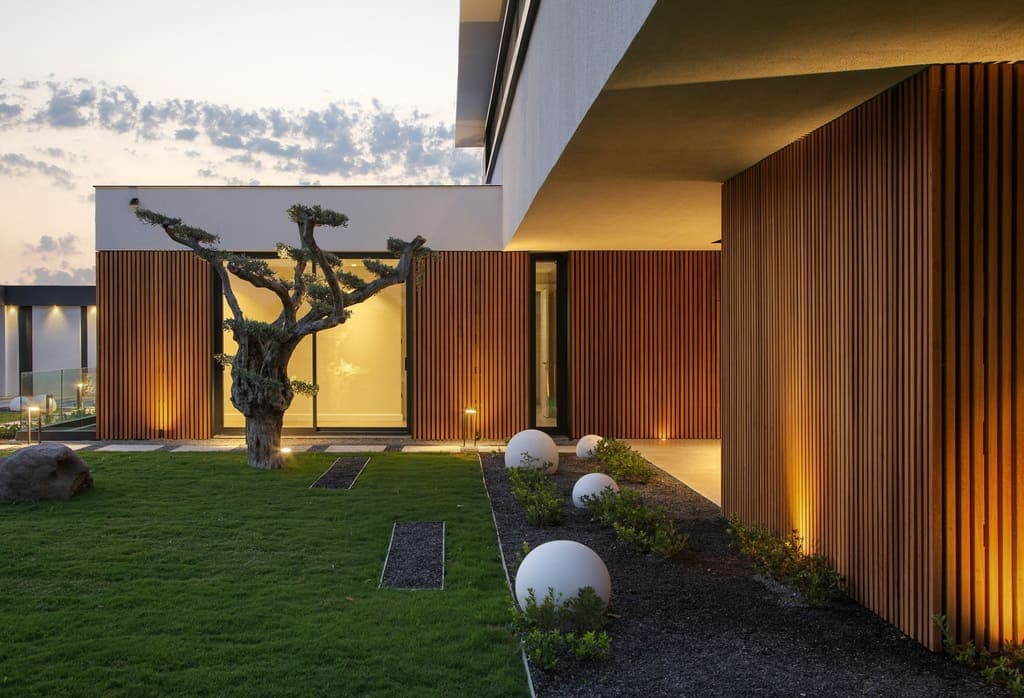
Understanding Thermally Modified Wood for Patio Walls
Thermally modified wood undergoes a high-temperature treatment process that alters its cellular structure. This process reduces the wood's ability to absorb moisture, which in turn enhances its dimensional stability and natural resistance to decay. For covered patio walls, this means a material less prone to warping, cupping, or swelling due to Savannah's humid climate.
Unlike untreated wood, thermally modified wood is often suitable for applications where some exposure to moisture is expected, even under cover. It retains the natural beauty of wood, offering a range of tones from lighter browns to richer, darker hues depending on the species and modification intensity. This makes it a versatile choice for creating inviting and durable patio spaces.
Selecting the Right Profile and Species
The aesthetic impact of your covered patio walls will be significantly influenced by the chosen profile. For thermally modified wood, common profiles include tongue and groove, shiplap, and square-edge boards. Tongue and groove profiles offer a seamless look with hidden fasteners, creating a tight, uniform surface. Shiplap provides a distinct shadow line, adding architectural interest and depth.
Square-edge boards can be installed with a visible gap for a more open, contemporary feel. Consider the overall design of your patio and home when making this selection. For example, a modern patio might benefit from clean lines of a shiplap or square-edge, while a more traditional design might lean towards tongue and groove.
Species like Thermally Modified Ash or Thermally Modified Pine are commonly available. Thermally Modified Ash often presents a richer, darker appearance and a prominent grain pattern. Thermally Modified Pine can offer a lighter, more uniform look. Review specific product details to understand the available species and their inherent characteristics.
Planning for Ventilation and Moisture Management
Even in a covered patio, proper ventilation behind the thermally modified wood cladding is crucial. This helps prevent moisture accumulation and allows the wood to breathe. A rainscreen assembly, while often associated with full exterior walls, can be adapted for covered patio applications to ensure airflow.
This typically involves installing furring strips or a drainage mat between the wall substrate and the thermally modified wood. This creates a small air gap that encourages drying and prevents moisture from getting trapped. Ensure that the design allows for air movement at the top and bottom of the wall assembly to facilitate this drying process. Proper detailing around the base of the wall and any openings is also important to prevent water ingress.
Finishing Options for Longevity and Aesthetics
Thermally modified wood can be left unfinished to weather naturally, developing a silver-gray patina over time. If you prefer to maintain the original wood color or enhance its tone, a finish is recommended. Clear sealers or transparent stains can protect the wood from UV degradation while allowing the natural grain to show through.
For covered patios, a finish can also offer an additional layer of protection against humidity and occasional splashes. Always select finishes specifically formulated for exterior wood applications and follow the manufacturer's recommendations for application and reapplication frequency. Regular cleaning and re-finishing, as needed, will help preserve the appearance of your patio walls.
Hypothetical Project Example: Savannah Covered Patio Wall
Consider a covered patio in Savannah, GA, with a wall section measuring 10 feet wide by 8 feet high that you wish to clad with Thermally Modified Ash shiplap. The chosen shiplap profile has an effective coverage width of 5.5 inches and comes in 8-foot lengths. The total area to cover is 80 square feet (10 ft x 8 ft).
To calculate the number of boards needed: First, convert the wall width to inches: 10 feet * 12 inches/foot = 120 inches. Divide the total width by the effective coverage width of each board: 120 inches / 5.5 inches/board 21.82 boards. Since you cannot purchase partial boards, you would need 22 boards. Each board is 8 feet long, matching the wall height, minimizing vertical cuts.
Therefore, for this 80 square foot section, you would purchase 22 boards of Thermally Modified Ash shiplap, each 5.5 inches by 8 feet. This calculation assumes minimal waste and straight cuts. It is always advisable to add an additional 5-10% for cuts, waste, and future repairs. For this project, consider adding 2-3 extra boards, bringing the total to 24-25 boards to ensure sufficient material.
Before you order
- Confirm the specific thermally modified wood species and profile (e.g., shiplap, tongue and groove) suitable for wall applications.
- Verify the level of coverage and protection offered by your patio structure. Is it truly 'covered' from direct rain and sun?
- Plan for proper ventilation and moisture management behind the cladding, even in a covered space.
- Decide on a finish (or no finish) and understand the maintenance implications.
- Calculate material quantities accurately, including waste factor, based on your specific patio wall dimensions.
- Consider the aesthetic impact of the profile and how it integrates with your existing home architecture.
- Investigate suitable fasteners and attachment methods for the chosen profile and substrate.
Confirm installation details, approved uses and warranty terms in the current instructions for the exact product and profile. Your installer should verify the substrate, structure and applicable project requirements.
This is a planning guide for projects in Savannah, GA. Ask our team to confirm availability, delivery to your ZIP code and which branch can support your order.
Questions to help you decide
Can thermally modified wood be painted for a covered patio wall?
While it can be painted, thermally modified wood is often chosen for its natural wood appearance. If painting, ensure the paint is suitable for exterior wood and adheres well to thermally modified surfaces. Always follow the paint manufacturer's recommendations for surface preparation and application.
How does Savannah's humidity affect thermally modified wood?
Thermally modified wood has enhanced dimensional stability and reduced moisture absorption compared to untreated wood. This makes it more resilient to the high humidity typical of Savannah, GA, helping to minimize warping and swelling. However, proper ventilation and installation remain key to long-term performance.
What kind of maintenance is required for thermally modified wood patio walls?
Maintenance depends on whether the wood is finished or left to weather naturally. Unfinished wood will develop a silver-gray patina and may only require occasional cleaning. Finished wood will need periodic cleaning and reapplication of the chosen finish (stain or sealer) according to the product manufacturer's guidelines to maintain its appearance and protection.
Ready to Enhance Your Savannah Covered Patio?
Request a material quote for thermally modified wood. Provide your project dimensions, desired profile, and ZIP code to confirm current availability and service options.
Request a material quote →