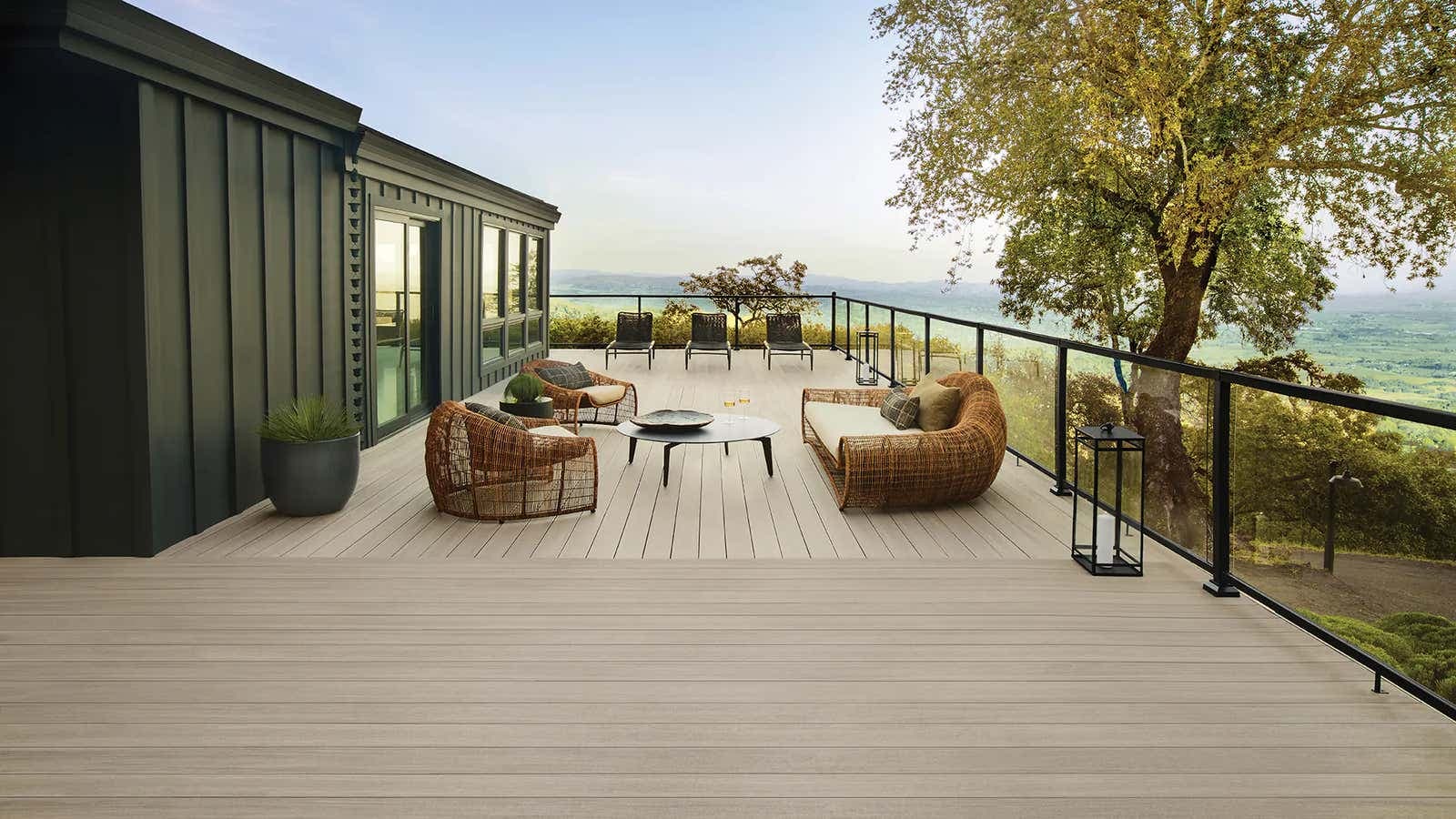
Defining Your Compact Space and Its Purpose
Before selecting materials, clearly define the boundaries and primary function of your compact outdoor area. Is it a small balcony for morning coffee, a narrow side yard intended for a quiet reading spot, or a courtyard patio designed for intimate gatherings? Understanding the intended use will guide decisions on board profiles, colors, and any accompanying features like planters or seating.
Consider the existing elements, such as adjacent walls, fences, or landscaping. How will the new deck integrate with these? For instance, a deck extending from a back door into a small courtyard might benefit from a lighter color to reflect light and make the space feel larger, while a deck in a shaded corner could use warmer tones to add coziness. The specific dimensions of your space will also influence board length choices and potential cutting plans to minimize waste and visual breaks.
Material Selection: Brands and Profiles for Smaller Decks
Lumber Plus offers composite decking from manufacturers such as Trex, TimberTech, and Fiberon. These brands provide various collections, colors, and board profiles suitable for diverse project needs. For compact spaces, consider factors beyond just aesthetics, such as board width and thickness, which can impact the perceived scale of the area.
Wider boards might make a small space feel expansive, while narrower boards can create a sense of intricate detail. Some collections offer multi-tonal boards or wood-grain textures that can add visual depth without overwhelming a smaller footprint. When planning, review the specific product documentation for each collection to understand available lengths, widths, and any recommended installation gaps. This detail is crucial for precise material takeoff and layout planning.
For example, Trex offers various lines with different aesthetics and core compositions. TimberTech also provides multiple collections, some featuring advanced capping for enhanced durability. Fiberon offers a range of colors and surface textures designed for both visual appeal and performance. Each brand provides options that can be tailored to the specific design goals of a compact Savannah outdoor space.
Remember that composite decking is typically quoted by collection, color, profile, quantity, and project ZIP code. We recommend reviewing manufacturer specifications for details on board dimensions, profiles, and any specific installation requirements before making a final selection.
Maximizing Usable Space: Design Strategies
In a compact area, every square foot counts. Consider design strategies that enhance usability without cluttering the space. Built-in benches or planters, for example, can serve multiple functions and eliminate the need for freestanding furniture that might obstruct pathways.
A diagonal board layout can sometimes make a small deck appear larger by drawing the eye across the space, rather than along its shortest dimension. However, this approach typically requires more cuts and may result in greater material waste. Another strategy is to use a picture-frame border, which can define the edge of the deck and provide a finished look, especially when transitioning to other surfaces like paving or landscaping. Ensure any border design is compatible with the chosen composite decking collection.
For very narrow spaces, consider a single-direction board layout that runs parallel to the longest dimension to emphasize length. Integrating low-profile lighting can also extend the usability of the deck into the evening hours without occupying valuable floor space.
Installation Considerations for Restricted Access
Savannah's urban and historic areas often feature properties with limited access, which can impact decking installation. Consider the logistics of material delivery and storage. Will boards need to be carried through a narrow gate, an alleyway, or even through the house? Long composite boards, while efficient for installation on larger decks, might be challenging to maneuver in confined spaces.
The installation process itself may require working in tighter quarters. Ensure that there is adequate room for installers to work safely and efficiently. Planning for any necessary cuts to boards in a designated area, rather than directly on the small deck, can help maintain a cleaner and more organized workspace. Discussing site access with your installer in advance can help prevent delays and unforeseen challenges.
It is important to adhere to manufacturer-specified gapping between boards. While not directly related to compact spaces, proper spacing is critical for drainage and material performance. Manufacturer guidelines for composite decking often specify gaps to allow for thermal expansion and contraction, which is important for the longevity of the deck structure.
Worked Example: A 6x10 Foot Courtyard Deck
Let's consider a hypothetical 6-foot by 10-foot courtyard space that needs a new deck. The goal is to create a small seating area. We'll assume a standard composite decking board width of 5.5 inches (0.458 feet) and available lengths of 12 feet and 16 feet.
For a 6-foot width, laying boards parallel to the 10-foot dimension:
Number of boards needed across the 6-foot width: 6 feet / 0.458 feet/board at approximately 13.1 boards. Since partial boards are not purchased, you would need 14 boards for the width.
For the 10-foot length, you could use 12-foot boards, which would result in a 2-foot offcut per board. If these offcuts are not reusable for other sections (e.g., a border or a smaller area), this could lead to waste. Alternatively, if 10-foot boards were available, they would be ideal.
Total boards (12-foot length): 14 boards * 12 feet/board = 168 linear feet.
If you chose a diagonal layout, it would require more material due to the increased cutting and waste along the perimeter. For a 6x10 rectangle, the longest diagonal is approximately 11.66 feet. Boards would need to be longer than this, and the angular cuts would generate more unusable offcuts. This would increase the total linear footage required, potentially by 15-20% or more, depending on the angle and board width.
This example illustrates that even for a small deck, careful planning of board direction and length can impact material costs and waste. Always confirm available board lengths and widths for your chosen collection and plan your layout to minimize cuts and maximize material efficiency. The final purchase quantity will be based on full boards, not just the exact square footage.
Before you order
- What is the primary function of your compact outdoor space?
- What are the precise dimensions of the area to be decked?
- Are there any existing structures or landscaping that need to be integrated or avoided?
- What color and texture aesthetic will best complement your home and make the space feel inviting?
- Which composite decking collection (Trex, TimberTech, Fiberon) offers the desired profile and durability?
- What are the available board lengths and widths for your chosen product, and how do they impact your layout and waste?
- Have you considered design elements like built-in seating, planters, or a picture-frame border?
- What are the site access limitations for material delivery and installation?
- Who will be installing the deck, and have they reviewed the site access and product specifications?
- Have you accounted for proper board gapping as per manufacturer instructions?
- Have you requested a material quote with your specific project dimensions and ZIP code?
Confirm installation details, approved uses and warranty terms in the current instructions for the exact product and profile. Your installer should verify the substrate, structure and applicable project requirements.
This is a planning guide for projects in Savannah, GA. Ask our team to confirm availability, delivery to your ZIP code and which branch can support your order.
Questions to help you decide
Can I install composite decking directly over an existing patio?
Installing composite decking over an existing patio typically requires a new substructure to ensure proper ventilation, drainage, and a level surface. Direct installation without a suitable frame can lead to moisture issues, void warranties, and compromise the deck's stability. Always consult manufacturer guidelines for substructure requirements and local building codes for proper installation.
How do I choose a composite decking color for a small, shaded area?
For small, shaded areas, lighter colors can help reflect light, making the space feel more open and brighter. However, warmer, medium tones can also create a cozy and inviting atmosphere. Consider the surrounding elements, such as house color and existing landscaping, and obtain physical samples to see how they appear in the actual light conditions of your space.
What maintenance does composite decking require in a humid climate like Savannah's?
Composite decking is designed for low maintenance. In humid climates, an annual wash with soap and water is generally sufficient to remove dirt, pollen, and mildew. Some manufacturers offer capped composite boards that are particularly resistant to moisture and mildew. Always refer to the specific manufacturer's cleaning and care instructions for your chosen product to ensure proper maintenance and to avoid using incompatible cleaning agents.
Start Planning Your Compact Deck Project
Ready to transform your compact outdoor space in Savannah, GA? Contact Lumber Plus to request a material quote. Provide your project dimensions, desired composite decking profile, and ZIP code to confirm current availability and service options. Our team can assist you with material selection and quantity estimates for your specific project.
Request a material quote →