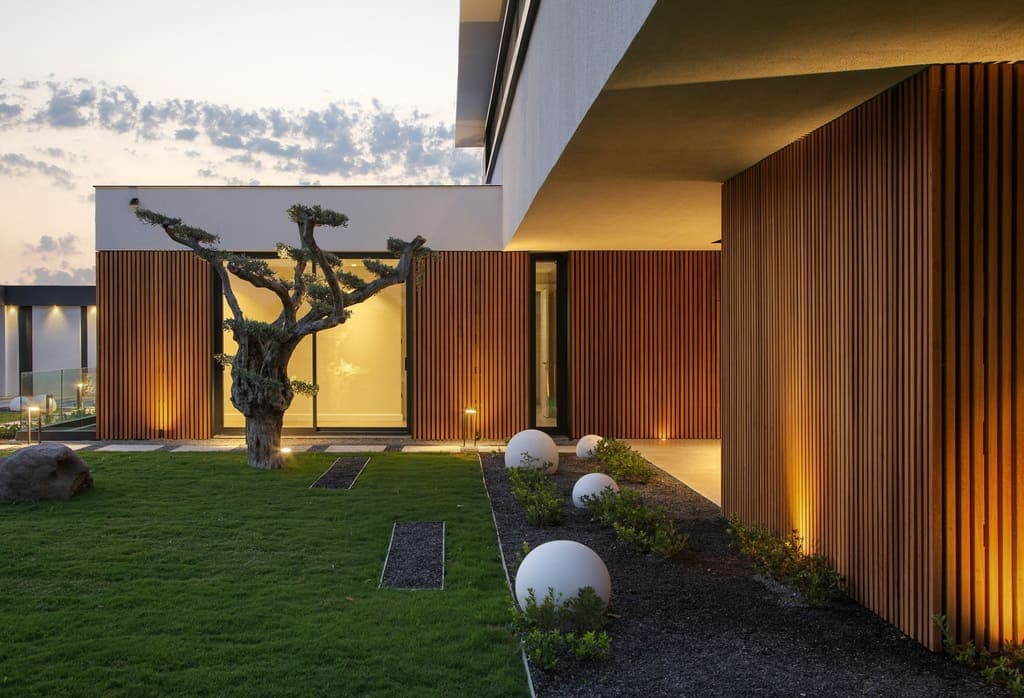
Understanding Thermally Modified Wood for Wall Applications
Thermally modified wood is a material that has been subjected to elevated temperatures in a controlled environment. This modification process aims to reduce the wood's hygroscopicity, meaning its tendency to absorb and release moisture. For covered patio walls, this reduced moisture movement can contribute to greater dimensional stability, which is particularly relevant in environments like Salt Lake City, where humidity levels can fluctuate.
While thermally modified wood is often considered for exterior cladding, its characteristics also make it suitable for covered, vertical applications. The thermal modification process typically darkens the wood, offering a rich, consistent color throughout the material. This color can be maintained with a finish or allowed to weather naturally to a silver-gray patina, depending on the project's aesthetic goals and the degree of protection from direct sunlight and rain on the patio wall.
Choosing the Right Profile and Species
When selecting thermally modified wood for covered patio walls, the profile plays a significant role in the final appearance and installation. Common profiles include tongue-and-groove, shiplap, and square-edge. Tongue-and-groove profiles offer a tight, interlocking fit, which can be advantageous for a clean, continuous look and can help conceal fasteners. Shiplap provides a distinctive shadow line, adding depth and architectural interest.
Square-edge boards can be installed with a visible gap for a more open, contemporary aesthetic, requiring careful consideration of the substructure and potential for visibility through the gaps. The choice of profile should align with the desired visual effect and the level of finish protection expected for the wall. Lumber Plus offers thermally modified wood in various profiles, which can be explored at our product page: [https://lumberplus.com/thermally-modified-wood](https://lumberplus.com/thermally-modified-wood).
Common species used for thermal modification include Ash, Poplar, and Spruce. Each species will have distinct grain patterns and initial color variations, even after modification. Ash, for example, often presents a more pronounced grain, while Poplar can offer a smoother, more uniform appearance. The choice of species can influence the overall character of the covered patio wall.
Finishing and Maintenance for Covered Patio Walls
Even in a covered application, thermally modified wood can benefit from a protective finish, particularly to maintain its initial color and provide an additional layer of defense against UV exposure and occasional moisture. Clear penetrating oils or stains designed for exterior wood can enhance the wood's natural tones and offer UV inhibitors. The degree of protection from the patio's cover will influence the frequency of reapplication required.
If a natural silver-gray patina is desired, the wood can be left unfinished. However, even unfinished wood will benefit from periodic cleaning to remove dirt, pollen, and other environmental deposits. For covered patio walls, maintenance is generally less intensive than for fully exposed siding but remains important for preserving the material's appearance over time. Always consult the finish manufacturer's instructions for application and maintenance guidelines.
Consider the overall aesthetic of your patio. If you are aiming for a cohesive look, you might also explore siding and cladding options that complement thermally modified wood, such as those found here: [https://lumberplus.com/siding-and-cladding](https://lumberplus.com/siding-and-cladding).
Installation Considerations for Salt Lake City
For covered patio walls in Salt Lake City, proper installation is key to the longevity and performance of thermally modified wood. While protected, the walls are still exposed to temperature fluctuations. Ensuring adequate ventilation behind the cladding is important. This typically involves using furring strips to create an air gap between the wood and the underlying wall structure. This air gap allows any moisture that might accumulate to dry out and helps to equalize pressure across the wall assembly.
Fastening methods should account for the wood's inherent stability. Hidden fasteners are often preferred for a clean aesthetic, especially with tongue-and-groove profiles. Face fastening with corrosion-resistant screws can also be used, provided the fasteners are appropriate for the wood species and exposure conditions. Always follow manufacturer guidelines for fastener type, spacing, and pre-drilling, if recommended, to prevent splitting.
Consider the detailing around any openings, corners, or transitions to other materials. Proper flashing and sealing are crucial to prevent water intrusion, even on a covered patio. While Salt Lake City does not experience the same level of precipitation as some coastal areas, occasional rain and snowmelt can still affect wall components.
Worked Example: Covered Patio Wall in Salt Lake City
Consider a covered patio with a single wall section that is 10 feet wide and 8 feet high, intended to feature a thermally modified wood accent. The homeowner desires a modern look with a subtle shadow line.
They select thermally modified Ash in a shiplap profile, with boards measuring 5.5 inches wide (actual coverage) and available in 10-foot lengths. The goal is to install them horizontally.
**Calculation:** 1. **Total wall area:** 10 feet (width) * 8 feet (height) = 80 square feet. 2. **Number of boards needed vertically:** 8 feet (height) / (5.5 inches / 12 inches/foot) = 8 / 0.4583 = 17.45 boards. Since boards are typically installed as full pieces or cut, and we are installing horizontally, we need to consider how many 10-foot boards are needed to cover the 8-foot height. 3. **Linear feet of coverage per board:** Each board is 10 feet long. 4. **Number of horizontal rows:** 8 feet (height) / (5.5 inches actual coverage / 12 inches/foot) = 17.45 rows. Since we can't have partial rows, we'll need 18 rows to ensure full coverage, allowing for minor adjustments or a small rip cut at the top/bottom if needed for a precise fit. 5. **Total linear feet of material:** 18 rows * 10 feet/row = 180 linear feet.
This calculation provides a baseline. It's always advisable to add 10-15% for waste, cuts, and potential future repairs. For this project, a purchase of approximately 200-207 linear feet (20-21 boards) would be a practical estimate for this specific wall section. The homeowner also plans to apply a clear, UV-inhibiting oil finish to maintain the rich brown tones of the thermally modified Ash.
For complementary materials, consider exploring NORX brand products for other outdoor elements: [https://lumberplus.com/brands/norx](https://lumberplus.com/brands/norx).
Before you order
- Verify local building codes and HOA requirements for patio wall materials.
- Assess the degree of protection offered by the patio cover: full rain/sun protection, or partial exposure?
- Choose a thermally modified wood species (e.g., Ash, Poplar) based on desired grain and color.
- Select a profile (e.g., tongue-and-groove, shiplap, square-edge) that aligns with aesthetic goals.
- Decide on a finish: natural weathering or a protective oil/stain to maintain color.
- Plan for ventilation behind the wall cladding using furring strips.
- Determine fastening method (hidden or face-fastened) and select appropriate corrosion-resistant fasteners.
- Measure the wall dimensions accurately, accounting for any openings or transitions.
- Calculate material quantities, adding waste factor for cuts and contingencies.
- Consider complementary materials for the rest of the patio space.
Confirm installation details, approved uses and warranty terms in the current instructions for the exact product and profile. Your installer should verify the substrate, structure and applicable project requirements.
This is a planning guide for projects in Salt Lake City, UT. Ask our team to confirm availability, delivery to your ZIP code and which branch can support your order.
Questions to help you decide
Can thermally modified wood be painted?
While thermally modified wood can be painted, it's often chosen for its natural wood appearance and enhanced stability. Painting would obscure the natural grain and may require specific primers and paints designed for modified wood. Most users opt for clear or semi-transparent stains/oils to highlight the wood's inherent beauty. If painting is desired, consult with a paint manufacturer for compatible products and application methods.
How does Salt Lake City's climate affect thermally modified wood?
Salt Lake City experiences distinct seasons with temperature fluctuations and relatively low humidity, though occasional precipitation occurs. Thermally modified wood's enhanced dimensional stability can help it resist warping, twisting, and checking that might be more pronounced in unmodified wood exposed to these conditions. For covered patio walls, the protection from direct sun and heavy rain further benefits the material, reducing the effects of UV degradation and moisture cycling.
Is thermally modified wood suitable for structural elements on a patio?
Thermally modified wood is typically used for non-structural applications such as cladding, siding, decking surfaces, and decorative elements. The thermal modification process primarily enhances durability and dimensional stability, not necessarily its structural load-bearing capacity. For structural components of a patio, such as beams, posts, or joists, traditional structural lumber or engineered wood products should be used. Always consult with a structural engineer for load-bearing applications.
Ready to Plan Your Covered Patio Walls?
Request a material quote with your project dimensions, exact profile, and ZIP code to confirm current availability and service options for thermally modified wood. Our team can help you select the right materials for your Salt Lake City project.
Request a material quote →