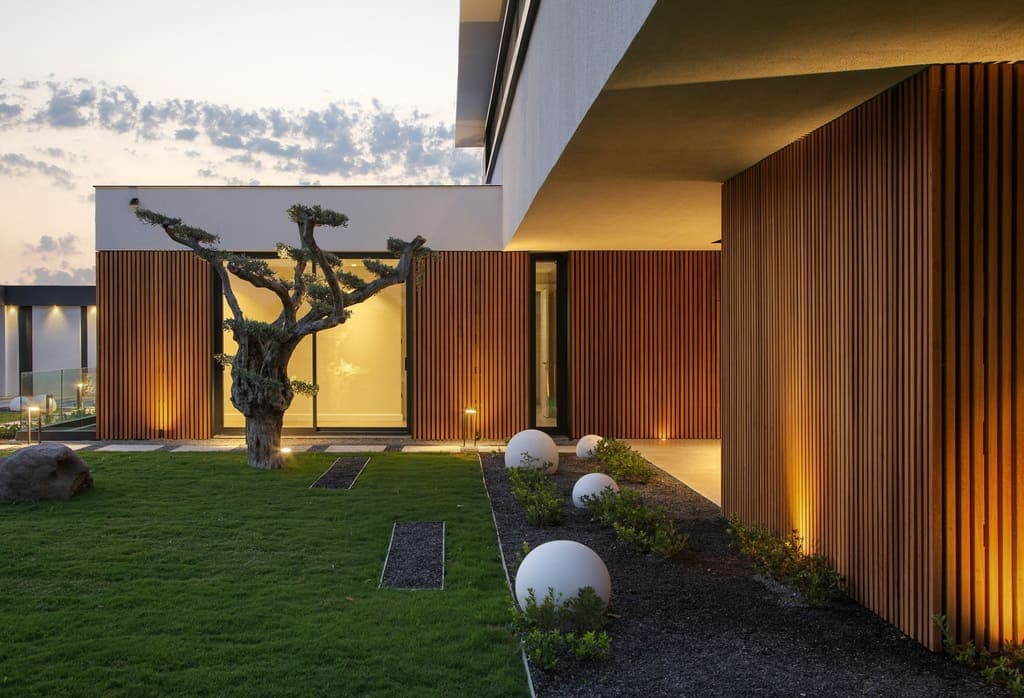
Understanding Covered Patio Wall Exposure in Park City
Park City's climate presents specific challenges, including significant temperature fluctuations and snowfall. While a covered patio protects walls from direct rain and snow, they are still exposed to ambient humidity, indirect sunlight, and temperature shifts. This 'covered but exposed' condition means that materials must be able to manage moisture changes without excessive movement or degradation. Thermally modified wood, through its heat treatment process, acquires increased dimensional stability and reduced water absorption, which can be beneficial in these conditions.
The degree of coverage is critical. A wall fully recessed under a deep overhang will experience different conditions than one partially exposed to prevailing winds and incidental precipitation. Assess the specific sun path, wind patterns, and roofline of your patio to determine the exact exposure level of the walls.
Choosing the Right Thermally Modified Wood Species and Profile
Thermally modified wood is available in various species, each with unique characteristics that can influence the final look and feel of your covered patio. Common species include ash, pine, and spruce, which, after thermal modification, typically exhibit a deepened, richer tone. The specific species can also affect the grain pattern and density.
For covered patio walls, a range of profiles can be considered. Shiplap, tongue-and-groove, and board-and-batten are popular choices that offer different aesthetic effects and installation methods. Shiplap provides a clean, overlapping joint, while tongue-and-groove offers a tighter fit, often preferred for a more seamless appearance. Board-and-batten creates a more traditional, textured look with vertical lines. The choice of profile should complement the overall architectural style of your home and patio.
Consider the nominal dimensions and how they will interact with the visual scale of your patio. Wider boards can create a more expansive feel, while narrower boards can add intricate detail. The profile also dictates how shadows are cast, adding depth and character to the wall surface.
Finishing and Maintenance for Covered Patio Walls
While thermally modified wood is known for its enhanced durability, applying a finish can further protect it and influence its appearance. For covered patio walls, a clear sealant or a semi-transparent stain can preserve the wood's natural color and grain while offering additional UV protection and moisture resistance. If left unfinished, thermally modified wood will gradually weather to a silvery-gray patina, a natural process that many homeowners find appealing.
Maintenance for covered patio walls typically involves periodic cleaning to remove dust, pollen, and any mildew that may accumulate due to humidity. A mild soap and water solution with a soft brush or cloth is often sufficient. If a finish has been applied, reapplication may be necessary every few years, depending on the product and exposure conditions.
The decision to finish or not should align with your aesthetic preference and willingness to perform maintenance. An unfinished look embraces natural aging, while a finished surface requires more upkeep but maintains a more consistent color.
Attachment Methods and Substructure Considerations
Proper attachment is crucial for the longevity and stability of thermally modified wood walls. For covered patio applications, direct fastening into a suitable substructure is common. The substructure could be existing framing, furring strips, or a rainscreen system, depending on the wall assembly. Using corrosion-resistant fasteners, such as stainless steel screws, is recommended to prevent staining and ensure long-term holding power, especially in humid environments.
When installing boards, allow for minor expansion and contraction, even with the enhanced stability of thermally modified wood. Follow manufacturer guidelines for spacing between boards and at corners. For a rainscreen assembly, furring strips create an air gap behind the cladding, promoting drainage and ventilation, which can be beneficial even in covered applications by helping to manage ambient moisture.
Consider the weight of the chosen thermally modified wood profile and ensure the substructure can adequately support it. For horizontal installations, ensure each board is supported at appropriate intervals to prevent sagging over time.
Example: Covered Patio Wall for a Park City Residence
Imagine a covered patio in Park City with existing timber posts and beams, creating an opening for a new feature wall. The desired dimensions for this wall are 12 feet long by 8 feet high. The homeowner seeks a modern aesthetic with clear lines and a warm, medium-brown tone.
For this project, thermally modified ash tongue-and-groove boards, 5.5 inches wide (nominal coverage) and 12 feet long, are selected. These boards offer a rich, consistent color and a clean, interlocking profile. To achieve the desired color and provide additional protection, a semi-transparent, UV-resistant stain in a medium walnut tone is chosen.
The thermally modified ash boards are then fastened vertically to the furring strips using stainless steel trim screws, concealed within the tongue for a clean finish. Each 12-foot board covers 5.5 inches horizontally. To cover the 12-foot length, approximately 26 boards (144 inches / 5.5 inches per board = 26.18) are needed. For the 8-foot height, the 12-foot long boards are cut, with care taken to optimize cuts and minimize waste. The total area is 96 square feet (12 ft x 8 ft). Assuming some waste for cuts and potential off-cuts not being perfectly reusable, purchasing 28 boards provides a conservative estimate. The project also includes finishing the cut ends with the same stain to ensure consistent protection and appearance.
This approach provides a durable, visually striking wall that complements the natural surroundings of Park City while offering enhanced performance against local climatic conditions.
Before you order
- Assess specific sun, wind, and moisture exposure for your covered patio walls.
- Select a thermally modified wood species that aligns with your aesthetic and performance goals.
- Choose a profile (shiplap, T&G, etc.) that complements your design and installation method.
- Decide on a finish: unfinished for natural graying, or a stain/sealant for color and protection.
- Plan for proper substructure and attachment methods, using corrosion-resistant fasteners.
- Consider ventilation and drainage even in covered applications, especially in humid climates.
- Calculate material quantities, accounting for waste and optimal board lengths.
- Review local building practices and any applicable codes for exterior wall coverings.
Confirm installation details, approved uses and warranty terms in the current instructions for the exact product and profile. Your installer should verify the substrate, structure and applicable project requirements.
This is a planning guide for projects in Park City, UT. Ask our team to confirm availability, delivery to your ZIP code and which branch can support your order.
Questions to help you decide
Does thermally modified wood require a finish for covered patio walls?
While thermally modified wood is more dimensionally stable and resistant to decay, a finish can offer additional UV protection and help maintain its original color. If left unfinished, it will naturally weather to a silver-gray patina over time. The choice depends on your desired aesthetic and maintenance commitment.
Can thermally modified wood be installed directly against an existing wall?
For optimal performance, especially in areas with fluctuating humidity like Park City, installing thermally modified wood over furring strips to create a ventilation gap (a rainscreen assembly) is often recommended. This allows air circulation and helps manage moisture, even in covered applications. Direct attachment might be possible depending on the specific product and wall assembly, but always consult manufacturer guidelines.
How do I clean thermally modified wood on a covered patio wall?
Regular cleaning with a mild soap and water solution, applied with a soft brush or cloth, is typically sufficient to remove dust, pollen, and light grime. Avoid harsh chemicals or high-pressure washers, which can damage the wood or its finish. Ensure the wall has adequate time to dry after cleaning.
Ready to Enhance Your Park City Covered Patio?
Request a material quote for your project. Provide your project dimensions, desired thermally modified wood species and profile, and your ZIP code to confirm current availability and service options. Explore our full range of <a href="/thermally-modified-wood">thermally modified wood</a>, <a href="/siding-and-cladding">siding and cladding</a>, and <a href="/brands/norx">NORX products</a> to find the perfect fit for your home.
Request a material quote →