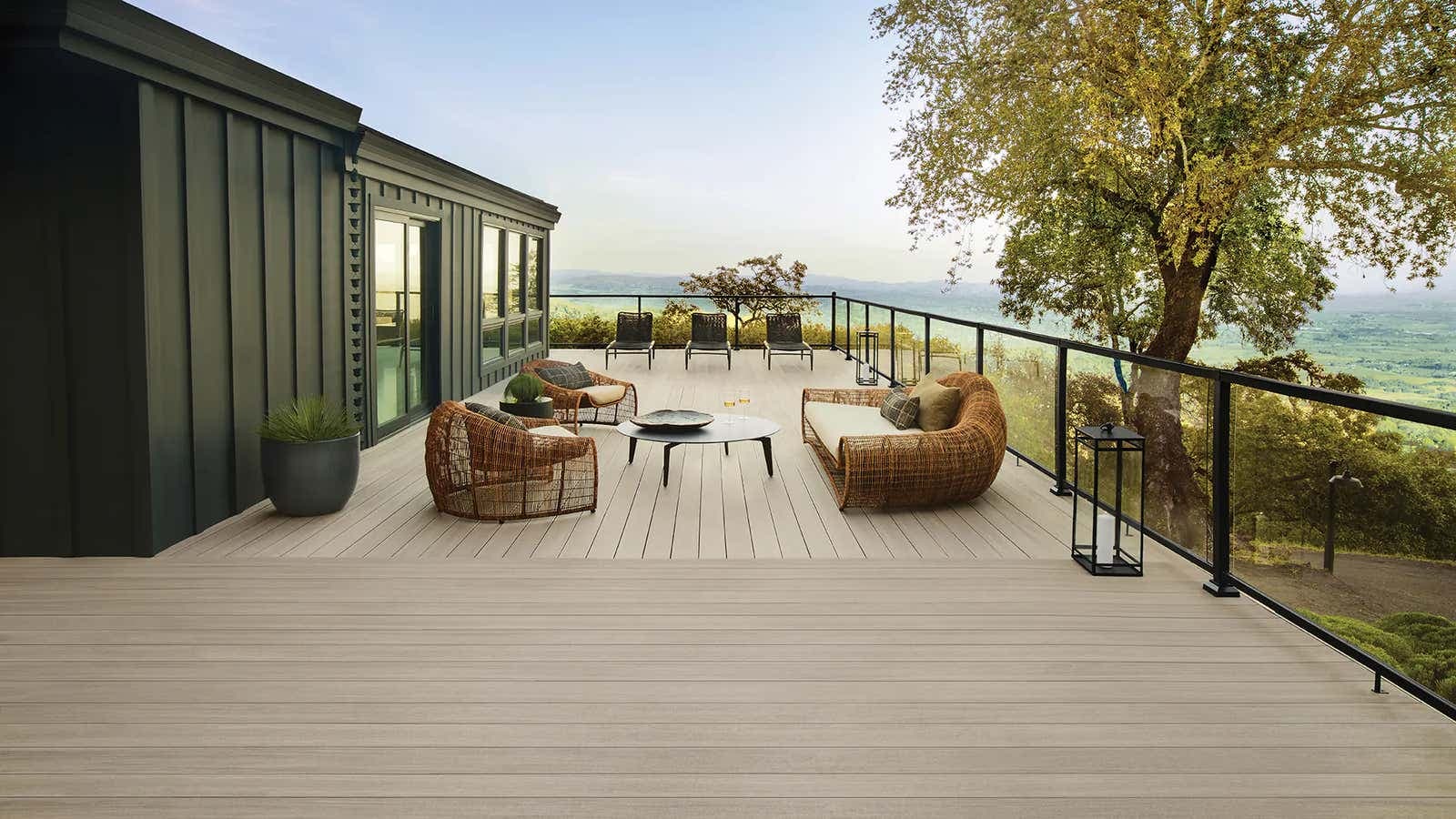
Why Composite Decking for Compact Spaces?
For smaller outdoor areas, composite decking provides several distinct advantages. Its uniform dimensions and predictable performance help minimize waste and simplify cutting, which is beneficial when working with precise layouts in limited footprints. The material's resistance to rot, splinters, and insect damage means less need for extensive repairs or replacements, a practical consideration for decks that might be difficult to access for ongoing work.
Furthermore, many composite decking options feature capped shells that are designed to resist fading and staining, reducing the need for frequent cleaning or sealing. This characteristic is particularly valuable for small urban decks or balconies where regular, intensive maintenance could be disruptive or impractical. With options from manufacturers like Trex, TimberTech, and Fiberon, you can find a range of colors and textures that can complement your home's aesthetic without demanding significant upkeep.
The consistent appearance of composite boards also allows for a cohesive look, which can make a small space feel more intentional and organized. For projects where every detail contributes to the overall impression, the reliability of composite materials can be a key factor.
Maximizing Usable Space with Board Profiles and Layouts
In compact outdoor settings, the choice of board profile and layout can significantly impact the perception and utility of the space. Narrower composite boards, for instance, can sometimes create an illusion of greater length or width, making a small deck feel more expansive. Consider board widths and how they align with the dominant dimension of your deck.
A diagonal layout, while potentially requiring more cuts, can also visually expand a space by drawing the eye across the deck rather than along its shortest dimension. However, for very small, rectangular balconies, a simple linear layout parallel to the longest edge might be the most efficient in terms of material use and installation time.
Another consideration is the use of a picture-frame border. While it adds a finishing touch, for extremely compact spaces, it can sometimes visually reduce the perceived area. Balance the aesthetic appeal of a border with the practical need to maximize every inch of usable surface. Review different board profiles available, such as grooved boards for hidden fasteners or solid edge boards for exposed fastening, to determine which best suits your project's scale and desired finish.
Deck Support Systems for Compact Decks
The foundation of any deck is crucial, and for compact spaces, the support system needs to be robust yet space-efficient. Traditional joist and beam construction is common, but for very low-profile decks or those over existing concrete slabs, alternative systems might be considered. Always consult with a structural engineer or a qualified contractor to ensure the chosen support system is appropriate for your specific site conditions and local building codes.
For decks built over existing concrete or hard surfaces, adjustable pedestals or low-clearance framing systems can be an option, provided they are compatible with your chosen composite decking and meet all structural requirements. These systems can help create a level surface and allow for drainage underneath, which is important for the longevity of both the deck and the underlying structure.
Ensure adequate ventilation beneath the deck, regardless of the support system. Even in compact areas, proper airflow helps prevent moisture buildup, which is essential for the long-term performance of the decking materials and the supporting structure. Refer to manufacturer guidelines for specific ventilation requirements for your chosen composite decking collection.
Installation and Accessibility in Restricted Areas
Installing decking in a compact outdoor space often presents unique challenges regarding access and maneuverability. Long boards can be difficult to transport through narrow doorways, up stairs, or onto balconies. Planning for material delivery and staging is critical. Confirm that board lengths can be safely moved to the installation site.
The use of hidden fastening systems, while aesthetically pleasing, can sometimes require more precise board alignment and specialized tools, which might be more challenging in tight spaces. Face fastening, while visible, can sometimes be quicker and simpler for DIYers or in areas where access for hidden fastener installation is difficult. Evaluate the trade-offs between appearance, installation complexity, and site accessibility.
Consider the tools required for cutting and fastening. For smaller projects, a miter saw might be sufficient, but ensure there's adequate space for safe operation. Plan for debris removal and material offcuts, as these can quickly accumulate and restrict an already small working area.
Example Project: A 6-foot by 10-foot Balcony Deck
Consider a hypothetical balcony in Park City, UT, measuring 6 feet wide by 10 feet long. The goal is to install composite decking that is durable and requires minimal maintenance.
For this 60-square-foot area, let's assume we choose a standard 12-foot long composite decking board, approximately 5.5 inches wide, from a collection like Trex Enhance Naturals. To minimize seams and optimize visual flow in the longer dimension, we might run the boards parallel to the 10-foot length.
Each 12-foot board covers approximately 5.5 inches (0.458 feet) in width. To cover the 6-foot width of the balcony, we would need 6 feet / 0.458 feet/board = approximately 13.1 boards. Since boards are sold in full lengths, we would need to purchase 14 boards. Each board is 12 feet long, so we would cut 10 feet for the main deck, leaving a 2-foot offcut. These offcuts might be usable for a small step or a decorative trim, depending on the project. This calculation is for coverage only and does not include waste factor for cuts or design elements like picture frames. Always add a waste factor, typically 5-10%, to account for trimming, mistakes, and future repairs.
For installation, given the compact nature, pre-planning the delivery route for 12-foot boards through doorways and up to the balcony is essential. Hidden fasteners might be chosen for a clean look, requiring careful attention to board spacing and alignment in the confined area.
Before you order
- Measure the exact dimensions of your compact outdoor space.
- Consider the visual impact of board width and layout (linear vs. diagonal).
- Evaluate accessibility for material delivery and installation.
- Research compatible support systems for low-clearance or existing slab conditions.
- Determine if hidden or face fastening is more practical for your space and skill level.
- Factor in ventilation requirements beneath the deck.
- Plan for material waste and offcut management.
- Confirm local building codes for deck construction in your area.
Confirm installation details, approved uses and warranty terms in the current instructions for the exact product and profile. Your installer should verify the substrate, structure and applicable project requirements.
This is a planning guide for projects in Park City, UT. Ask our team to confirm availability, delivery to your ZIP code and which branch can support your order.
Questions to help you decide
Can composite decking be installed directly over an existing concrete patio?
Installing composite decking directly over concrete often requires a low-profile framing system or adjustable pedestals to ensure proper drainage and ventilation. Direct contact with concrete can trap moisture, which is not ideal for the decking or the sub-structure. Always follow the manufacturer's specific guidelines for installation over concrete or other hard surfaces.
How do I clean composite decking in a small space?
Composite decking generally requires minimal cleaning. For most collections, a simple wash with soap and water is sufficient to remove dirt and debris. For tougher stains, consult the manufacturer's cleaning recommendations, as harsh chemicals can damage the surface. For compact spaces, a soft-bristle brush and a garden hose are often adequate, avoiding high-pressure washers unless specifically approved by the manufacturer.
What are the common board lengths available for composite decking?
Composite decking boards typically come in standard lengths such as 12, 16, and 20 feet. Some manufacturers may offer other lengths or special order options. For compact spaces, selecting lengths that minimize waste and seams is important. For instance, a 10-foot long deck might be best served by 12-foot boards to achieve continuous runs with minimal offcuts, assuming the offcuts can be utilized elsewhere.
Start Your Compact Deck Project with Composite Decking
Ready to transform your compact outdoor area in Park City, UT? Request a material quote today. Provide your project dimensions, desired composite decking profile, and project ZIP code to confirm current availability and service options. Explore our full range of composite decking options at /decking/composite, and consider complementary products like hardwood decking at /decking/hardwood or PVC decking at /decking/pvc.
Request a material quote →