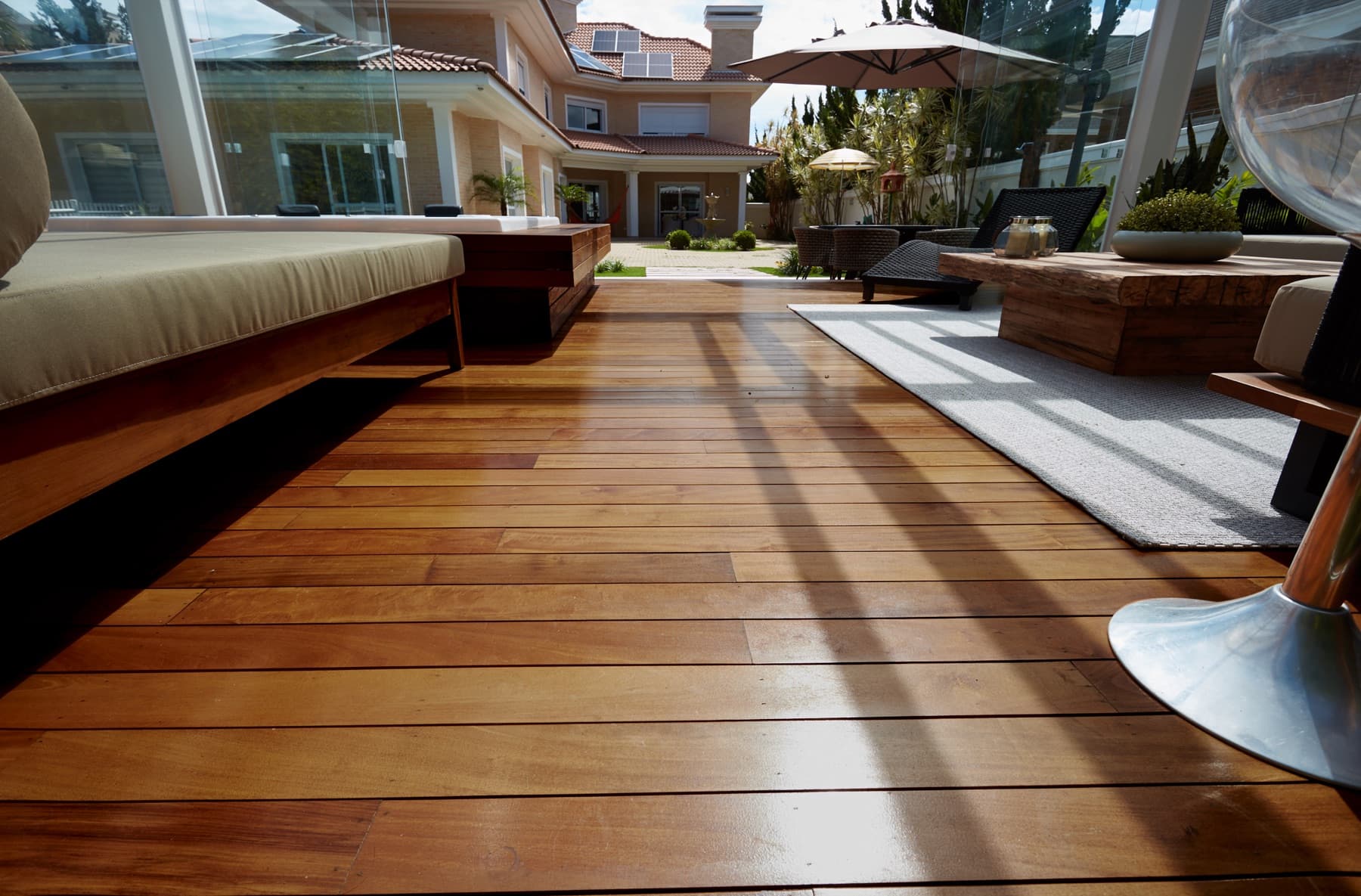
Evaluating Your Existing Deck Frame for Hardwood Decking
Before selecting new decking material, a thorough inspection of your existing deck frame is essential. Hardwood decking, particularly dense species like Ipe or Cumaru, can be significantly heavier than original composite or pressure-treated lumber. This increased weight necessitates a robust sub-structure. Check for any signs of rot, insect damage, or weakened joists and beams. Ensure all fasteners are secure and free from corrosion.
Verify the spacing of your joists. If your existing joists are spaced wider, you may need to add additional joists or consider a different decking material. Consult with a structural professional to confirm your frame can safely support the increased load of hardwood decking and any anticipated live loads, such as furniture or snow accumulation.
Hardwood Species for Park City's Climate
Park City's climate, with its snowy winters and warm summers, demands decking materials that can withstand significant temperature fluctuations and moisture exposure. Tropical hardwoods like Ipe and Cumaru are recognized for their natural density and resistance to environmental challenges, making them suitable choices for such conditions.
Its natural oils contribute to its resistance to rot, insects, and mold, and it exhibits minimal movement post-installation. Ipe's color ranges from reddish-brown to olive-brown and can be maintained with a UV-blocking sealer or allowed to weather to a silvery-gray patina. (S1)
It shares Ipe's resistance to termites and weather changes. Cumaru offers stiffness, strength, and hardness, making it a dependable choice for demanding builds. (S1)
Both Ipe and Cumaru are noted for their ability to resist warping after moisture exposure and are considered marine-grade standards, indicating their suitability for environments with significant moisture exposure. (S1, S2)
Calculating Material Needs for Your Renovation
Accurately calculating the required hardwood decking boards is crucial for a successful renovation. Here’s a hypothetical example:
Imagine you are renovating a rectangular deck that measures 12 feet by 16 feet. The total surface area is 192 square feet. You plan to use standard 1x6 (nominal size) hardwood decking boards, which typically have an actual width of 5.5 inches.
First, convert the deck width to inches: 12 feet * 12 inches/foot = 144 inches. Divide the deck width by the actual board width: 144 inches / 5.5 inches/board = 26.18 boards. Since you can't buy partial boards, round up to 27 boards to cover the width. For the 16-foot length, you would need boards of at least that length. If boards are available in 16-foot lengths, you would need 27 boards * 16 feet/board = 432 linear feet of decking.
Consider adding 10-15% extra for cuts, waste, and potential future repairs. For this example, 432 linear feet * 1.15 (15% waste) = 496.8 linear feet. Round up to 500 linear feet to ensure sufficient material. It is always recommended to confirm actual board dimensions and available lengths with your supplier, as well as any specific installation spacing requirements, which can slightly alter the total count.
Installation Considerations for Hardwood Decking
Installing hardwood decking requires careful attention to detail, especially given the density of species like Ipe and Cumaru. Pre-drilling is often necessary to prevent splitting when fastening boards. Specialized tools may be required for cutting and installing these dense materials. Professional installation is often recommended due to these specific requirements. (S1)
Proper ventilation beneath the deck is vital to prevent moisture buildup, which can affect the longevity of both the decking and the sub-structure. Ensure adequate spacing between boards to allow for drainage and air circulation. The exact spacing will depend on the specific product and local climate conditions, so always refer to the manufacturer's guidelines.
Consider the fastening method: hidden fasteners can provide a clean, fastener-free surface, while face-fastening offers a traditional look and may be simpler for some installers. Discuss the pros and cons of each with your installer and confirm compatibility with your chosen hardwood species.
Maintenance and Longevity in a Mountain Environment
Hardwood decking offers significant longevity with proper care. For species like Ipe, with proper care, it can last up to 75 years.
In Park City's environment, regular cleaning to remove dirt, debris, and snow is important. An annual wash is generally recommended. If you prefer to maintain the original color of the wood, an annual application of a UV-blocking oil or sealer is advised. Without this, the wood will naturally weather to a silvery-gray patina, which does not compromise its structural integrity. (S1, S2)
While hardwood is naturally resistant to many issues, inspecting your deck annually for any signs of wear, loose fasteners, or minor damage can help address issues before they become significant. This proactive approach contributes to the deck's overall lifespan and appearance.
Before you order
- Assess existing deck frame for structural integrity and joist spacing.
- Determine if the existing frame can support the weight of hardwood decking.
- Select hardwood species suitable for Park City's climate (e.g., Ipe, Cumaru).
- Measure your deck accurately to calculate linear footage needed, adding waste factor.
- Consider professional installation due to hardwood density and specialized tools.
- Plan for proper ventilation and board spacing.
- Decide on desired finish: natural silvering or maintained color with UV-blocking oil.
- Commit to annual cleaning and maintenance to ensure longevity.
Confirm installation details, approved uses and warranty terms in the current instructions for the exact product and profile. Your installer should verify the substrate, structure and applicable project requirements.
This is a planning guide for projects in Park City, UT. Ask our team to confirm availability, delivery to your ZIP code and which branch can support your order.
Questions to help you decide
Can I use my existing deck frame for hardwood decking?
It depends on the condition and construction of your existing frame. Hardwood decking is often heavier than other materials, so a structural engineer or experienced contractor should assess if your current frame can safely support the increased load.
How does hardwood decking perform in snowy Park City winters?
Dense tropical hardwoods like Ipe and Cumaru are highly resistant to moisture absorption, warping, and rot, making them well-suited for snowy conditions. Their natural density helps them withstand freeze-thaw cycles. Regular snow removal and ensuring proper drainage can further enhance their performance and longevity.
What is the maintenance difference between letting hardwood silver and maintaining its original color?
If left untreated, hardwood decking will naturally weather to a silvery-gray patina over time due to UV exposure, which does not affect its structural integrity. If you prefer to retain the wood's original rich brown tones, an annual application of a UV-blocking oil or sealer is recommended after a thorough cleaning.
Request a Quote for Your Hardwood Decking Renovation
Ready to transform your Park City deck with durable hardwood? Provide your project dimensions, desired hardwood profile, and ZIP code to request a material quote. Our team can help you confirm current availability and service options for your renovation project.
Request a material quote →