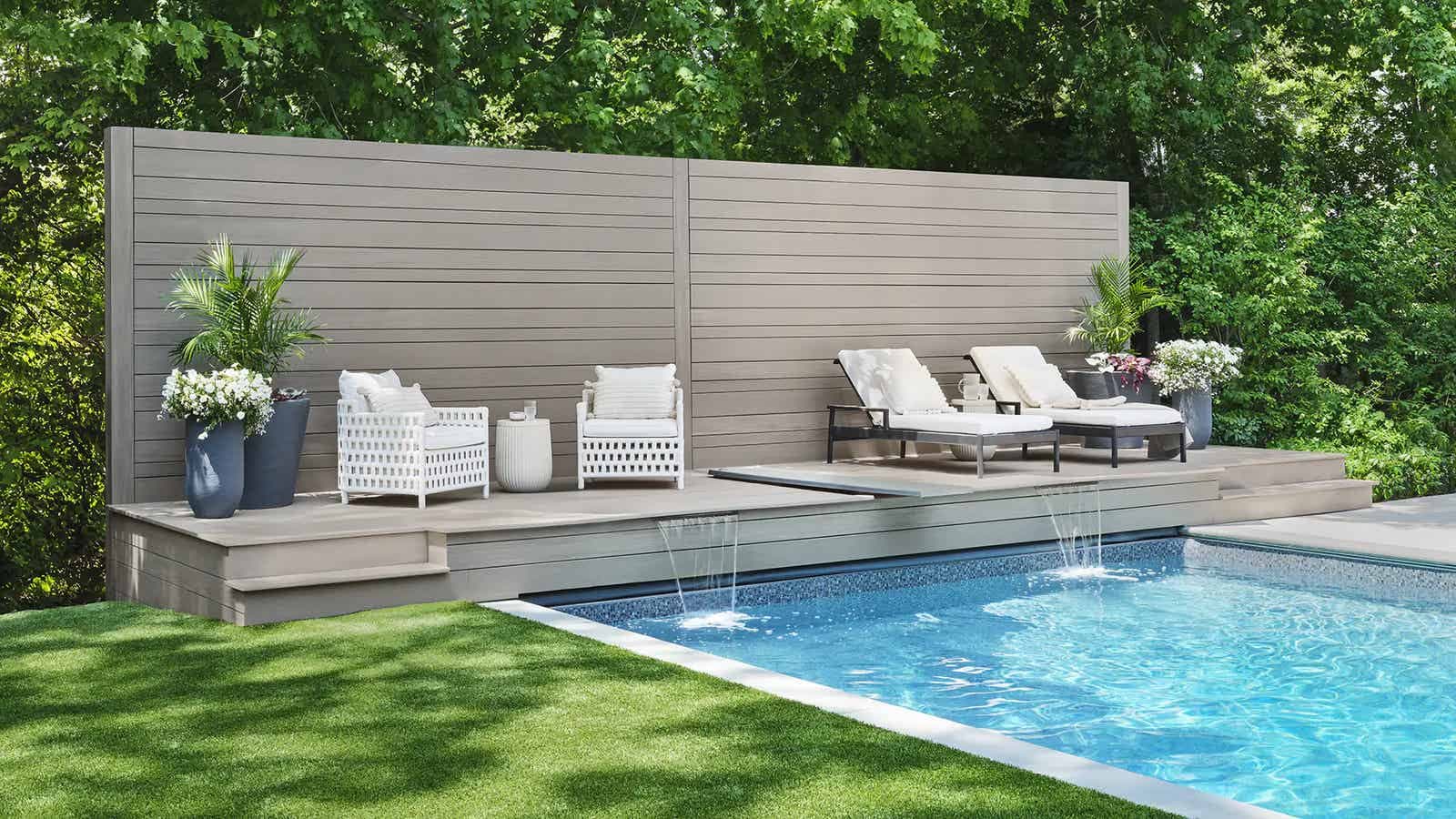
Why PVC Decking for Pool Terraces?
PVC (Polyvinyl Chloride) decking is a fully synthetic material, meaning it contains no wood fibers. This composition is a primary reason it stands out for applications like pool terraces where constant moisture is present. The absence of wood makes PVC inherently resistant to water absorption, which prevents swelling, rot, and decay often associated with wood products in wet environments.
For pool surrounds, this translates to a deck that can withstand splashes, chlorinated water, and even standing water without compromising its structural integrity or appearance over time. Leading manufacturers, such as TimberTech Azek, specifically design their PVC lines for such demanding conditions, positioning them as a standard for docks and pool decks. This material choice can significantly reduce long-term maintenance needs compared to traditional wood or some composite alternatives. It also offers advanced capping for enhanced durability and aesthetic appeal.
PVC decking is also notable for its lighter weight compared to hardwood and even some composite options. This can simplify handling and installation, especially in projects with complex access or where structural load is a consideration, such as rooftop pools or elevated terraces.
Understanding Wet-Area Suitability and Performance
The core benefit of PVC decking for pool terraces is its waterproof nature. Because it's 100% synthetic and waterproof to the core, PVC decking does not swell, stain, or rot when exposed to standing water, splash zones, or even salt spray. This characteristic makes it a reliable choice for areas that are consistently wet, ensuring the deck's longevity and stability around a pool.
While PVC decking is engineered for wet environments, it's important to note that specific products within the PVC family offer different levels of surface performance. Some advanced PVC lines feature enhanced capping that helps shed grease and wine, making cleanup easier with just soap and water. These surfaces are designed to be low-maintenance, resisting common poolside stains.
It is important to select a PVC decking product explicitly designed for pool surrounds and to confirm its specific properties, including any fade and stain coverage. This ensures that the material meets the demands of a high-moisture, high-traffic area like a pool terrace.
Aesthetic Choices and Design Integration
Modern PVC decking offers a wide range of aesthetic options, allowing homeowners to achieve various looks that complement their home and landscape design. Collections like TimberTech Azek's Vintage, Landmark, and Harvest offer deep wood-grain looks, providing the visual warmth of natural wood without its maintenance demands.
When planning a pool terrace, consider how the decking color and finish will integrate with the pool's coping, surrounding hardscaping, and the architectural style of your home. Lighter colors can help mitigate heat absorption, which is a practical consideration for poolside surfaces, especially during warm Park City summers. Darker colors might offer a striking contrast but could become warmer under direct sun.
The ability of PVC to be cut and shaped allows for various design possibilities, including intricate patterns, picture-frame borders, and curved edges around the pool. Coordinate these design elements with your contractor to ensure a cohesive and visually appealing pool terrace.
Installation Considerations for Poolside PVC Decking
While PVC decking is generally easier to handle due to its lighter weight, proper installation is still crucial for a poolside application. The substructure must be sound, adequately spaced, and designed to manage drainage effectively. Even though PVC itself is waterproof, water should not be allowed to pool underneath the deck.
Ensure that the installer follows the manufacturer's specific guidelines for board spacing, fastening, and ventilation. Proper spacing is necessary to allow for thermal expansion and contraction, which can occur with temperature changes. Hidden fastening systems are often preferred for a clean, barefoot-friendly surface around a pool.
Consider the integration of the decking with other pool features, such as drains, skimmer lids, and steps. Planning these details in advance with your installer will ensure a seamless and functional finish. Proper ventilation beneath the deck is also important to prevent moisture buildup and maintain the integrity of the substructure.
Maintenance and Longevity of Your PVC Pool Deck
One of the significant advantages of PVC decking for a pool terrace is its low maintenance profile. Unlike wood, it does not require sanding, staining, or sealing. Routine cleaning typically involves soap and water to remove dirt, pool chemicals, and spills. For specific stains, consult the manufacturer's cleaning recommendations to ensure compatibility with the decking material.
While PVC is resistant to fading and staining, proper care helps maintain its appearance over time. Regularly sweeping or blowing off debris prevents accumulation that could lead to discoloration or mildew growth. Promptly cleaning spills, especially those involving sunscreen, oils, or strong chemicals, is also advisable.
Many PVC decking products come with warranties covering fade and stain performance, which can offer peace of mind for a long-term investment. Understanding the terms of these warranties is part of a comprehensive project plan.
Hypothetical Project Example: Park City Pool Terrace
Imagine a rectangular pool terrace in Park City, measuring 20 feet by 30 feet, with the pool positioned centrally. The homeowner wants a clean, modern look using TimberTech Azek Vintage Collection PVC decking in a light, heat-mitigating color. The decking boards are 12 feet long and 5.5 inches wide.
To calculate the approximate board quantity for the 600 square foot area (20 ft x 30 ft), we first determine the square footage per board. A 12-foot board at 5.5 inches wide is 12 ft * (5.5/12) ft = 5.5 square feet per board. Dividing the total area by the area per board gives 600 sq ft / 5.5 sq ft/board 109.09 boards. Accounting for cuts, waste, and a desired aesthetic that minimizes seams, we might plan for 115-120 boards.
For a seamless appearance, the installer plans to lay the 12-foot boards perpendicular to the longest edge of the terrace where possible, minimizing visible end joints. Around the curved edges of the pool coping, boards will be carefully cut and fastened to follow the contour, requiring precise measurements and potentially more waste. A picture-frame border using the same decking material will be installed around the perimeter of the terrace, adding a finished edge and concealing the cut ends of the main field boards. This border will require additional linear footage of decking, calculated based on the perimeter plus allowances for mitered corners and waste. The substructure will be designed for adequate ventilation and drainage away from the pool, consistent with manufacturer guidelines.
Before you order
- Confirm the specific PVC decking product is rated for poolside and wet applications.
- Evaluate color and finish options for heat mitigation and aesthetic integration.
- Verify manufacturer's installation guidelines for board spacing, fastening, and ventilation.
- Plan for drainage around the pool and beneath the deck structure.
- Discuss edge treatments, fascia, and coping integration with your contractor.
- Review cleaning and maintenance instructions for long-term care.
- Obtain a material quote based on precise project dimensions and chosen profile.
Confirm installation details, approved uses and warranty terms in the current instructions for the exact product and profile. Your installer should verify the substrate, structure and applicable project requirements.
This is a planning guide for projects in Park City, UT. Ask our team to confirm availability, delivery to your ZIP code and which branch can support your order.
Questions to help you decide
Is PVC decking slippery when wet?
Specific slip resistance ratings can vary by manufacturer and product line. It is always recommended to check the product specifications for details on its wet-use performance. Generally, PVC decking is considered a suitable choice for pool surrounds due to its inherent resistance to water absorption and design features.
How does PVC decking handle the Park City climate, especially winter?
PVC decking is a durable, all-weather material. Its synthetic composition makes it resistant to moisture damage from snow and ice, and it handles freeze-thaw cycles better than wood. However, like all outdoor materials, PVC can become colder in winter. Choosing lighter colors can help mitigate heat absorption in summer, but the material's performance in extreme cold generally remains stable.
Can I install PVC decking myself around my pool?
While some experienced DIYers might undertake a PVC decking project, installing around a pool terrace requires precision, adherence to manufacturer guidelines, and attention to details like drainage, fastening, and integration with pool features. It is generally recommended to use a professional deck builder experienced with PVC decking and pool surrounds to ensure proper installation, warranty compliance, and a safe, lasting result. Improper installation can lead to issues with stability, appearance, and longevity.
Ready to Plan Your PVC Pool Terrace in Park City?
Request a material quote for your project. Provide your project dimensions, desired PVC decking profile, and ZIP code to confirm current availability and service options. Our team can help you select the ideal PVC decking for your pool surround.
Request a material quote →