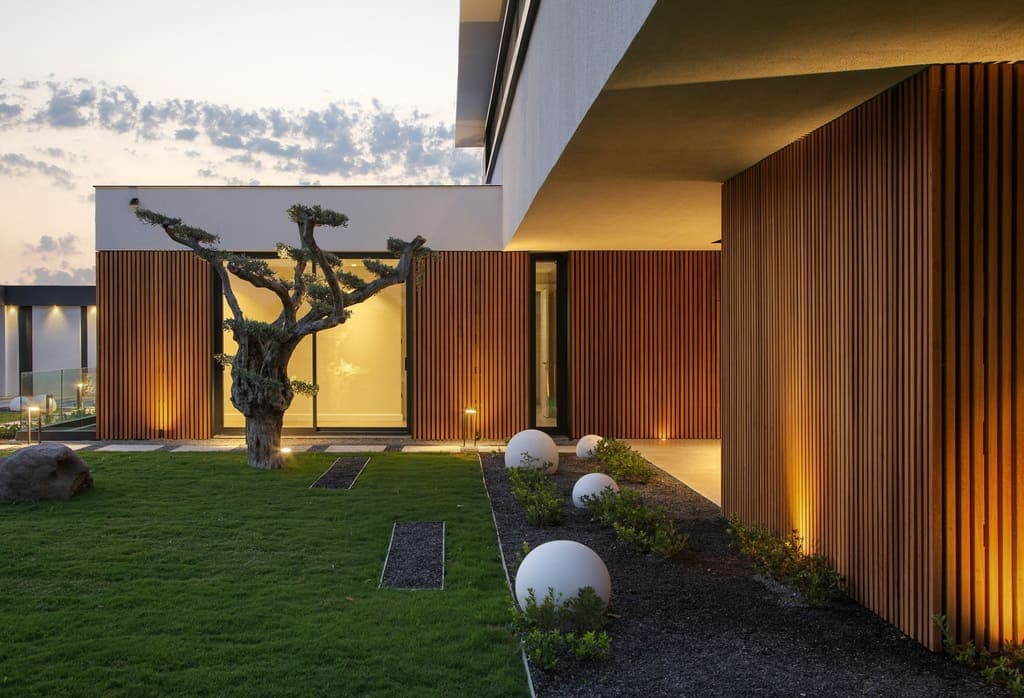
Understanding Thermally Modified Wood for Covered Patio Applications
Thermally modified wood undergoes a high-heat treatment process that alters its cellular structure. This process aims to enhance the wood's stability and reduce its susceptibility to moisture absorption compared to untreated wood. For covered patio walls, these properties are beneficial because while sheltered from direct precipitation, the wood will still experience fluctuations in humidity and temperature.
The modification process also typically results in a darker, more uniform color throughout the wood, which can be a desirable aesthetic for outdoor spaces. The material's reduced tendency to swell and shrink can lead to a more stable and visually consistent wall surface over time, minimizing potential gapping or warping issues that might arise with less stable wood products in a semi-exposed setting.
Selecting the Right Profile and Species
The profile of the thermally modified wood planks significantly influences the final appearance of your covered patio walls. Common profiles suitable for wall applications include tongue-and-groove, shiplap, and square-edge boards. Tongue-and-groove and shiplap profiles offer a cleaner, more interlocking look, often preferred for a refined aesthetic. Square-edge boards can create a more rustic or contemporary open-joint design, depending on the spacing.
When considering species, thermally modified pine or spruce are common options, offering a balance of performance and appearance. NORX thermally modified spruce, for example, is available in various profiles and can be a suitable choice for covered wall applications where dimensional stability and a consistent look are priorities. Maximo Accoya is another option, known for its stability and durability, which can also be specified for exterior wall applications.
For covered patio walls, you might consider horizontal or vertical orientations. Horizontal installation can make a space feel wider, while vertical installation can make it appear taller. The chosen profile should complement the desired orientation and overall architectural style of your home in Jefferson City.
Finishing and Maintenance for Covered Walls
While thermally modified wood offers enhanced stability, applying a finish can provide additional protection and allow for customization of its appearance. For covered patio walls, finishes can range from clear sealers that enhance the natural wood tone to semi-transparent or opaque stains that introduce color. A finish can help protect the wood from UV degradation, which, even in a covered area, can cause gradual graying over time, especially near openings or where sunlight may reach.
Regular cleaning is generally recommended to remove dirt, dust, and any mildew that might accumulate in humid conditions. The frequency of reapplication for finishes will depend on the product type, exposure to indirect sunlight, and local conditions in Jefferson City. Always refer to the specific finish manufacturer's recommendations for maintenance schedules and suitable products.
For covered applications, a finish can also offer a layer of defense against minor splashes or humidity, helping to maintain the wood's aesthetic over a longer period. Consider a finish that is formulated for exterior use and compatible with thermally modified wood.
Substructure and Attachment Considerations
Even for covered patio walls, a robust substructure is essential. The walls should be framed according to local building practices in Jefferson City, MO, providing a flat and stable surface for attachment. Furring strips or a rainscreen system are recommended, even in covered applications, to create an air gap behind the wood. This gap promotes ventilation, which helps manage moisture and can contribute to the longevity of the installation.
For attachment, stainless steel fasteners are generally recommended to prevent staining or corrosion, especially in areas with fluctuating humidity. Fasteners should be appropriate for the chosen profile and spaced according to manufacturer guidelines to ensure secure attachment without compromising the wood. For tongue-and-groove or shiplap profiles, concealed fastening methods can provide a clean, fastener-free appearance.
Consider the weight of the chosen thermally modified wood and ensure the substructure can adequately support it. Proper detailing around corners, openings, and the base of the wall is also critical for a professional and durable installation.
Worked Example: Covered Patio Wall Project
Let's consider a hypothetical covered patio in Jefferson City, MO, with two walls to be clad in thermally modified wood. One wall measures 10 feet wide by 8 feet high, and the other is 12 feet wide by 8 feet high. The owner desires a horizontal shiplap profile for a contemporary look.
Using NORX Thermally Modified Spruce Shiplap with a nominal face width of 5.5 inches (0.458 feet) and available in 16-foot lengths:
Total wall area: (10 ft + 12 ft) * 8 ft = 22 ft * 8 ft = 176 square feet.
Number of boards needed per 8-foot height (assuming minimal waste for cuts): 8 ft / 0.458 ft/board = approximately 17.47 boards. Round up to 18 boards for a full height.
Total linear footage of boards: (10 ft + 12 ft) * 18 boards = 22 ft * 18 boards = 396 linear feet. Since boards come in 16-foot lengths, we need 396 / 16 = 24.75 boards. Round up to 25 boards to account for cuts and potential waste. This provides some buffer for minor errors or specific field cuts that might not yield reusable offcuts.
For the substructure, assume furring strips every 24 inches on center vertically across the 8-foot height. For the 22-foot total width, this would require 22 ft / 2 ft/strip = 11 strips. Each strip is 8 feet long, so 11 * 8 ft = 88 linear feet of furring strips. Always factor in extra for framing or waste.
Before you order
- Verify local building codes for exterior wall coverings, even for covered patios.
- Assess the existing substructure for soundness and readiness for cladding.
- Choose a thermally modified wood species and profile suitable for wall applications.
- Decide on the desired orientation (horizontal or vertical) and its impact on aesthetics and installation.
- Select a finish type (clear, semi-transparent, opaque) based on aesthetic goals and UV protection needs.
- Plan for a ventilation gap behind the cladding using furring strips or a rainscreen system.
- Specify appropriate corrosion-resistant fasteners for the chosen profile and substructure.
- Calculate material quantities accurately, including waste factors for cuts and detailing.
- Consider professional installation for optimal results and adherence to best practices.
Confirm installation details, approved uses and warranty terms in the current instructions for the exact product and profile. Your installer should verify the substrate, structure and applicable project requirements.
This is a planning guide for projects in Jefferson City, MO. Ask our team to confirm availability, delivery to your ZIP code and which branch can support your order.
Questions to help you decide
Can thermally modified wood be left unfinished on covered patio walls?
While thermally modified wood is more stable, leaving it unfinished may result in a gradual graying or weathering effect over time, even in a covered area, due to indirect UV exposure and humidity. A finish can help maintain its original color and provide an additional layer of protection, but an unfinished look is possible if the weathered aesthetic is desired.
How do I clean thermally modified wood on covered patio walls?
Regular cleaning with a soft brush or cloth and a mild soap-and-water solution is typically sufficient. Avoid harsh chemicals or high-pressure washers, which can damage the wood surface or finish. For stubborn stains or mildew, use a cleaner specifically designed for wood exteriors, following the product instructions carefully.
Is a rainscreen system necessary for covered patio walls?
While covered patio walls are protected from direct rain, a rainscreen system or furring strips to create an air gap are still highly recommended. This gap promotes air circulation, helping to manage humidity and prevent moisture buildup behind the cladding, which can contribute to the overall longevity and stability of the thermally modified wood.
Ready to Transform Your Patio Walls in Jefferson City, MO?
Request a material quote today with your project dimensions, exact profile preferences, and ZIP code. We can help confirm current availability and service options for your thermally modified wood project.
Request a material quote →