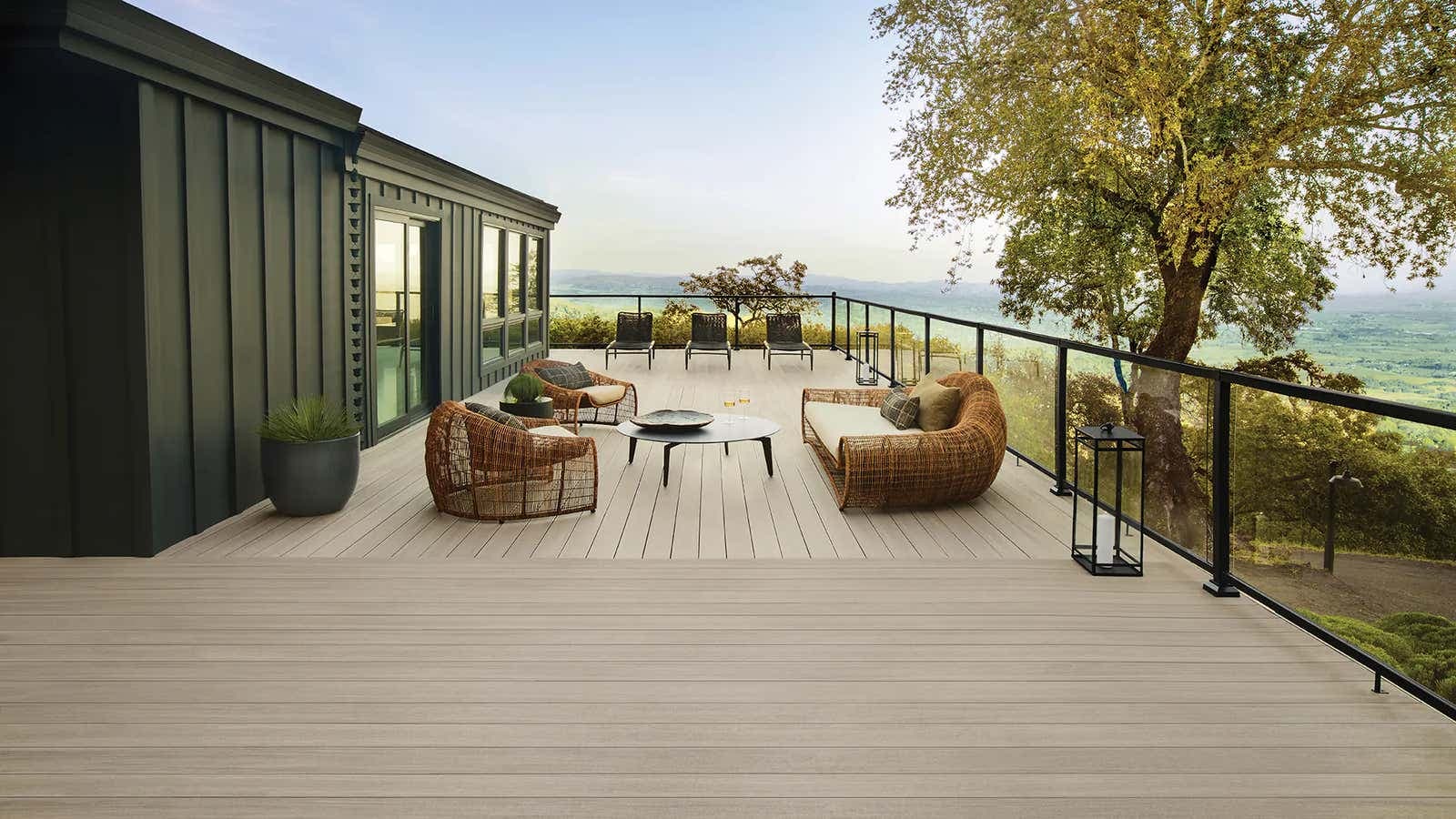
Defining Your Compact Outdoor Space
Before selecting materials, clearly define the boundaries and dimensions of your compact outdoor space. Is it a narrow side yard, a small urban patio, a balcony, or a dedicated corner of a larger yard? Understanding the exact dimensions and existing features like walls, windows, and entry points will inform your decking choices and layout.
Consider how you intend to use the space. Will it be for a small bistro set, a grilling area, container gardening, or simply a place to relax? The primary function will influence the required deck area, furniture placement, and ultimately, the decking board orientation and finish. For instance, a dining area might benefit from a smoother surface, while a relaxation spot could prioritize a specific color or texture.
Composite Decking Options for Smaller Footprints
Composite decking comes in various profiles, colors, and textures, which can be particularly impactful in a compact space. Manufacturers like Trex, TimberTech, and Fiberon offer a range of collections. These products are designed to resist fading and staining, requiring only an annual soap-and-water wash, which can be a significant advantage in areas where access for maintenance might be restricted.
When dealing with smaller areas, consider board width and length. While standard lengths are common, some manufacturers offer different widths that might allow for fewer cuts or a more proportional appearance. The consistent color and grain of composite boards ensure a uniform look, which can help a small space feel cohesive and intentional.
Maximizing Usable Space Through Design
In a compact area, design choices can significantly impact perceived and actual usable space. A diagonal decking layout, for example, can sometimes make a small area feel larger by drawing the eye across the space. However, this also typically results in more material waste due to angled cuts.
Consider a picture-frame border. This design element can define the edge of the deck, creating a finished look and visually containing the space. For very small areas, integrating built-in seating or planters along the perimeter can save floor space that freestanding furniture would occupy, making the area more functional.
Another consideration is the height of your deck. A low-profile deck that is just a step or two above grade can blend seamlessly with the surrounding landscape, reducing the visual mass that a higher deck might present in a small setting. Always verify the specific support requirements and recommended joist spacing for your chosen composite decking collection, as these can vary by manufacturer and product line.
Planning for Project Access and Logistics
Jefferson City projects, especially those in established neighborhoods with compact lots, may present unique logistical challenges. Consider how decking boards, which can be long and heavy, will be delivered to your project site. Narrow gates, tight turns, or limited street parking can affect delivery methods and require careful coordination.
On-site storage for materials also needs to be planned. Composite decking should be stored flat and supported to prevent warping. In a compact space, this might mean stacking materials vertically or arranging for phased deliveries. Confirming current lines, colors, and delivery timing with your supplier is crucial to avoid delays and ensure a smooth project flow.
For installation, ensure there is adequate room for installers to work safely and efficiently. Even for a small deck, tools, fasteners, and cut pieces will require space. Clear pathways and an organized work area are important for any project, but especially so where space is constrained.
Hypothetical Project Example: A 10'x8' Courtyard Deck
Let's consider a hypothetical courtyard deck project in Jefferson City measuring 10 feet by 8 feet. The goal is to create a small outdoor dining area. We'll assume a standard composite decking board width of 5.5 inches and a length of 12 feet.
For a 10-foot width, laying boards parallel to the 8-foot dimension would require approximately 22 boards (10 feet / 5.5 inches per board * 12 inches/foot = 21.8 boards). Since boards are 12 feet long, each board can be cut to yield one 8-foot piece and one 4-foot offcut. The 8-foot pieces would cover the entire 8-foot length.
To cover the 10-foot width, you'd need 22 boards. Each 12-foot board yields one 8-foot piece. Therefore, you would purchase 22 boards. The offcuts (4 feet long) might be reusable for other small features, but for the main deck, 22 full boards are needed.
If a picture-frame border is desired, additional boards would be needed for the perimeter. For a 10'x8' deck, this would typically involve two 10-foot pieces and two 8-foot pieces for the outer frame. These would require additional boards beyond the main field calculation. Always account for waste from cuts and any specific design elements when calculating your material needs.
Before you order
- What are the precise dimensions of your compact outdoor space?
- How will the deck primarily be used (dining, relaxation, grilling)?
- What composite decking collection, color, and profile best suit your aesthetic and functional goals?
- Have you considered board orientation (parallel, diagonal) and its effect on perceived space and material waste?
- Are there any specific support requirements for the chosen composite decking collection?
- How will materials be delivered to and stored at your project site, considering limited access?
- Have you accounted for waste in your material calculations, especially for cuts or complex designs?
- Will you incorporate any built-in features like seating or planters to maximize space?
Confirm installation details, approved uses and warranty terms in the current instructions for the exact product and profile. Your installer should verify the substrate, structure and applicable project requirements.
This is a planning guide for projects in Jefferson City, MO. Ask our team to confirm availability, delivery to your ZIP code and which branch can support your order.
Questions to help you decide
Is composite decking suitable for very small balconies?
Composite decking can be suitable for small balconies, provided the balcony's structural integrity can support the weight of the decking and any planned furniture or occupants. Always consult with a structural engineer or qualified professional to confirm the weight capacity of your balcony before installation. Lightweight composite options or smaller format tiles might be considered, but direct manufacturer guidance on specific applications and support structures is essential. Always ensure proper drainage.
How does composite decking compare to natural wood for compact spaces?
For compact spaces, composite decking often offers consistent board-to-board appearance and significantly reduced maintenance compared to natural wood. While natural wood requires regular sanding, staining, or oiling, composite decking typically only needs an annual wash. This can be a major advantage in small areas where access for maintenance might be challenging. Both materials offer aesthetic appeal, but the long-term upkeep difference is notable. Consider options like Ipe hardwood for a durable natural wood alternative, but be prepared for its specific maintenance needs.
Can I install composite decking directly over an existing concrete patio?
Installing composite decking directly over a concrete patio requires careful planning to ensure proper ventilation and drainage. Most composite decking systems require a substructure (joists) to allow for airflow and prevent moisture buildup, which can lead to issues like mold or damage. Check the specific manufacturer's installation guidelines for your chosen composite decking product. Some systems may offer low-profile or tile options designed for such applications, but a standard board installation usually necessitates a framed substructure to maintain warranty and performance.
Ready to Plan Your Compact Composite Decking Project?
Request a material quote today. Provide your project dimensions, desired composite decking profile, and project ZIP code to confirm current availability and service options. Our team can help you navigate the choices for your Jefferson City outdoor space.
Request a material quote →