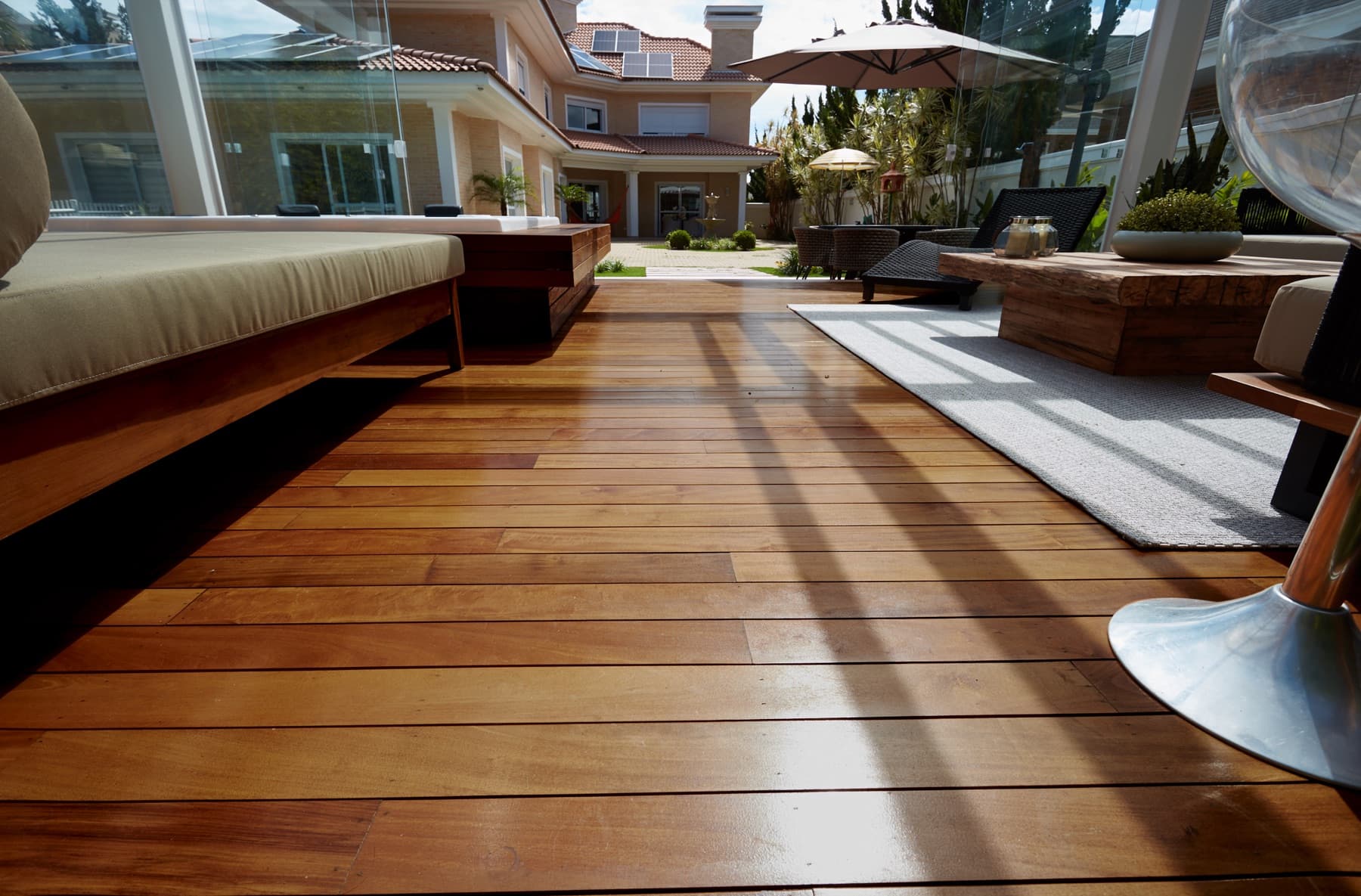
Assessing Your Existing Deck Frame and Substructure
Before selecting any decking material, a thorough inspection of your existing deck's frame and substructure is crucial. Hardwood decking species like Ipe and Cumaru are known for their density and strength, which means they are heavier than many alternative decking materials. Your existing joists, beams, and support posts must be in excellent condition and adequately sized to bear the increased load. Look for any signs of rot, insect damage, or structural instability.
It's recommended to consult with a qualified builder or structural engineer in Jefferson City to ensure your current frame can safely support the new hardwood decking. They can assess the condition of the wood, the spacing of joists, and the overall integrity of the structure. This step helps prevent future issues and ensures the safety and longevity of your renovated deck.
Choosing the Right Hardwood Species for Your Jefferson City Deck
Lumber Plus offers a selection of Brazilian hardwood decking species, each with distinct characteristics suitable for outdoor applications. For renovations, durability and natural resistance are often top priorities.
Ipe, also known as Brazilian walnut, is a benchmark hardwood. Its natural resistance to rot, insects, and mold makes it a strong contender for long-lasting outdoor projects. Ipe typically ranges from reddish-brown to olive-brown and can last for decades with proper care. It's often chosen for projects demanding high performance and a luxurious appearance. You can find more details on Ipe here: /decking/hardwood/ipe.
Cumaru is another very durable tropical hardwood. Cumaru is a dependable choice for demanding builds and shares many advantages with Ipe, often at a different price point. It's known for its cinnamon and vanilla scent when worked and provides a beautiful, lasting finish. Learn more about Cumaru: /decking/hardwood.
Other species like Garapa and Tigerwood also offer distinct aesthetics and performance characteristics. Garapa is a value-oriented option with a golden tone, while Tigerwood provides a dramatic striped figure. Consider the desired appearance, expected lifespan, and maintenance preferences when making your selection.
Material Takeoff: Calculating Your Hardwood Decking Needs
Accurate measurements are vital for ordering hardwood decking. For a renovation, measure the exact dimensions of your existing deck surface. Consider the board width you plan to use and whether you intend to incorporate a picture-frame border or diagonal layout, as these affect material calculations and cuts. Hardwood decking is typically available in various profiles and lengths.
Let's consider a hypothetical example for a rectangular deck renovation in Jefferson City. Assume your existing deck surface measures 12 feet by 16 feet (192 square feet). If you choose 1x6 (nominal) Ipe decking boards, which are typically 5.5 inches wide, here's a simplified calculation:
First, convert the width to feet: 5.5 inches / 12 inches/foot = approximately 0.458 feet. To cover the 16-foot length, you'd need 16 feet / 0.458 feet/board ≈ 34.93 boards. The total number of linear feet would be (35 boards * 12 feet) + (27 boards * 16 feet) = 420 + 432 = 852 linear feet if laid in alternating directions, or simpler: 192 square feet / (5.5 inches / 12 inches/foot) = 192 / 0.458 = 419.2 linear feet of 5.5 inch wide boards. We recommend adding 10-15% for cuts, waste, and future repairs, especially with hardwood, given its density and specific installation requirements. For this example, 852 linear feet * 1.15 (15% waste) = 979.8 linear feet. You would then need to purchase full-length boards that add up to this total, minimizing waste by planning cuts effectively. Always confirm available lengths with your supplier.
Remember that this calculation is simplified. Factors like board spacing (which is critical for hardwood to allow for natural movement and drainage), end-matching, and any special design elements will impact the final quantity. It is always best to provide your project dimensions and desired layout to a Lumber Plus representative for an accurate material quote.
Installation Considerations for Hardwood Decking
Hardwood decking, particularly dense species like Ipe and Cumaru, requires specialized installation techniques and tools. Due to their hardness, pre-drilling is typically necessary for fasteners to prevent splitting. Hidden fastening systems are popular for a clean, uninterrupted surface, but face-fastening with screws is also an option. Ensure any fasteners chosen are compatible with the specific hardwood species and suitable for outdoor exposure in Jefferson City's climate.
Proper ventilation beneath the deck is crucial for hardwood longevity. Good airflow helps prevent moisture buildup, which can lead to cupping or warping. Ensure there's adequate space between the deck surface and the ground, and that any skirting allows for cross-ventilation. Board spacing is also important; follow the manufacturer's recommendations to allow for natural expansion and contraction of the wood. Professional installation is often recommended due to the specific requirements for working with these dense hardwoods.
Maintenance and Longevity in Missouri's Climate
Hardwood decking, especially species like Ipe and Cumaru, is known for its exceptional longevity with minimal maintenance. In Jefferson City's climate, which experiences warm, humid summers and cold winters, the natural resistance of these hardwoods to weather changes and pests is a significant advantage.
To maintain the rich, natural color of your hardwood deck, an annual application of a UV-blocking oil or sealer is recommended. If left untreated, hardwoods will naturally weather to a beautiful silvery-gray patina over time, without compromising their structural integrity. Regular cleaning with a mild cleaner and water will help remove dirt, pollen, and mildew, keeping your deck looking its best. Unlike composite materials, hardwood decks do not require pressure treatment or harsh chemicals for protection, as their natural density provides inherent defense against rot and insects.
Before you order
- Have I inspected my existing deck frame for structural integrity, rot, and insect damage?
- Is my existing frame adequately sized to support the increased weight of hardwood decking?
- Have I considered consulting a local structural engineer or builder for frame assessment?
- Which hardwood species (Ipe, Cumaru, Garapa, Tigerwood) best fits my aesthetic and performance needs?
- Have I accurately measured my deck surface, accounting for any special layouts (borders, diagonals)?
- Have I added 10-15% extra material for cuts, waste, and future repairs?
- Have I planned for appropriate board spacing and under-deck ventilation?
- Am I prepared for the specialized tools and techniques required for hardwood installation, or do I plan to hire a professional?
- Do I prefer to maintain the natural wood color with an annual oil, or allow it to weather to a silvery-gray?
- Have I confirmed current profiles and lengths available from Lumber Plus for my chosen species?
Confirm installation details, approved uses and warranty terms in the current instructions for the exact product and profile. Your installer should verify the substrate, structure and applicable project requirements.
This is a planning guide for projects in Jefferson City, MO. Ask our team to confirm availability, delivery to your ZIP code and which branch can support your order.
Questions to help you decide
Can I reuse my existing deck frame for hardwood decking?
You may be able to reuse your existing deck frame, but it requires a thorough inspection. Hardwood decking is denser and heavier than many other materials, so your frame must be structurally sound, free of rot or damage, and capable of supporting the increased load. Consulting a local builder or engineer is highly recommended to assess the frame's suitability.
What is the typical lifespan of hardwood decking in Jefferson City, MO?
With proper care, hardwood decking species like Ipe can last up to 75 years, and Cumaru over 25 years. Their natural resistance to rot, insects, and weather changes makes them exceptionally durable, even in Missouri's varied climate. Regular cleaning and optional oiling for color retention contribute to their longevity.
How much maintenance does hardwood decking require?
Hardwood decking is relatively low maintenance. A simple wash once a year is generally sufficient. If you wish to preserve the original rich brown tones, an annual application of a UV-blocking oil is recommended. Without oil, the wood will naturally weather to a beautiful silvery-gray patina, which does not affect its structural integrity.
Ready to Transform Your Jefferson City Deck?
Contact Lumber Plus today for a material quote. Provide your project dimensions, desired hardwood profile, and ZIP code to confirm current availability and service options for your deck renovation.
Request a material quote →