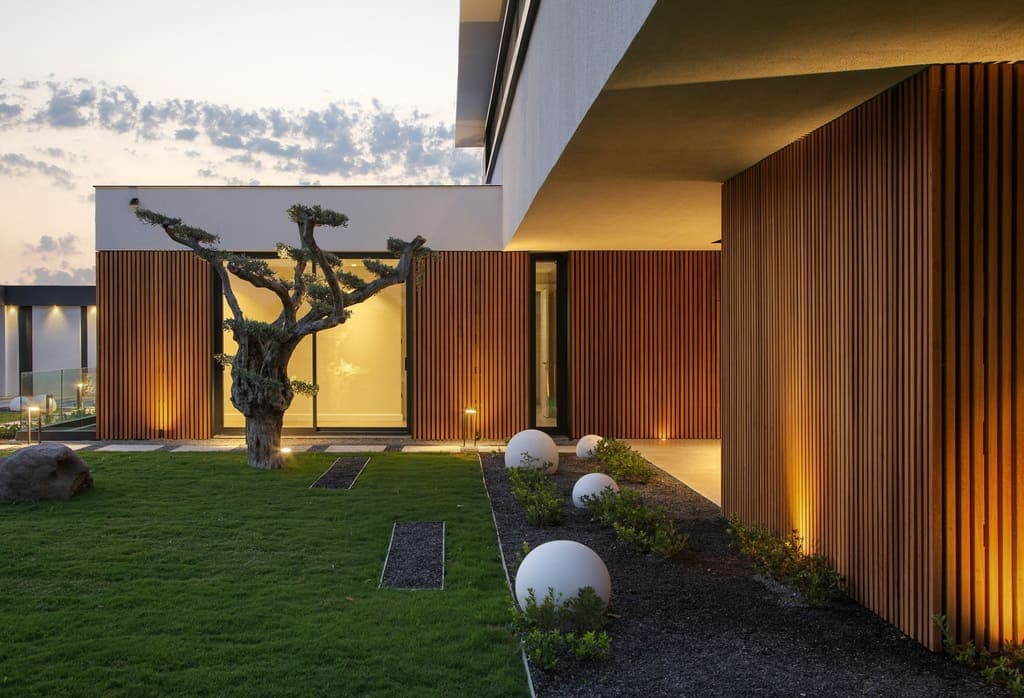
Understanding Thermally Modified Wood for Wall Applications
Thermally modified wood undergoes a controlled heat treatment process that alters its cellular structure. This process enhances the wood's dimensional stability, making it less prone to expansion and contraction due to changes in humidity. For covered patio walls, this stability is a significant advantage, as it helps maintain the integrity and appearance of the installation over time.
While thermally modified wood offers improved resistance to decay and insects, it is important to note that it is not waterproof. Covered patio applications provide a degree of protection from direct rainfall and intense sun, which can contribute to the longevity of the finish and the material itself. However, proper detailing for drainage and ventilation remains crucial.
When selecting thermally modified wood for wall applications, consider profiles designed for vertical surfaces. These often include tongue-and-groove, shiplap, or board-and-batten styles, which provide distinct visual effects and facilitate installation.
Selecting the Right Profile and Species
The aesthetic of your covered patio wall will largely depend on the profile and species of thermally modified wood you choose. Common thermally modified species include Ash and Poplar, each offering unique grain patterns and natural coloration. Thermally modified Ash, for example, often presents a rich, darker tone, while Poplar can have a lighter, more uniform appearance.
For covered patio walls, popular profiles include 1x6 (nominal) shiplap and tongue-and-groove boards. Shiplap creates a clean, overlapping look with distinct shadow lines, while tongue-and-groove provides a tighter, more continuous surface. The specific dimensions and profiles available can influence both the visual outcome and the installation process. Consider how the shadow lines created by the profile will interact with the natural light on your patio.
Lumber Plus offers a range of thermally modified wood options suitable for wall applications. For example, explore our general selection of thermally modified wood at our product page: [https://www.lumberplus.com/thermally-modified-wood](https://www.lumberplus.com/thermally-modified-wood). You might also consider specific brands like NORX for their thermally modified offerings: [https://www.lumberplus.com/brands/norx](https://www.lumberplus.com/brands/norx).
Finishing and Maintenance for Jacksonville's Climate
While thermally modified wood is enhanced for durability, applying a finish is recommended for covered patio walls, especially in a climate like Jacksonville's. A finish can protect the wood from UV degradation, which can cause the wood to gradually weather to a silver-gray patina if left untreated. It also provides an extra layer of defense against moisture, even in a covered application.
Clear penetrating oils or stains are common choices. Penetrating oils nourish the wood and enhance its natural color, while stains offer a wider range of color options. When selecting a finish, consider products designed for exterior wood applications and those that offer UV protection. Always follow the manufacturer's instructions for application and reapplication.
Regular cleaning with a mild soap and water solution can help maintain the appearance of your covered patio walls. Inspect the finish periodically for signs of wear, especially in areas that might receive incidental sun exposure or splash from rain. Reapplying the finish as needed will help preserve the wood's color and extend its lifespan.
Installation and Substructure Considerations
Proper installation is key to the performance and longevity of thermally modified wood walls. Even in a covered patio setting, ensuring adequate ventilation behind the wood is crucial to prevent moisture accumulation. This typically involves creating a rainscreen gap between the wood cladding and the structural wall.
The substructure for covered patio walls should be robust and designed to support the weight of the wood. This often involves attaching furring strips or battens to the existing wall, providing a level and plumb surface for fastening the thermally modified wood. These battens also create the necessary air gap for ventilation.
Fasteners should be corrosion-resistant, such as stainless steel screws, to prevent staining and ensure a secure attachment. Hidden fastening systems are often preferred for a clean aesthetic. Always pre-drill pilot holes to prevent splitting, especially near board ends. Consult product specifications for recommended fastener types and spacing. Our general siding and cladding page offers additional context on installation principles: [https://www.lumberplus.com/siding-and-cladding](https://www.lumberplus.com/siding-and-cladding).
Project Example: A 10' x 8' Covered Patio Wall
Consider a covered patio in Jacksonville, FL, where one wall, measuring 10 feet wide by 8 feet high, is to be clad with thermally modified wood shiplap. We'll use 1x6 nominal (actual 5.25" coverage) thermally modified Ash shiplap boards.
First, calculate the total area: 10 feet x 8 feet = 80 square feet. Each shiplap board provides 5.25 inches of coverage. To convert this to feet: 5.25 inches / 12 inches/foot = 0.4375 feet. If boards are typically available in 8-foot lengths, one board covers 0.4375 feet x 8 feet = 3.5 square feet.
To cover 80 square feet, you would need 80 sq ft / 3.5 sq ft/board = approximately 22.86 boards. Since you cannot purchase partial boards, you would need 23 boards. This calculation assumes minimal waste and full 8-foot lengths. For a 10-foot wide wall, if using 8-foot boards horizontally, you would need to cut and butt join boards, which might increase waste. If using 10-foot boards (if available) vertically, you would need 10 feet / 0.4375 feet/board = approximately 22.86 boards, so 23 boards. Always account for a waste factor, typically 10-15%, for cuts, mistakes, and optimizing board layout. So, for this 80 sq ft area, purchasing 25-26 boards would be a more practical estimate.
Before you order
- Confirm the specific thermally modified wood species and profile are approved for vertical, covered exterior wall applications.
- Evaluate the desired aesthetic: natural wood look, stained, or painted finish.
- Verify the substructure can accommodate a rainscreen gap and provide adequate fastening points.
- Determine the required quantity, adding a waste factor for cuts and unforeseen issues.
- Select appropriate corrosion-resistant fasteners and any necessary trim pieces.
- Plan for proper ventilation behind the cladding to prevent moisture buildup.
- Choose an exterior-grade finish suitable for the Jacksonville climate and thermally modified wood.
- Consider long-term maintenance requirements for the chosen finish and wood.
Confirm installation details, approved uses and warranty terms in the current instructions for the exact product and profile. Your installer should verify the substrate, structure and applicable project requirements.
This is a planning guide for projects in Jacksonville, FL. Ask our team to confirm availability, delivery to your ZIP code and which branch can support your order.
Questions to help you decide
Does thermally modified wood require a finish for covered patio walls?
While thermally modified wood offers enhanced durability, applying an exterior-grade finish is recommended for covered patio walls. A finish provides protection against UV radiation, which can cause the wood to weather to a silver-gray color over time, and offers an additional barrier against incidental moisture and dirt. It also allows for customization of the aesthetic.
What is the best way to clean thermally modified wood walls?
For routine cleaning, a soft brush or cloth with a mild soap and water solution is generally sufficient. Avoid harsh chemicals or abrasive cleaners, as these can damage the finish or the wood surface. Rinse thoroughly with clean water. For more stubborn dirt or mildew, consider specialized wood cleaners designed for exterior use, following product instructions carefully.
Can thermally modified wood be installed directly onto a concrete block wall?
Direct installation onto a concrete block wall is not recommended for thermally modified wood cladding. A substructure of furring strips or battens should be installed first. This creates a necessary air gap behind the wood, allowing for ventilation and drainage, which is crucial for the long-term performance and stability of the cladding, even in a covered application.
Ready to Plan Your Thermally Modified Wood Patio Wall?
Contact us with your project dimensions, desired profile, and ZIP code to request a material quote. Our team can help confirm current availability and service options for your Jacksonville, FL project.
Request a material quote →