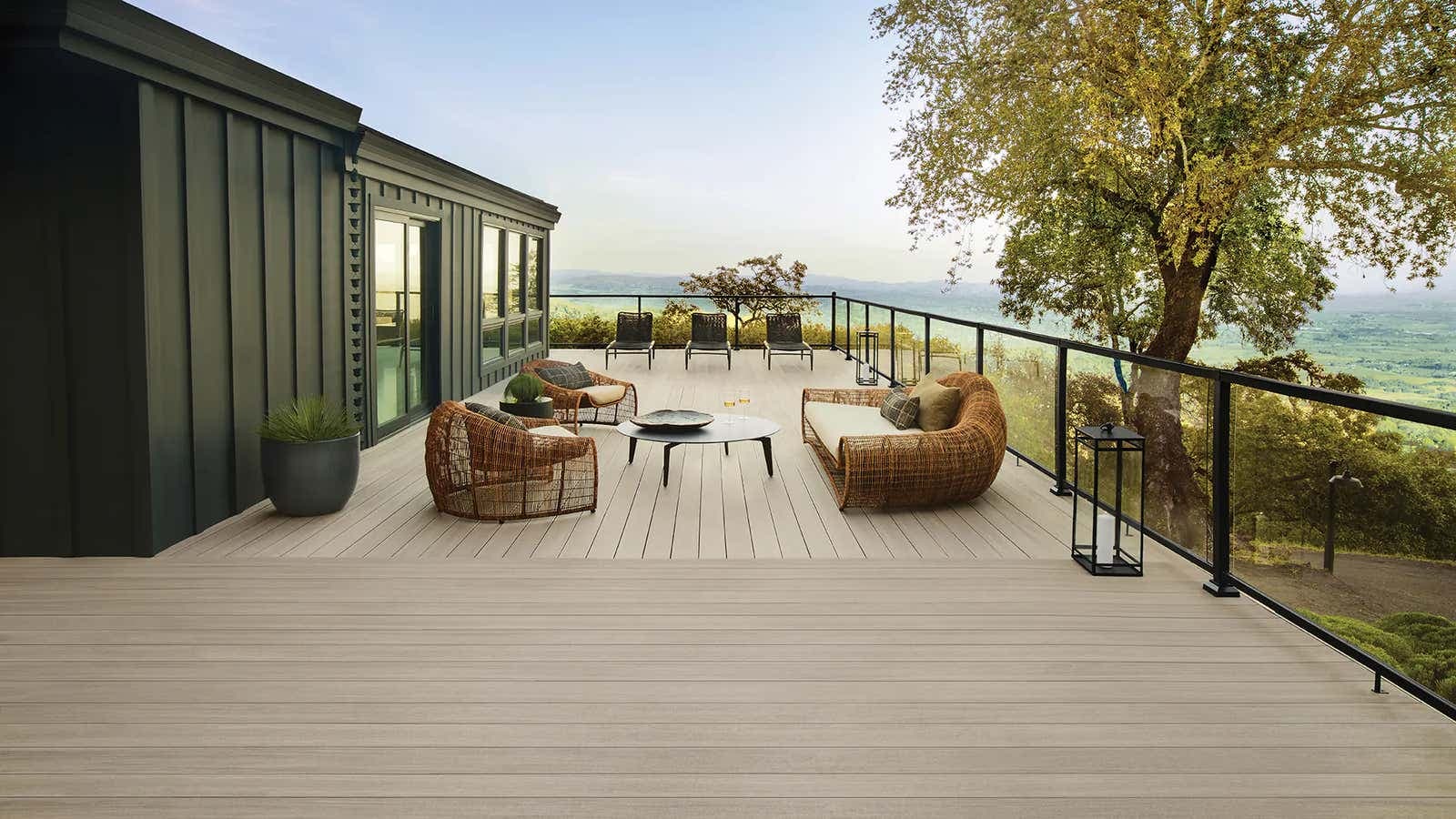
Evaluating Usable Space in Compact Areas
Before selecting your composite decking, precisely measure your compact outdoor space. Consider not just the floor area, but also vertical clearance, existing structures like walls or railings, and the swing radius of any doors. For a small balcony, this might mean mapping out where a bistro table and two chairs can comfortably fit, leaving room for movement. In a narrow courtyard, it could involve planning around planters or a small grill.
The goal is to define the 'usable' footprint. This helps determine the optimal board length and layout, potentially minimizing cuts and waste.
Composite Decking Collections for Jacksonville's Climate
Composite decking from brands like Trex, TimberTech, and Fiberon is engineered to withstand various environmental conditions, making it suitable for Jacksonville's humid, warm climate. These products typically feature a capped shell that resists moisture, stains, and fading, which is beneficial in areas with high humidity and intense sun exposure.
Some composite decking options are designed to be cooler underfoot, a significant advantage in Florida's warm months. When planning for a compact space, consider the visual effect of different board profiles and colors. Lighter colors can make a small area feel more open, while darker tones might absorb more heat. Reviewing specific collections allows you to compare these attributes alongside aesthetic preferences.
For example, Trex offers composite decking with up to 95% recycled content, combining sawdust and plastic film. This commitment to recycled materials can be a consideration for environmentally conscious projects. These materials are designed for annual soap-and-water washing, eliminating the need for oiling, sanding, or staining.
Support Details for Compact Composite Decks
Even in compact spaces, proper structural support is essential for composite decking. Composite boards require specific joist spacing, which can vary by product line and intended load. Always consult the manufacturer's installation guidelines for the exact collection you choose. For small elevated decks or balconies, this might involve verifying the existing structure's capacity or planning for new, appropriately spaced joists.
Unlike some traditional materials, composite decking is not typically designed for direct ground contact without a proper subframe. For ground-level patios, a properly prepared gravel base with sleepers or a concrete slab may be required beneath the deck frame to ensure adequate drainage and stability. This is especially important in Jacksonville, where heavy rains can occur. Ensure that any support system allows for proper ventilation beneath the deck to prevent moisture buildup.
Navigating Project Access and Logistics in Jacksonville
Compact outdoor spaces often come with restricted access for material delivery and construction. For projects in Jacksonville's urban core or densely populated neighborhoods, consider how composite decking boards, which can be long and heavy, will be transported to the installation site. Will they need to be carried through a narrow gate, up a flight of stairs, or across a shared common area?
Planning for delivery timing and on-site storage is crucial. Composite decking should be stored flat and supported to prevent warping. If space is severely limited, coordinating just-in-time delivery or arranging for smaller, more frequent material drops might be necessary. Discuss these logistical considerations with your supplier and installer well in advance.
Worked Example: A 6x10 Foot Balcony Deck
Consider a hypothetical balcony in Jacksonville measuring 6 feet (72 inches) by 10 feet (120 inches). You plan to run the composite decking boards parallel to the 10-foot length, which is common for maximizing the visual length of a small space.
For the 6-foot width, you'll need boards covering 72 inches. If using standard 5.5-inch wide composite boards, this means approximately 72 / 5.5 = 13.09 boards. You would purchase 14 boards to ensure full coverage and account for minor cuts or edge finishing. For the 10-foot length, if boards are available in 10-foot lengths, you would need 14 boards of 10 feet each. If boards are only available in 12-foot lengths, you would purchase 14 boards of 12 feet each, with each board yielding a 2-foot offcut that may or may not be reusable depending on your project's specific needs (e.g., for a picture frame border).
The total area is 60 square feet. This example demonstrates that simply dividing area by board coverage does not always equal the purchase quantity. Always account for full board lengths and potential waste. Also, consider the thickness of any fascia boards or trim for the edges, which would require separate calculations.
Before you order
- Measure the exact dimensions of your compact space, noting any obstructions or existing structures.
- Define the primary use of the space (e.g., dining, lounging, plant display) to determine required furniture and circulation paths.
- Research composite decking collections for their specific attributes like capped shell technology, cooler-underfoot options, and aesthetic range.
- Verify the manufacturer's recommended joist spacing and support requirements for your chosen composite product.
- Assess site access for material delivery and storage, especially for longer board lengths.
- Consider the visual impact of board width, color, and grain pattern on the perception of space.
- Plan for proper drainage and ventilation beneath the deck, crucial for Jacksonville's climate.
- Factor in any trim, fascia, or railing requirements for a complete and polished look.
- Request a material quote with exact dimensions, preferred profile, and your project ZIP code for accurate pricing.
Confirm installation details, approved uses and warranty terms in the current instructions for the exact product and profile. Your installer should verify the substrate, structure and applicable project requirements.
This is a planning guide for projects in Jacksonville, FL. Ask our team to confirm availability, delivery to your ZIP code and which branch can support your order.
Questions to help you decide
Can composite decking be installed directly on a concrete patio in Jacksonville?
Composite decking typically requires a subframe for proper ventilation and drainage, even over a concrete patio. Installing directly on concrete can trap moisture, potentially leading to issues. Consult the manufacturer's guidelines for the specific product to ensure correct installation over a hard surface.
What maintenance does composite decking require in Jacksonville's climate?
Composite decking is designed for low maintenance. Generally, an annual cleaning with soap and water is sufficient to keep it looking its best. Unlike wood, it does not require sanding, staining, or sealing. This is a significant advantage in Jacksonville's humid climate, where traditional wood can require more frequent attention.
Will composite decking get too hot in the Jacksonville sun?
While all decking materials absorb some heat from direct sun, many composite decking manufacturers offer 'cooler-underfoot' options. Lighter colors tend to absorb less heat than darker ones. When selecting your composite decking, you can inquire about specific collections designed to mitigate heat absorption, which can be beneficial in Jacksonville's warm climate.
Ready to Plan Your Compact Deck in Jacksonville?
Submit your project dimensions, desired composite decking profile, and project ZIP code to request a material quote. Our team can help confirm current availability and service options for your Jacksonville project.
Request a material quote →