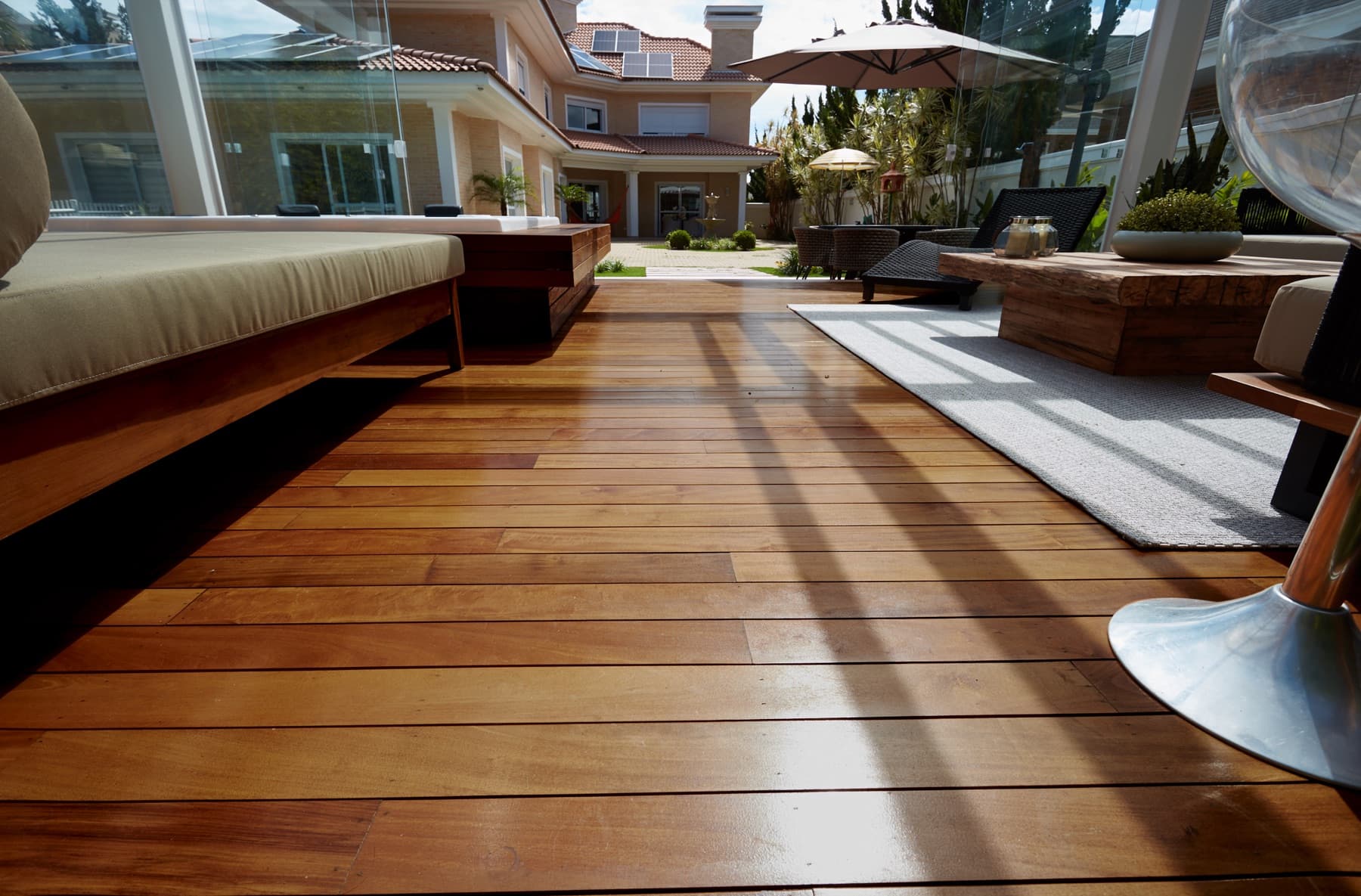
Assessing Your Existing Deck Frame for Hardwood Decking
Before selecting new decking boards, it's essential to inspect your existing deck frame. Hardwood decking, especially dense species like Ipe and Cumaru, is heavier than many common decking materials. Your existing joists, beams, and footings must be structurally sound and capable of supporting the increased load. Look for signs of rot, insect damage, or excessive deflection in the joists. Any compromised structural elements should be repaired or replaced before new decking is installed.
Consider the spacing of your joists. If your current framing has wider spacing, you may need to add additional joists or select a thicker hardwood profile to ensure proper support and prevent board deflection. Consult with a qualified builder or engineer to confirm the structural integrity of your existing frame and its suitability for hardwood decking.
Considering Hardwood Species: Ipe and Cumaru for Jacksonville Decks
Two popular hardwood species well-suited for demanding outdoor applications, including coastal environments, are Ipe and Cumaru. Both offer distinct advantages for deck renovation projects.
Ipe, also known as Brazilian walnut, is a dense and durable hardwood that ranges in color from reddish-brown to olive-brown. It is highly resistant to rot, insects, and mold, making it a robust choice for the humid conditions often found in Jacksonville, FL. Ipe's natural oils also contribute to its resistance to cracking and warping, even after exposure to moisture. Its durability and minimal movement post-installation contribute to its reputation as a benchmark hardwood. With proper care, Ipe decking can last for decades.
Cumaru is another very durable tropical hardwood. It is resistant to termites and weather changes, making it a dependable choice for outdoor builds. Cumaru typically presents in shades of reddish-brown and offers stiffness, strength, and extreme hardness. Like Ipe, it possesses natural resistance to insects, rot, and fungi. Cumaru is often chosen for its balance of performance and value, providing a similar level of resilience to Ipe for many applications.
Advantages of Hardwood Decking in Coastal Climates
For areas like Jacksonville, FL, with proximity to salt water and humid conditions, hardwood decking offers specific benefits. Species like Ipe and Cumaru are recognized for their natural resistance to rot, insects, and marine borers, often without the need for chemical treatments. This inherent durability makes them suitable for docks, boardwalks, and seawall caps, indicating their performance in salt air and spray environments.
The density of these hardwoods contributes to their stability and longevity, resisting the expansion and contraction that can lead to warping and cracking in less durable materials. This resilience is a key factor when selecting materials for decks exposed to the variable weather of coastal Florida.
Hardwood decking can be maintained to retain its original rich color by applying a UV-blocking sealer, or it can be allowed to weather to a silvery-gray patina. Structurally, both appearances are equally sound, offering flexibility in design aesthetics.
Planning Your Decking Layout and Quantity
When renovating, carefully measure your deck area. Consider the desired board width and length to minimize waste and optimize the visual flow of your deck. Hardwood decking is typically available in various profiles and lengths, but specific availability can vary. For example, Ipe is often available in dimensions from 1"x2" through 6"x6" and lengths from 3 to 24 feet.
A common renovation scenario involves a deck measuring 12 feet by 16 feet. If you plan to use 1x6 (nominal) hardwood decking boards, which are typically 5.5 inches wide, you would calculate the number of boards needed. For a 12-foot width, you'd need approximately 26 boards (144 inches / 5.5 inches per board). For a 16-foot length, you would purchase 16-foot boards to run the full length without seams, or shorter lengths if a staggered seam pattern is desired. Always account for a waste factor, typically 10-15%, especially when cuts are involved for railings, stairs, or intricate patterns. This ensures you have enough material for cuts and any unforeseen issues.
It is recommended to create a detailed drawing of your deck layout, indicating board directions, seams, and any special cuts. This plan will help in calculating the precise quantity of boards needed and identifying any opportunities to reuse offcuts.
Installation Considerations for Hardwood Decking
Due to the density and hardness of Ipe and Cumaru, specialized tools and techniques are often required for installation. Pre-drilling screw holes is typically necessary to prevent splitting, and specific fasteners designed for hardwoods are recommended. Hidden fastening systems can provide a clean, fastener-free surface, while face-fastening offers a more traditional look with visible screws.
Proper ventilation beneath the deck is important for all decking materials, but especially for hardwoods, to ensure air circulation and minimize moisture accumulation. This helps in the long-term stability and performance of the deck boards. Ensure that the deck design allows for adequate airflow and drainage.
While it is possible for experienced DIYers to install hardwood decking, professional installation is often recommended due to the specialized nature of working with these materials. An experienced installer can ensure proper techniques are used, leading to a durable and aesthetically pleasing result.
Before you order
- Assess existing deck frame for structural integrity and joist spacing.
- Determine if your existing frame can support the weight of hardwood decking.
- Choose between Ipe, Cumaru, or other hardwood species based on desired appearance, durability, and budget.
- Measure your deck area precisely and plan your board layout to calculate material quantities.
- Consider professional installation due to the specialized tools and techniques required for hardwoods.
- Plan for adequate ventilation beneath the deck.
- Decide on fasteners: hidden or face-fastened.
- Factor in a waste percentage for cuts and potential errors.
Confirm installation details, approved uses and warranty terms in the current instructions for the exact product and profile. Your installer should verify the substrate, structure and applicable project requirements.
This is a planning guide for projects in Jacksonville, FL. Ask our team to confirm availability, delivery to your ZIP code and which branch can support your order.
Questions to help you decide
How does Ipe compare to Cumaru for a deck renovation?
Both Ipe and Cumaru are excellent choices for durable hardwood decking. Ipe is generally considered the benchmark for extreme durability and longevity, often lasting longer than Cumaru. Cumaru offers similar resistance to rot and insects and is a strong, dense wood, often at a lower price point. Both perform well in coastal climates.
Can I install hardwood decking over an existing composite or pressure-treated deck frame?
It's crucial to inspect the existing frame for any rot, damage, or weakness before proceeding, as hardwood is denser and heavier than many other decking materials.
What kind of maintenance does hardwood decking require in Jacksonville, FL?
Hardwood decking is relatively low maintenance. A yearly wash to remove dirt and debris is generally sufficient. If you wish to preserve the original reddish-brown or olive-brown color, an annual application of a UV-blocking oil or sealer is recommended. If left untreated, the wood will naturally weather to a silvery-gray patina without affecting its structural integrity.
Plan Your Hardwood Deck Renovation in Jacksonville, FL
Ready to transform your outdoor space? Request a material quote for your project. Provide your project dimensions, desired hardwood profile, and ZIP code to confirm current availability and service options.
Request a material quote →