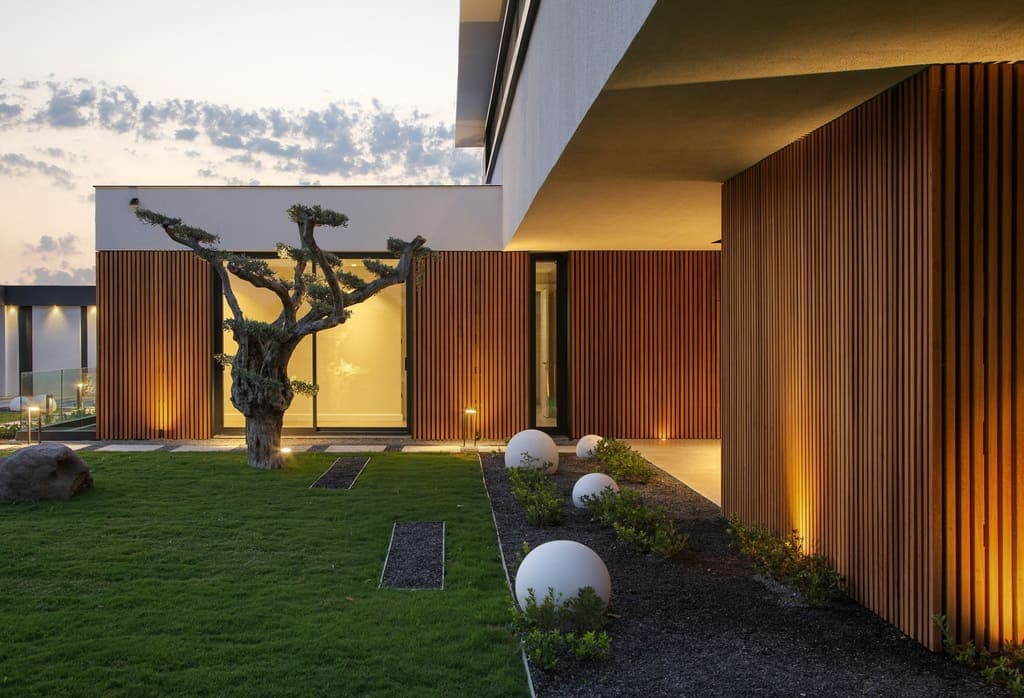
Why Choose Thermally Modified Wood for Covered Patio Walls?
Thermally modified wood undergoes a high-temperature treatment process that alters its cellular structure. This process aims to enhance the wood's stability and reduce its susceptibility to moisture absorption. For covered patio walls, these characteristics can be beneficial, as the wood is less prone to warping or shrinking compared to untreated lumber when exposed to fluctuating humidity levels.
The modification process also typically darkens the wood, creating a rich, consistent color throughout the material. This inherent coloration can reduce the need for heavy staining or painting, allowing the natural grain to show through. This aesthetic quality is often desired for outdoor living spaces where a connection to natural materials is valued.
Selecting the Right Profile and Species for Wall Applications
Thermally modified wood is available in various profiles suitable for wall cladding. Common options include tongue-and-groove, shiplap, and square-edge boards. For covered patio walls, the choice of profile often comes down to the desired aesthetic and ease of installation.
Tongue-and-groove profiles offer a tight, interlocking fit, which can create a smooth, continuous surface. Shiplap provides a distinct shadow line between boards, adding visual depth. Square-edge boards can be installed with a visible gap, creating a more open, contemporary look. Always confirm that the chosen profile is approved for vertical wall applications. Species such as Ash and Poplar are commonly used for thermal modification, offering different grain patterns and density.
For a clean, modern appearance, consider the NORX Clear Grade Thermally Modified Ash. Its smooth surface and consistent color lend themselves well to contemporary patio designs. If a more textured or rustic feel is desired, other thermally modified options may be suitable, but always verify their suitability for wall cladding.
Finishing and Appearance Considerations
While thermally modified wood is enhanced for stability, it will still naturally weather to a silver-gray patina over time if left unfinished and exposed to UV radiation. For covered patio walls, this weathering process may be slower and less uniform due to partial protection from the elements. If you prefer to maintain the original rich color, a UV-inhibiting finish or stain is recommended.
Clear penetrating oils can enhance the wood's natural tones and offer some protection. Pigmented stains can provide a more uniform color and greater UV resistance. It's important to choose a finish specifically designed for exterior wood and to follow the manufacturer's application and maintenance guidelines. Regular cleaning and reapplication of finish will help preserve the desired appearance.
Installation Best Practices for Covered Patio Walls
Proper installation is key to the longevity and appearance of thermally modified wood walls. The substructure should be sound and plumb, typically consisting of furring strips or battens to create a ventilation gap behind the cladding. This air gap helps manage moisture and allows the wood to acclimate.
Fasteners should be corrosion-resistant, such as stainless steel, to prevent staining of the wood. Depending on the profile, hidden fasteners or face fasteners may be used. For tongue-and-groove or shiplap, blind fastening through the tongue or lap can create a cleaner look. Always pre-drill pilot holes to avoid splitting the wood, especially near ends.
Allow for proper expansion and contraction. While thermally modified wood is more stable, it still experiences some movement. Maintain appropriate spacing between boards and at corners and edges as recommended by the manufacturer. Adequate ventilation at the top and bottom of the wall assembly is also important to ensure air circulation within the rainscreen cavity.
Hypothetical Project Example: Detroit Covered Patio Wall
Consider a hypothetical covered patio in a Detroit, MI home, featuring a back wall that is 12 feet wide and 8 feet high, fully protected by an overhang. The homeowner desires a modern, natural look. We choose NORX Clear Grade Thermally Modified Ash, with a tongue-and-groove profile, in 1x6 (nominal) dimensions, which provides approximately 5.125 inches of exposed face per board. The boards are typically sold in lengths such as 8, 10, 12, or 16 feet.
To cover the 12-foot wide wall, we'd need approximately (12 feet * 12 inches/foot) / 5.125 inches/board = 28.1 boards horizontally. Since boards are typically installed vertically for a covered patio wall, we'd use 8-foot lengths. For the width, we would need 12 feet / (5.125 inches / 12 inches/foot) = 28.1 boards. Rounding up, we would need 29 boards. Total lineal footage required would be 29 boards * 8 feet/board = 232 lineal feet. For a typical order, it's advisable to add 10-15% for cuts, waste, and future repairs, bringing the total to approximately 255-267 lineal feet. This would require purchasing 32-34 individual 8-foot boards.
The wall would be installed over a system of vertical furring strips, spaced according to manufacturer guidelines, with a dark-colored breathable building wrap behind them. Fastening would involve corrosion-resistant blind fasteners into the tongue of each board. A clear, UV-resistant penetrating oil would be applied to maintain the wood's warm tone and provide surface protection.
Before you order
- Confirm the specific thermally modified wood species and profile are approved for vertical wall cladding.
- Assess the level of protection the patio walls receive from direct sun and rain.
- Decide on the desired long-term appearance: natural graying or maintained color with a finish.
- Select appropriate exterior-grade finishes and ensure compatibility with thermally modified wood.
- Plan for a proper substructure with ventilation (rainscreen assembly) behind the cladding.
- Choose corrosion-resistant fasteners suitable for the chosen profile and installation method.
- Account for material expansion and contraction during installation.
- Calculate material quantities, including waste factor, based on accurate project dimensions.
Confirm installation details, approved uses and warranty terms in the current instructions for the exact product and profile. Your installer should verify the substrate, structure and applicable project requirements.
This is a planning guide for projects in Detroit, MI. Ask our team to confirm availability, delivery to your ZIP code and which branch can support your order.
Questions to help you decide
Can thermally modified wood be painted?
While thermally modified wood can be painted, it is often chosen for its natural wood aesthetic and enhanced color. Painting would obscure this natural appearance. If a solid color is desired, it is generally more common to use a solid-color stain or an opaque exterior paint system designed for wood, following all manufacturer recommendations for surface preparation and application.
Does thermally modified wood require maintenance?
Yes, like all exterior wood, thermally modified wood benefits from periodic cleaning and inspection. If a finish is applied to maintain its color, it will require reapplication according to the finish manufacturer's instructions, typically every few years depending on exposure. If left unfinished, it will weather to a silver-gray patina and may only require occasional cleaning to remove dirt or mildew.
Is thermally modified wood suitable for all climates?
Thermally modified wood's enhanced stability makes it a suitable material for various climates, including those with significant temperature and humidity fluctuations. Its reduced moisture absorption can be an advantage in regions like Detroit, MI, which experience cold winters and humid summers. However, proper installation techniques, including a ventilation gap, are crucial to ensure performance in any climate.
Ready to Plan Your Thermally Modified Wood Patio Walls?
For a material quote tailored to your project dimensions, exact profile, and ZIP code, please contact us. We can also confirm current availability and service options for your area. Explore our range of Thermally Modified Wood and Siding and Cladding products, including NORX and Maximo Accoya, to find the ideal solution for your Detroit, MI home.
Request a material quote →