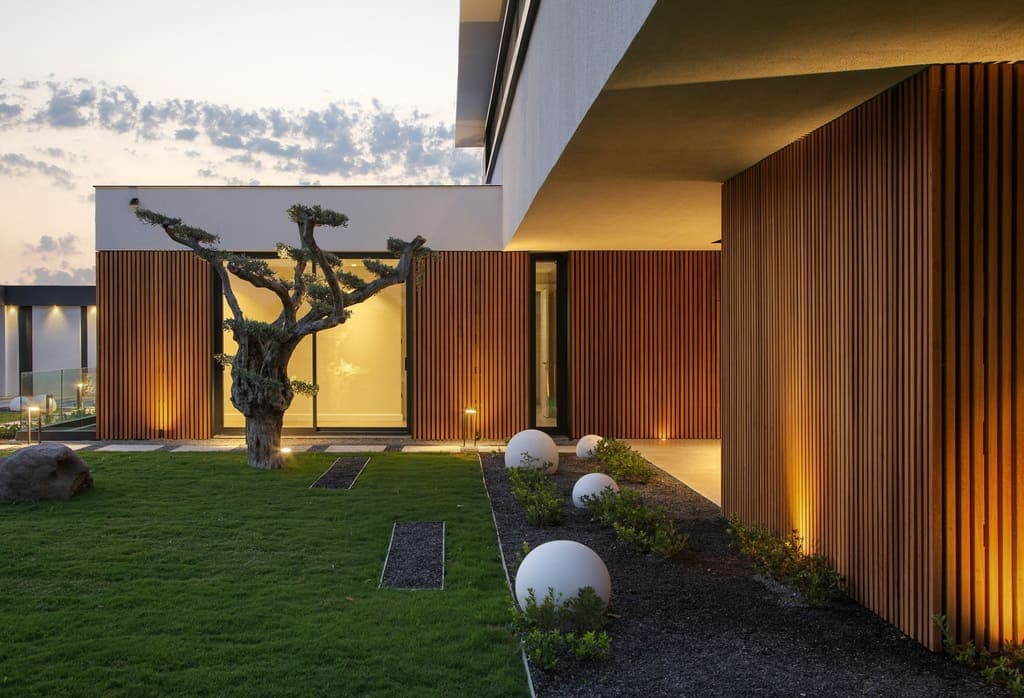
Understanding Thermally Modified Wood for Wall Applications
Thermally modified wood undergoes a high-heat treatment process that alters its cellular structure. This process aims to reduce the wood's ability to absorb moisture, which contributes to increased dimensional stability and a reduced tendency to swell, shrink, or cup when exposed to changes in humidity. For covered patio walls, where humidity fluctuations can still occur even with overhead protection, this stability is a key advantage.
The thermal modification process also darkens the wood, creating a richer, often more uniform color. This can be a desirable aesthetic for a covered outdoor space, offering a sophisticated backdrop to furniture and landscaping. While the wood's natural properties are enhanced, it's important to remember that it remains a wood product and will interact with its environment.
Selecting the Right Profile for Covered Patio Walls
The profile of the thermally modified wood planks significantly impacts the final look and installation method. Common profiles suitable for covered patio walls include tongue-and-groove, shiplap, and square-edge boards. Each offers a different aesthetic and installation characteristic.
Tongue-and-groove profiles create a tight, interlocking fit, which can provide a clean, continuous surface. This is often chosen for a more finished, interior-like appearance in covered outdoor spaces. Shiplap offers a distinct shadow line and a slightly more rustic or contemporary feel, depending on the reveal gap. Square-edge boards, while simpler, require precise spacing and can be installed with an open-joint rainscreen approach, even in covered areas, to allow for air circulation and drainage behind the cladding.
Consider the visual impact you desire. A narrow, V-groove tongue-and-groove might create a refined, linear look, while a wider shiplap could offer a bolder, more substantial presence. The choice of profile also influences fastener selection and visibility, with some systems allowing for concealed fasteners.
Finishing and Appearance Options
Thermally modified wood can be left unfinished to weather naturally to a silver-gray patina, or it can be treated with a finish to maintain its original color or enhance its tone. For covered patio walls, where direct sun exposure may be reduced but not eliminated, the rate of weathering can be slower and less uniform than on fully exposed surfaces.
If you opt for a finish, choose a product designed for exterior wood, such as a penetrating oil or a UV-resistant stain. These finishes can help protect the wood from UV degradation and moisture absorption, while also allowing for easier cleaning. Regular reapplication will be necessary to maintain the finish's appearance and protective qualities. Always follow the finish manufacturer's instructions for application and maintenance.
Installation Considerations for Covered Patio Walls
While covered patio walls offer some protection, proper installation is still crucial for longevity. Ensure adequate ventilation behind the cladding, even if it's not a full rainscreen system. A minimum air gap, typically achieved with furring strips, allows moisture to escape and helps prevent condensation buildup, which is important for any wood application.
Fasteners should be corrosion-resistant, such as stainless steel, to prevent staining of the wood and ensure long-term structural integrity. For concealed fastener profiles like tongue-and-groove, ensure the fasteners are driven correctly to avoid splitting the wood. For face-fastened applications, pre-drilling may be necessary, especially near board ends, to prevent cracking.
Consider how the wall will terminate at corners, the ceiling, and the base. Flashing and trim details are important to manage any water ingress, even in covered areas, and to provide a clean, finished appearance. Allow for expansion and contraction of the wood by following manufacturer-recommended spacing guidelines, especially for longer runs.
Project Example: Covered Patio Wall with Thermally Modified Wood
Imagine a covered patio measuring 12 feet wide by 10 feet deep, with a back wall and two side walls that are 8 feet tall. The back wall is 12 feet long, and each side wall is 10 feet long. You decide on a horizontal shiplap profile for the thermally modified wood, where each board is 5.5 inches wide (nominal 6-inch board) and 8 feet long.
First, calculate the total linear footage of walls: 12 ft (back) + 10 ft (side 1) + 10 ft (side 2) = 32 linear feet. The total area is 32 ft * 8 ft height = 256 square feet. Each 8-foot-long board, with a 5.5-inch exposed face, covers (5.5 / 12) * 8 = 3.67 square feet. To cover 256 square feet, you would need approximately 256 / 3.67 = 69.7 boards. Accounting for cuts and waste (typically 10-15% for wood cladding), you might plan to purchase around 77-80 boards.
The shiplap boards would then be installed horizontally, starting from the bottom, overlapping each course and securing with corrosion-resistant fasteners into the furring strips. Careful attention would be paid to corner details, using mitered joints or trim pieces for a clean finish. This approach combines the aesthetic appeal of the thermally modified wood with a robust installation method suitable for a covered outdoor environment.
Before you order
- Confirm the specific thermally modified wood species and profile are approved for vertical wall applications.
- Assess the degree of exposure to sun, rain, and humidity for your covered patio walls.
- Decide on a finish: natural weathering or a protective oil/stain.
- Plan for proper ventilation behind the cladding (e.g., furring strips).
- Select appropriate corrosion-resistant fasteners.
- Detail how corners, top, and bottom edges will be finished.
- Estimate material quantities, including waste factor.
- Consider the aesthetic impact of board width and profile on the overall look.
Confirm installation details, approved uses and warranty terms in the current instructions for the exact product and profile. Your installer should verify the substrate, structure and applicable project requirements.
This is a planning guide for projects in Denver, CO. Ask our team to confirm availability, delivery to your ZIP code and which branch can support your order.
Questions to help you decide
Can thermally modified wood be painted for covered patio walls?
While thermally modified wood can be painted, it's more commonly finished with penetrating oils or stains that highlight its natural grain and color. If painting, use a high-quality exterior primer and paint system designed for wood, and ensure proper surface preparation. Be aware that paint will require regular maintenance, potentially more frequently than oil finishes, to prevent peeling or cracking.
Is thermally modified wood suitable for all types of covered patios?
Thermally modified wood is generally suitable for most covered patio walls due to its enhanced stability. However, the specific environmental conditions, such as extreme humidity fluctuations or indirect exposure to splashing rain, should be considered. Always ensure adequate ventilation and proper installation details to maximize its performance in any covered outdoor setting.
How does thermally modified wood compare to other woods for covered patio walls?
Compared to untreated woods, thermally modified wood typically offers greater dimensional stability and improved resistance to decay due to its reduced moisture absorption. This can result in less movement, cupping, or warping over time. It provides a natural wood aesthetic that differs from composite materials or other engineered options, offering a balance of natural beauty and enhanced performance for outdoor applications.
Ready to Plan Your Covered Patio Walls?
Request a material quote with your project dimensions, desired profile, and ZIP code to confirm current availability and service options for thermally modified wood. Explore our selection of <a href="/thermally-modified-wood">thermally modified wood</a>, <a href="/siding-and-cladding">siding and cladding</a>, and <a href="/brands/norx">NORX products</a> to find the ideal solution for your outdoor living space. You may also consider <a href="/products/maximo-accoya">Maximo Accoya</a> for other exterior applications.
Request a material quote →