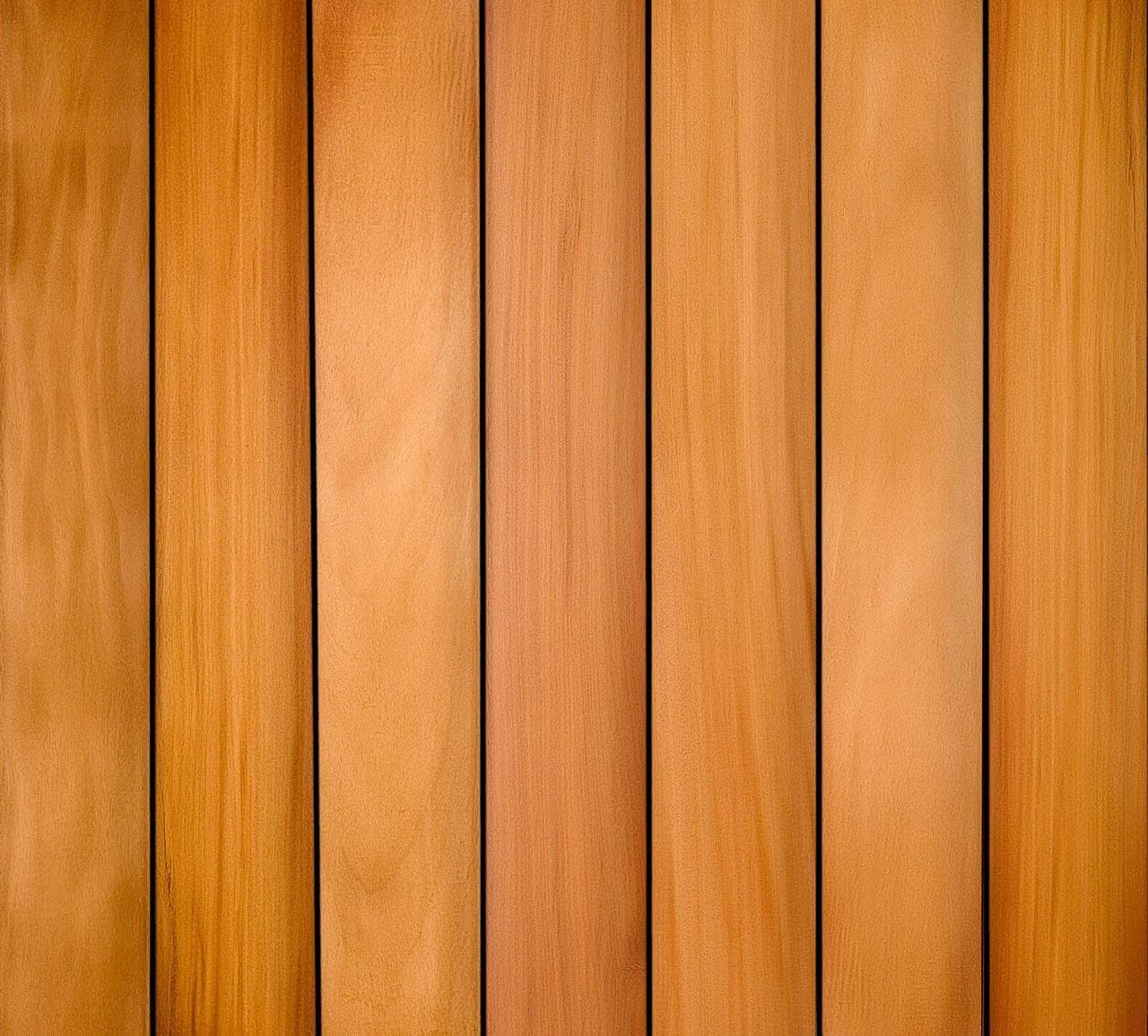
Understanding Garapa Hardwood for Terrace Applications
Garapa (Apuleia leiocarpa), also known as Brazilian Ash, is a tropical hardwood originating from Brazil. It is characterized by its golden color, which can bring a warm and modern aesthetic to any exterior. This wood is recognized for its durability and natural resistance to rot, decay, and insects, reducing the need for constant chemical treatments.
For terraces, especially those exposed to varying weather, Garapa's resistance to weather changes is a key attribute. These properties make it a viable option for elevated decking surfaces where longevity and minimal maintenance are desired.
Garapa is also noted for being scratch and slip resistant, with minimal splintering. This can contribute to a more comfortable and practical surface for outdoor living areas on a terrace, where bare feet or pets might be present. Its 'great fire rating' is another characteristic to consider for projects, though specific local building codes and requirements should always be verified for any installation.
Designing a Terrace with Garapa: A Hypothetical Example
Consider a hypothetical terrace project for a Denver, CO residence: a 10-foot by 15-foot rectangular terrace on the second story, accessed from a main living area. The design goal is a contemporary outdoor lounge space that complements the home's architecture, with a durable, warm-toned decking surface.
For this terrace, a straight-lay pattern of Garapa decking is chosen, utilizing 5/4"x6" (1" x 5.5" actual) boards. The golden hue of the Garapa is intended to create a visual transition from the indoor space to the outdoors, enhancing the sense of an extended living area. A picture-frame border will define the perimeter, providing a finished edge and visually anchoring the decking.
Given the 10-foot by 15-foot dimensions, the total area is 150 square feet. For the main field, using 5.5-inch wide boards, approximately 33 boards would be needed for the 15-foot length (15 ft * 12 in/ft / 5.5 in/board = 32.7 boards). For the 10-foot width, approximately 22 boards (10 ft * 12 in/ft / 5.5 in/board = 21.8 boards). Accounting for cuts and waste, and considering available lengths from 3 to 24 feet, careful planning of board lengths is essential to minimize waste. For the border, additional boards would be required to create the frame, which would be cut to size to fit around the main field.
Planning for Denver's Climate and Terrace Exposure
Terraces in Denver, CO can experience significant temperature fluctuations, intense sun exposure, and snowfall. Garapa's natural resistance to weather changes makes it suitable for such conditions. However, proper installation practices are crucial to accommodate wood movement, especially in an environment with varying humidity and temperature.
For elevated terraces, adequate ventilation beneath the deck boards is important to prevent moisture buildup and ensure the longevity of the material. This helps the wood dry evenly and minimizes potential issues like warping or cupping. Consideration should also be given to how the decking will perform under direct sunlight; while Garapa has a golden color, all wood exposed to UV rays will naturally weather and may change in appearance over time, typically developing a silver-gray patina if left untreated.
For those who wish to maintain the golden color, periodic application of a UV-inhibiting oil finish is typically recommended. This is a maintenance consideration to factor into the long-term plan for your terrace. Without treatment, the wood will age gracefully to a natural silver-gray.
Material Takeoff and Ordering Considerations
To accurately calculate the quantity of Garapa decking needed, precise measurements of your terrace area are essential. Measure the length and width of the main decking area, as well as any areas designated for borders, stairs, or other features.
Garapa decking is available in profiles such as 5/4"x6" (actual 1" x 5.5"), with grooved options also available. Lengths typically range from 3 to 24 feet. When calculating, consider the most efficient way to lay out boards to minimize waste. It's often recommended to add an additional 10-15% to your total square footage calculation for cuts, waste, and potential future repairs. For complex layouts or diagonal patterns, a higher waste factor may be advisable.
Remember that area divided by module area only provides area-equivalent coverage. An 8-by-5-foot rectangle is 40 square feet, but if using 24-inch wide modules, a straight grid might require 12 purchased tiles, not 10, depending on edge cuts. For decking, this means accounting for full board lengths and how they fit your dimensions, rather than just total square footage. Always confirm the exact assembly and permitted edge cuts with your installer or project plan.
Complementary Materials and Installation Support
Beyond the Garapa decking boards themselves, consider the full scope of materials needed for your terrace project. This includes appropriate fasteners (hidden fasteners are often preferred for a clean look, or face-fastening with pre-drilling), suitable joist material, and any support structures. For hidden fasteners, ensure they are compatible with hardwood and the specific Garapa profile you choose.
For the sub-structure, materials like pressure-treated lumber or steel can provide a robust foundation for your Garapa deck. Ensuring proper joist spacing and structural integrity is paramount for any elevated terrace. Proper ventilation for the sub-deck structure is also critical to ensure the longevity of both the decking and the structural components.
Finally, plan for any railing systems, stairs, or integrated planters that will be part of your terrace design. Coordinating these elements with the golden tone of Garapa decking can help create a cohesive and inviting outdoor living space. Consider products like Ipe decking for contrasting accents or composite/PVC decking for different aesthetic or maintenance profiles, if desired.
Explore related products that might complement your Garapa terrace: [Decking](/decking), [Hardwood Decking](/decking/hardwood), [Ipe Decking](/decking/hardwood/ipe), [Composite Decking](/decking/composite), [PVC Decking](/decking/pvc).
Before you order
- Confirm terrace dimensions and desired layout (straight, diagonal, border).
- Decide on Garapa profile: 5/4"x6" (1" x 5.5" actual) and any grooved options.
- Determine fastening method: hidden fasteners or face-fastening.
- Plan for sub-structure materials and adequate ventilation.
- Consider long-term maintenance: natural weathering vs. oil finish to retain golden color.
- Verify local building codes and fire ratings for elevated structures.
- Account for waste factor (10-15% recommended) in material calculations.
- Identify complementary materials for railings, stairs, and other features.
Confirm installation details, approved uses and warranty terms in the current instructions for the exact product and profile. Your installer should verify the substrate, structure and applicable project requirements.
This is a planning guide for projects in Denver, CO. Ask our team to confirm availability, delivery to your ZIP code and which branch can support your order.
Questions to help you decide
Does Garapa decking require special treatment for Denver's weather?
Garapa has natural resistance to weather changes, rot, decay, and insects. While it doesn't require constant chemical treatments, applying a UV-inhibiting oil can help maintain its golden color, otherwise it will naturally weather to a silver-gray patina.
What profiles and lengths are available for Garapa decking?
Garapa decking is typically available in a 5/4"x6" profile, which is an actual 1" x 5.5" size, with grooved options available. Board lengths generally range from 3 to 24 feet.
Ready to Plan Your Garapa Terrace in Denver, CO?
Request a material quote today. Provide your project dimensions, desired Garapa profile, and ZIP code to confirm current availability and service options for your Denver terrace project. Visit our quote page at [Lumber Plus contact us](/contact-us).
Request a material quote →