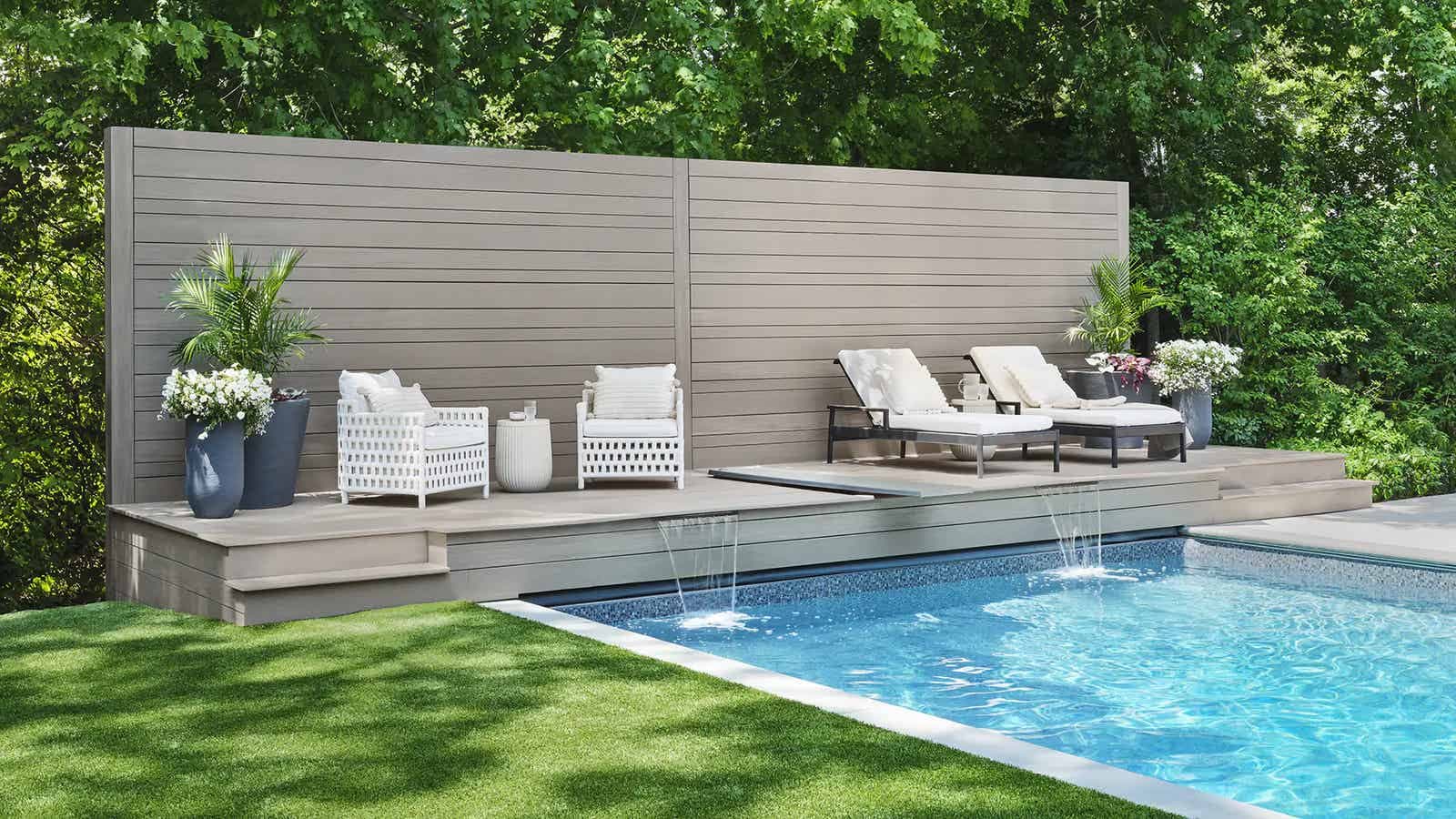
Why PVC Decking for Pool Terraces?
The primary advantage of PVC decking for pool terraces stems from its synthetic composition. Unlike wood-based materials, PVC contains no wood fiber, which means it is waterproof to its core. This characteristic is particularly relevant for pool surrounds, splash zones, and any area where boards will experience standing water or frequent saturation. The absence of wood fiber eliminates the risk of swelling, staining, or rot that can affect other decking materials in consistently wet conditions.
PVC decking is often specified for applications where boards are expected to be frequently wet, such as pool surrounds, docks, and even covered porches exposed to weather from multiple directions. This inherent water resistance contributes to its durability and potential longevity in a poolside setting. Additionally, advanced capping on many PVC boards is designed to shed grease and wine, allowing for simpler cleanup with soap and water, which is a practical benefit for an area prone to spills during outdoor gatherings.
Some PVC decking options also offer heat-mitigating color choices, which can be an important consideration for surfaces exposed to direct sun, helping to maintain a more comfortable temperature underfoot. The material’s lighter weight compared to hardwood and some composite options can also simplify handling and installation.
Understanding PVC Decking Profiles and Appearance
PVC decking is available in various collections that aim to replicate the aesthetics of natural wood, offering deep wood looks and a range of colors. Collections such as Vintage, Landmark, and Harvest provide options for different visual preferences, from rich, multi-tonal boards to more uniform finishes. These aesthetic choices allow homeowners to integrate the decking seamlessly with their overall outdoor design theme.
When planning your pool terrace, consider the available board widths and lengths to minimize seams and optimize the visual flow of the deck. Fascia and edge finishes are also important for a polished look around the perimeter of the pool and the deck itself. Coordinating these elements ensures a cohesive and attractive final appearance.
Planning for Water Management and Drainage
While PVC decking is waterproof, proper planning for water management and drainage remains crucial for any pool terrace. Ensure that the underlying structure and surrounding landscape are designed to direct water away from the deck and pool area. This prevents water from pooling on the surface and helps maintain the integrity of the entire installation.
Adequate spacing between boards is necessary, following manufacturer guidelines, to allow for drainage and air circulation. Even though PVC does not absorb water, proper ventilation under the deck can help manage moisture and contribute to the overall health of the deck structure and surrounding environment. Consider the slope and grading of the sub-structure to facilitate efficient water runoff.
Installation Considerations for a Pool Terrace
Installation of PVC decking around a pool requires attention to detail. Fastening methods, whether hidden or face-fastened, should be chosen based on manufacturer recommendations and aesthetic preferences. Hidden fasteners can create a smooth, uninterrupted surface, which can be desirable for a pool area.
When cutting boards, especially for intricate shapes around the pool edge or features, ensure precise measurements and clean cuts. The lighter weight of PVC compared to some other decking materials can make handling and installation easier. Always consult the specific product guide for board spacing requirements, as these can vary by manufacturer and environmental conditions. Proper spacing is essential for drainage and to accommodate any material movement.
Maintenance and Longevity of PVC Decking
PVC decking is designed for low maintenance. Its capped polymer surface is engineered to resist stains from common spills, allowing for cleanup with soap and water. This ease of cleaning is a practical benefit for a pool terrace where spills and splashes are common. Regular cleaning to remove debris and dirt can help maintain its appearance.
The 100% synthetic composition of PVC decking means it is not susceptible to rot or insect damage, which can be concerns for wood products in moist environments. While PVC decking is a durable material, it is important to follow any specific maintenance guidelines provided by the manufacturer to ensure its longevity and to maintain any applicable coverage.
Before you order
- Confirm local building codes and permits required for deck construction around a pool.
- Evaluate the specific site conditions, including sun exposure, prevailing winds, and existing drainage patterns.
- Select a PVC decking collection that complements your home's architecture and landscape design.
- Verify heat-mitigating color options if the deck will be in direct, intense sunlight.
- Plan for adequate sub-structure design to support the deck and ensure proper water drainage away from the pool.
- Choose appropriate fastening systems (hidden or face-fastened) based on aesthetic and functional preferences.
- Account for all necessary trim, fascia, and stair components to match the chosen decking.
- Review manufacturer installation instructions for board spacing, ventilation, and edge finishing.
- Consider accessibility and safety features, such as slip-resistant surfaces if available for your chosen product.
- Estimate material quantities, including waste factor for cuts and adjustments around pool features.
Confirm installation details, approved uses and warranty terms in the current instructions for the exact product and profile. Your installer should verify the substrate, structure and applicable project requirements.
This is a planning guide for projects in Denver, CO. Ask our team to confirm availability, delivery to your ZIP code and which branch can support your order.
Questions to help you decide
Is PVC decking slippery when wet around a pool?
While PVC decking is designed for outdoor use, any surface can become slippery when wet, especially with pool chemicals or organic residue. It is important to regularly clean your deck. Some PVC decking products may offer textured surfaces or specific finishes designed to enhance grip; check the product specifications for details regarding slip resistance.
How do I clean a PVC pool terrace deck?
Most PVC decking can be cleaned with a solution of mild soap and water, using a soft-bristle brush. For specific stains or more stubborn dirt, consult the manufacturer's cleaning recommendations, as certain chemicals or high-pressure washing can potentially damage the surface. Regular cleaning helps prevent the buildup of mold, mildew, and other residues common in poolside environments.
Can PVC decking be installed directly over an existing concrete slab around a pool?
Installing PVC decking over an existing concrete slab is possible, but it requires careful planning to ensure proper drainage and ventilation. A sleeper system or a pedestal system is typically used to create an air gap between the concrete and the decking boards. This gap is crucial for water runoff and to prevent moisture buildup. Always consult the decking manufacturer's installation guidelines for specific recommendations regarding installation over solid surfaces.
Ready to Plan Your PVC Pool Terrace?
Request a material quote with your project dimensions, desired profile, and ZIP code to confirm current availability and service options for your PVC decking project. Explore our full range of decking options, including hardwood and composite, to find the perfect material for your outdoor space.
Request a material quote →