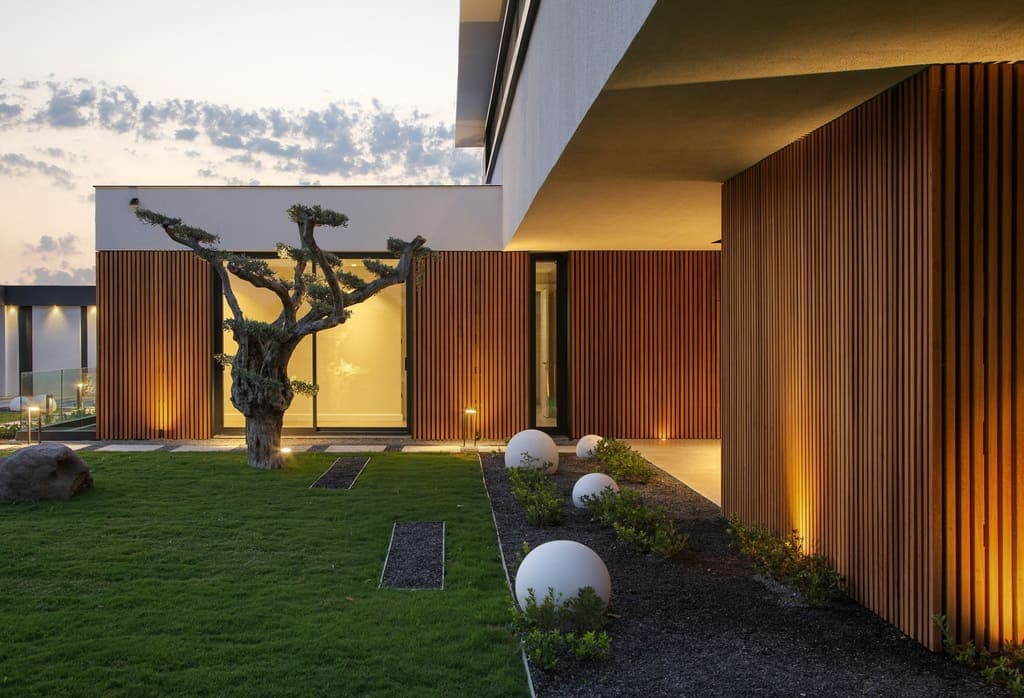
Why Thermally Modified Wood for Covered Patio Walls?
Thermally modified wood undergoes a high-temperature treatment process that alters its cellular structure, resulting in material with improved dimensional stability and reduced susceptibility to moisture absorption compared to untreated wood. This makes it a suitable choice for exterior applications, even in climates with seasonal shifts like Bismarck, ND.
For covered patio walls, the primary benefits include a consistent appearance over time, less prone to warping or cupping. While protected from direct precipitation, these walls still experience humidity changes, making the enhanced stability of thermally modified wood a significant advantage. It offers a sophisticated, natural wood aesthetic that can complement various architectural styles, from modern to rustic.
Choosing the Right Profile and Species
Thermally modified wood is available in various profiles, each creating a distinct visual effect. Common options include tongue-and-groove, shiplap, and board-and-batten styles. For covered patio walls, the choice often comes down to desired shadow lines and ease of installation.
Tongue-and-groove profiles offer a tight, interlocking fit, which can create a smooth, continuous surface. Shiplap provides a clean, overlapping joint that casts a subtle shadow line, adding depth. Board-and-batten, while less common for a full covered patio wall, can offer a more dramatic, textured appearance. Popular species for thermal modification include Ash and Pine, each offering unique grain patterns and color tones. For example, NORX thermally modified wood is available in various profiles suitable for vertical applications.
Consider the overall design of your patio and home. A contemporary design might favor a sleek shiplap or tongue-and-groove, while a more traditional or rustic aesthetic could lean towards a wider board profile or a subtle V-groove.
Finish Options and Weathering
Thermally modified wood can be left unfinished to gradually weather to a silver-gray patina, or it can be treated with a protective finish to retain its original color. For covered patio walls, an unfinished approach can be appealing for a low-maintenance, natural look, but the weathering process will still occur, albeit potentially more slowly and unevenly than fully exposed surfaces.
If maintaining the initial rich color is desired, applying a penetrating oil or stain formulated for exterior wood is recommended. These finishes help protect the wood from UV degradation and moisture, although reapplication will be necessary over time. Even on covered walls, UV exposure can cause color changes, so regular inspection and reapplication as needed are important for finish longevity.
It's important to understand that 'low maintenance' does not mean 'no maintenance.' All wood, even thermally modified, benefits from periodic cleaning to remove dirt and mildew, especially in a partially enclosed environment.
Installation and Substructure Considerations
Proper installation is crucial for the performance and longevity of thermally modified wood walls. Even on covered patios, a rainscreen assembly is often recommended to promote airflow behind the cladding, allowing any moisture to dry out effectively. This involves installing furring strips over a weather-resistant barrier (WRB) on the wall sheathing, creating a ventilation gap.
Fastening methods should follow manufacturer recommendations. Typically, stainless steel fasteners are used to prevent staining and ensure long-term hold. Concealed fastening systems are available for some profiles, offering a cleaner aesthetic. Ensure adequate spacing between boards to allow for minor expansion and contraction, even with the enhanced stability of thermally modified wood.
Consider the design details around corners, openings, and the base of the wall. Proper flashing and trim are essential to prevent water intrusion and create a finished look. For instance, a small gap at the bottom of the wall, protected by a drip edge, can help shed any condensation or splashed water.
Worked Example: Covered Patio Wall in Bismarck
Let's consider a hypothetical covered patio wall in Bismarck, ND, measuring 12 feet wide by 8 feet tall. The homeowner desires a modern aesthetic using NORX Thermally Modified Ash in a shiplap profile, with individual boards measuring 5.5 inches wide and 12 feet long. The plan includes vertical installation over furring strips.
First, calculate the wall area: 12 ft x 8 ft = 96 square feet. Next, determine the number of board courses needed. A 5.5-inch wide board (0.4583 feet) means approximately 12 ft / 0.4583 ft = 26.18 boards. Rounding up, we'd need 27 boards. Since each board is 12 feet long, and the wall is 8 feet tall, each board will yield one full 8-foot section and a 4-foot offcut. However, for vertical installation, we would need 27 boards of 8-foot length. If purchasing 12-foot lengths, we would need 27 boards, with each yielding an 8-foot section and a 4-foot reusable offcut (assuming no waste from cutting).
This creates the necessary ventilation gap. Stainless steel fasteners would be used to secure the shiplap boards to the furring strips, typically with a concealed fastener system or face-fastened through the overlap. This approach ensures durability and a clean appearance for the covered patio wall.
Before you order
- Verify local building codes and HOA requirements for exterior finishes.
- Select thermally modified wood species and profile (e.g., Ash shiplap, Pine tongue-and-groove).
- Decide on finish: natural weathering or applied stain/oil.
- Plan for rainscreen assembly with furring strips and weather-resistant barrier.
- Choose appropriate stainless steel fasteners.
- Measure wall dimensions accurately for material quantity calculation.
- Consider trim details for corners, edges, and openings.
- Plan for periodic cleaning and finish reapplication if chosen.
Confirm installation details, approved uses and warranty terms in the current instructions for the exact product and profile. Your installer should verify the substrate, structure and applicable project requirements.
This is a planning guide for projects in Bismarck, ND. Ask our team to confirm availability, delivery to your ZIP code and which branch can support your order.
Questions to help you decide
Can thermally modified wood be painted?
While thermally modified wood can accept paint, it is generally recommended to use penetrating oils or stains, or to allow it to weather naturally. The dimensional stability of thermally modified wood reduces issues like paint cracking and peeling, but paint can obscure the natural wood grain that is often a desired characteristic of this material. Consult with the finish manufacturer for suitable exterior paint options if this aesthetic is preferred.
How does Bismarck's climate affect thermally modified wood on a covered patio?
Bismarck's climate, with its wide temperature swings and seasonal humidity variations, highlights the benefits of thermally modified wood's enhanced dimensional stability. While covered patio walls are protected from direct rain and snow, they are still exposed to ambient humidity and temperature changes. The thermal modification process helps the wood resist warping, checking, and cupping that can occur with untreated wood in such conditions, contributing to a more stable and long-lasting installation.
Is special maintenance required for thermally modified wood on covered patio walls?
Thermally modified wood is considered low-maintenance compared to untreated wood, but it is not maintenance-free. For covered patio walls, periodic cleaning to remove dust, dirt, and any mildew is recommended to maintain its appearance. If a finish (like an oil or stain) is applied, it will require reapplication over time to protect against UV degradation and maintain its color. The frequency depends on the product, exposure, and desired aesthetic.
Ready to Plan Your Thermally Modified Wood Patio Walls?
Request a material quote with your project dimensions, desired profile, and ZIP code to confirm current availability and service options. Our team can help you select the right materials for your Bismarck, ND project.
Request a material quote →