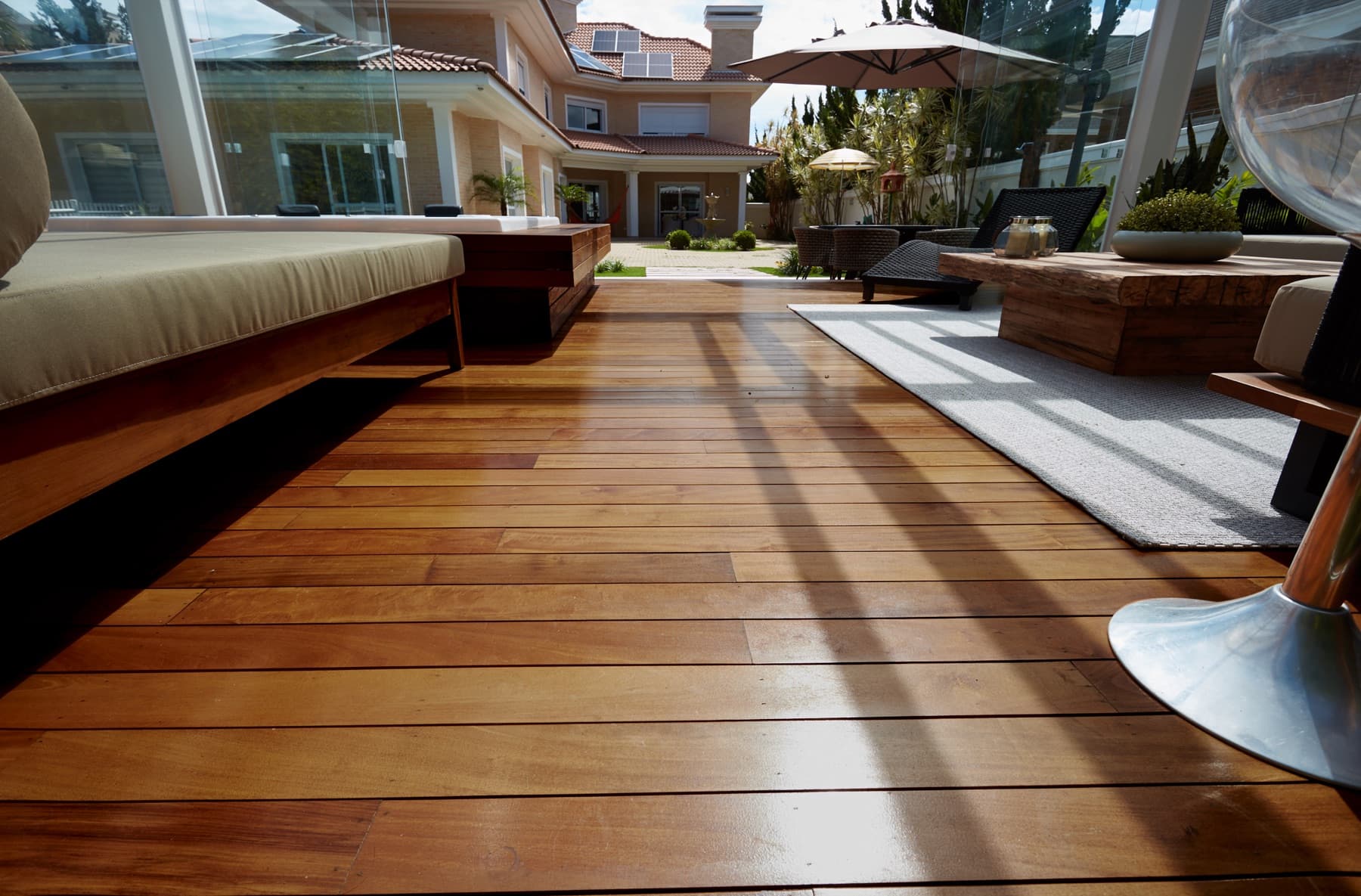
Assessing Your Existing Deck Frame for Hardwood
Before selecting any new decking material, a thorough inspection of your existing deck frame is essential. Hardwood decking, particularly dense species like Ipe or Cumaru, is heavier than many common decking materials. Your frame must be structurally sound and capable of supporting the increased load.
Check all joists, beams, and support posts for signs of rot, insect damage, or excessive deflection. Pay close attention to connections and fasteners. Any compromised elements should be repaired or replaced. Ensure the spacing of your joists is appropriate for the hardwood board dimensions you plan to use. Consult local building codes and a qualified professional for structural integrity assessments, especially if you are unsure about the frame's condition or if you plan to change the deck's footprint or load requirements.
Choosing Your Hardwood Species: Ipe vs. Cumaru
Lumber Plus offers a range of Brazilian hardwood decking species, each with distinct characteristics. For renovation projects, Ipe and Cumaru are frequently chosen due to their durability and resistance to harsh weather conditions.
Ipe, often called Brazilian walnut, is a benchmark for durability. It features a reddish-brown to olive-brown color and is noted for its minimal movement post-installation and natural resistance to rot, insects, and weather changes. It can last for decades with proper care. Cumaru is another very durable tropical hardwood, resistant to termites and weather changes. Cumaru also imparts a subtle scent of cinnamon and vanilla when worked.
Both species can be left untreated to weather to a silvery-gray patina or can be maintained with a UV-blocking sealer to preserve their original rich colors. Your choice may depend on aesthetic preference, specific project demands, and budget considerations.
Explore more about Ipe: [Lumber Plus Ipe Hardwood Decking](/decking/hardwood/ipe)
Explore more about Cumaru: [Lumber Plus Hardwood Decking](/decking/hardwood)
Understanding Hardwood Profiles and Lengths
Hardwood decking is available in various profiles and lengths. Lengths can vary, typically ranging from 3 to 24 feet. When planning your renovation, consider how board lengths will impact your layout, minimizing waste and visible seams.
For a seamless appearance, longer boards are often preferred, but they can be more challenging to transport and install. Shorter boards might be more economical for smaller areas or complex layouts requiring many cuts. Always confirm current availability of specific profiles and lengths when requesting a quote, as inventory can vary.
Consider [Lumber Plus Hardwood Decking](/decking) for a broader overview of available species and profiles.
Worked Example: Renovating a 10x15-foot Deck in Bismarck
Let's consider a hypothetical deck renovation project for a 10-foot by 15-foot deck in Bismarck, ND.
First, calculate the total deck surface area: 10 feet * 15 feet = 150 square feet. Next, determine how many linear feet of Ipe decking are needed. To cover 10 feet of width, you'd need approximately 10 / 0.468 = 21.36 boards. Round up to 22 boards for full coverage across the width.
For the 15-foot length, if using 15-foot boards, you would need 22 boards * 15 feet/board = 330 linear feet. If using a mix of lengths, say 10-foot and 5-foot boards to minimize waste, the calculation becomes more intricate, requiring a detailed cut plan. Always add a waste factor, typically 10-15%, to account for cuts, defects, and future repairs. So, for this project, you'd order approximately 330 linear feet * 1.15 (15% waste) = 379.5 linear feet. Round up to 380 linear feet to ensure sufficient material. It is always best to plan your board layout on paper before ordering to optimize lengths and reduce waste.
Installation Considerations for Hardwood Decking
Due to its density and hardness, hardwood decking requires specific installation techniques and tools. Pre-drilling is often necessary to prevent splitting when using face fasteners. Hidden fastener systems are also popular for a clean, fastener-free surface appearance, but ensure the chosen system is compatible with the specific hardwood species and profile.
Proper ventilation beneath the deck is crucial to prevent moisture buildup and ensure the long-term stability of the hardwood. Maintain adequate spacing between boards to allow for drainage and natural expansion and contraction. Always refer to the manufacturer's specific installation guidelines for your chosen hardwood product.
Consider complementary products such as [Lumber Plus Composite Decking](/decking/composite) or [Lumber Plus PVC Decking](/decking/pvc) if you are exploring alternatives or combining materials for specific design elements.
Before you order
- Inspect existing deck frame: Check joists, beams, and posts for structural integrity, rot, or damage.
- Select hardwood species: Compare Ipe and Cumaru based on durability, appearance, and budget.
- Determine profile and lengths: Choose board dimensions that minimize waste and suit your aesthetic.
- Plan installation method: Decide on face fastening with pre-drilling or a compatible hidden fastener system.
- Consider ventilation: Ensure adequate airflow beneath the deck for longevity.
- Consult local codes: Verify compliance with all local building regulations for deck renovations.
Confirm installation details, approved uses and warranty terms in the current instructions for the exact product and profile. Your installer should verify the substrate, structure and applicable project requirements.
This is a planning guide for projects in Bismarck, ND. Ask our team to confirm availability, delivery to your ZIP code and which branch can support your order.
Questions to help you decide
Can I use my existing deck frame for hardwood decking?
You can, but it requires a thorough inspection. Hardwood decking is dense and heavier than many other materials, so your existing frame must be structurally sound and capable of supporting the additional load.
What is the difference between Ipe and Cumaru for decking?
Both Ipe and Cumaru are highly durable Brazilian hardwoods. Ipe is known for its exceptional hardness and resistance to rot and insects, with a reddish-brown to olive-brown color. Cumaru is also very durable, resistant to termites and weather, and has a slightly softer feel than Ipe, often displaying golden-brown to reddish-brown tones. Ipe generally has a longer projected lifespan.
How much maintenance does hardwood decking require in Bismarck's climate?
Hardwood decking is relatively low maintenance. A yearly wash to remove dirt and debris is generally sufficient. If you wish to preserve the original color, applying a UV-blocking sealer annually or bi-annually is recommended. If left untreated, the wood will naturally weather to a silvery-gray patina, which does not affect its structural integrity.
Ready to Transform Your Bismarck Deck?
Request a material quote today! Provide your project dimensions, desired hardwood profile, and ZIP code to confirm current availability and service options for your deck renovation.
Request a material quote →