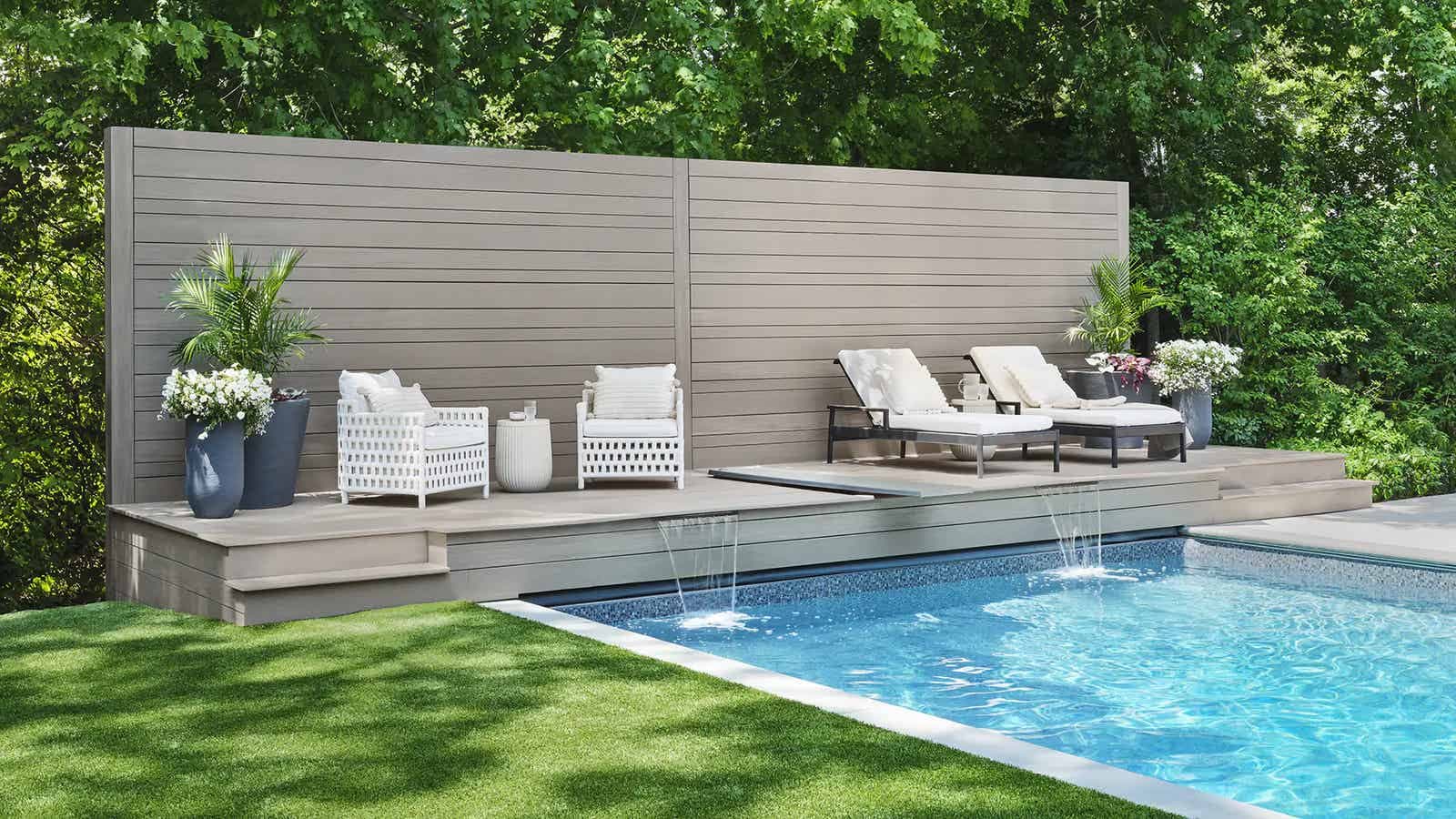
Why PVC Decking Excels in Wet Environments
The primary benefit of PVC decking for a pool terrace is its composition. Being 100% synthetic with zero wood fiber, PVC boards are inherently waterproof. This characteristic is crucial for areas like pool surrounds, docks, or covered porches where boards might experience prolonged exposure to moisture from both above and below. This eliminates concerns about the material swelling, staining, or rotting due to water exposure, chlorinated water, or other pool chemicals.
This inherent water resistance contributes to a low-maintenance profile. Capped polymer surfaces are designed to shed common spills like grease and wine, allowing for easy cleaning with soap and water. This simplifies the upkeep required to maintain a clean and inviting pool area.
Design Considerations for a Pool Terrace
When planning a PVC deck for a pool terrace, consider both the aesthetic and functional aspects. PVC decking is available in various collections, such as TimberTech Azek's Vintage, Landmark, and Harvest lines, which offer diverse appearances, including deeper wood looks. Selecting a color that complements your home's exterior and landscaping is important, but also consider heat mitigation. Some color options are designed to absorb less heat, which can be a comfort factor for bare feet on sunny days.
Board width and length selections also impact the overall visual. While PVC decking is not typically structural, its lighter weight compared to hardwood and some composites can make handling and installation faster, potentially simplifying certain project logistics. Planning for proper drainage around the pool deck is also essential, ensuring water can escape the surface efficiently and not pool against the house or other structures.
Installation and Fastening for Poolside Decks
PVC decking can be installed using either hidden fasteners or face-fastening methods, depending on the specific product and desired aesthetic. Hidden fasteners create a smooth, uninterrupted surface, which can be particularly appealing around a pool where exposed screw heads might be less desirable. Always consult the manufacturer's specific installation guidelines for board spacing and fastening requirements to ensure proper performance and longevity.
Ventilation beneath the deck is also important, even for waterproof PVC. While the boards themselves are not susceptible to moisture damage, proper airflow helps manage moisture levels in the substructure and can contribute to overall deck health. Ensure that the deck design allows for adequate cross-ventilation, especially in areas where the deck might be low to the ground or enclosed.
Maintenance and Longevity of PVC Pool Decks
One of the key advantages of PVC decking for a pool terrace is its low maintenance. The synthetic material resists mold, mildew, and insect damage, which are common concerns with wood products in moist environments. Routine cleaning typically involves soap and water to remove dirt, pool chemicals, or spills. Always check the manufacturer's recommendations for compatible cleaning products to avoid damaging the surface.
While PVC decking is designed for durability, understanding its long-term characteristics is important. Brands like Azek offer extensive warranties that cover the material for as long as you own your home, including fade and stain coverage. This provides peace of mind regarding the material's performance over time in a demanding application like a pool terrace.
Worked Example: A 200 sq ft Pool Terrace in Bismarck, ND
Let's consider a hypothetical pool terrace project in Bismarck, ND, measuring 10 feet by 20 feet, totaling 200 square feet. For this project, a homeowner wants to use PVC decking with a standard board width of 5.5 inches (0.458 feet) and available lengths of 12, 16, or 20 feet. The goal is to minimize seams and waste.
For a 10-foot by 20-foot area, running boards along the 20-foot dimension would require fewer seams. If we select 20-foot boards, each board covers 0.458 feet * 20 feet = 9.16 square feet. To cover the 200 square feet, we would need approximately 200 / 9.16 = 21.83 boards. Since boards are purchased in full lengths, 22 boards would be needed for the main deck area, assuming no significant waste from cuts not aligning with the 10-foot width. The 10-foot width would require 10 feet / 0.458 feet/board = 21.83 boards across. So, 22 boards, each 20 feet long, would cover the main area, with some trimming on the width.
For a picture frame border, if we plan a single 5.5-inch board around the perimeter, we would need additional material. The perimeter is (10 + 20) * 2 = 60 linear feet. Allowing for mitered corners and some waste, approximately 65-70 linear feet of border material might be needed. This could translate to 4-5 additional 16-foot boards, depending on the exact cut plan. Always add a small percentage (5-10%) for cuts, waste, and potential future repairs. This hypothetical example illustrates the need for precise measurements and a detailed cut plan to optimize material purchase.
Before you order
- Review local building codes and HOA requirements for pool decks.
- Measure your pool terrace area accurately, including any steps or curves.
- Consider the desired aesthetic: wood-look, solid color, board width, and pattern.
- Evaluate heat-mitigating color options for comfort in direct sun.
- Plan for proper drainage and ventilation beneath the deck.
- Choose between hidden fasteners for a smooth finish or face-fastening.
- Factor in fascia boards, stair treads, and any railing connections.
- Research manufacturer-recommended cleaning and maintenance procedures.
- Obtain samples to assess color, texture, and slip resistance.
- Request a detailed material quote based on your project dimensions and chosen products.
Confirm installation details, approved uses and warranty terms in the current instructions for the exact product and profile. Your installer should verify the substrate, structure and applicable project requirements.
This is a planning guide for projects in Bismarck, ND. Ask our team to confirm availability, delivery to your ZIP code and which branch can support your order.
Questions to help you decide
Is PVC decking slippery when wet?
It is important to review specific product specifications and consider the finish of the chosen PVC board to understand its slip resistance characteristics, especially for pool surrounds where water exposure is constant. Regular cleaning can also help maintain the surface texture.
How does PVC decking handle Bismarck's winter weather?
PVC decking is a synthetic material that is designed to withstand a range of weather conditions, including freezing temperatures. Unlike wood, it does not absorb moisture, which prevents issues like cracking or warping due to freeze-thaw cycles. However, proper installation and sub-structure ventilation are still important for overall deck longevity.
Can I install PVC decking directly over an existing concrete patio?
Installing PVC decking over an existing concrete patio requires careful planning to ensure proper ventilation and drainage. While it's technically possible, it typically involves building a sleeper system or a low-profile substructure to elevate the deck boards. This creates an air gap that allows for airflow and prevents moisture from getting trapped between the decking and the concrete. Direct contact without ventilation can lead to issues with the substructure and may void some warranties. Always consult the manufacturer's installation guides for specific recommendations on installing over solid surfaces.
Ready to Plan Your PVC Pool Terrace?
Request a material quote with your project dimensions, exact profile preferences, and ZIP code to confirm current availability and service options. Our team can assist you in selecting the right PVC decking for your pool area.
Request a material quote →