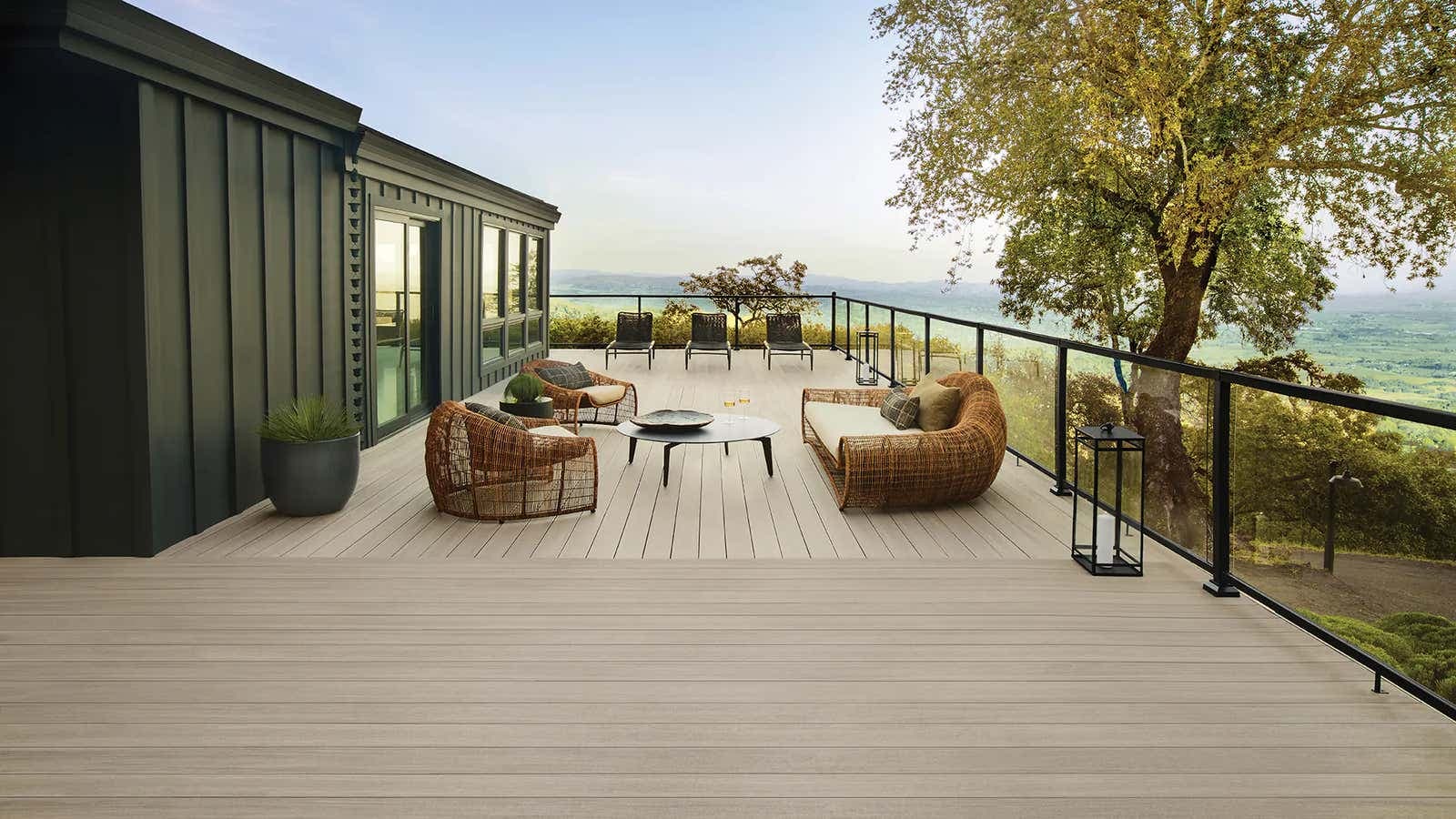
Understanding Your Compact Space: Balcony, Patio, or Small Yard?
Before selecting composite decking, clarify the nature of your compact outdoor area. Is it a balcony, a ground-level patio, or a small section of a backyard? Each type presents unique considerations.
Balconies often have strict weight limits and require specific attachment methods to the building structure. Ground-level patios may involve working over an existing concrete slab or preparing a new sub-base. Small backyard areas might offer more flexibility but still benefit from efficient design to integrate with landscaping and other features. Understanding these distinctions will guide your material selection and installation planning.
For ground-level applications, ensure proper drainage is accounted for, especially if installing over a solid surface. Adequate airflow beneath the deck is also important for the longevity of the deck structure, even in a small space.
Material Selection: Capped Composite for Durability and Aesthetics
Composite decking, available from manufacturers like Trex, TimberTech, and Fiberon, is engineered for durability and low maintenance. For compact spaces, where daily use might be concentrated, these attributes are particularly beneficial.
Many composite boards feature a capped shell, which provides enhanced resistance to fading, staining, and moisture. This outer layer helps the deck maintain its appearance with a simple soap-and-water wash, eliminating the need for oiling, sanding, or staining.
The consistent color and grain patterns of composite decking also contribute to a uniform, clean look that can make a smaller space feel more cohesive and intentional. Cooler-underfoot options are available, which can be a comfort consideration if the compact deck receives direct sun exposure.
Board Profiles and Dimensions for Small Projects
While standard decking board widths are common, consider how these dimensions will impact your compact layout. Wider boards can sometimes make a small space feel larger by reducing the number of visible seams, creating a more expansive visual flow.
Conversely, very narrow boards might introduce too much visual 'noise' in a confined area. It's often helpful to visualize the board width in relation to the overall dimensions of your project. For example, a 12-foot by 8-foot deck might look different with 5.5-inch wide boards versus 3.5-inch wide boards.
Consider board lengths as well. While longer boards reduce butt joints, they can be more challenging to maneuver and cut in tight spaces. For smaller projects, a mix of shorter lengths might be more practical for minimizing waste and simplifying installation logistics. Discuss available lengths with your supplier.
Color and Finish Choices to Enhance Small Areas
The color of your composite decking can significantly influence the perceived size and ambiance of a compact outdoor space. Lighter colors tend to reflect more light, making an area feel more open and spacious. They can also feel cooler underfoot.
Darker colors can add a sense of sophistication and intimacy, but they may absorb more heat. Consider the surrounding elements, such as the color of your home's siding, existing landscaping, and outdoor furniture, to create a harmonious palette.
Manufacturers offer various finishes, from smooth to embossed wood grain textures. A subtle, consistent texture can provide visual interest without making the space feel cluttered. Review physical samples to see how colors and finishes appear in natural light.
Worked Example: A 10-Foot by 6-Foot Balcony Deck
Let's consider a hypothetical 10-foot by 6-foot balcony deck.
To cover the 10-foot length, you would need boards running parallel to the 6-foot dimension. Each 12-foot board can be cut to yield two 6-foot pieces. The 10-foot width, converted to inches, is 120 inches. This means you would need 21 boards to cover the width.
Since each 12-foot board yields two 6-foot pieces, you would purchase 11 full 12-foot boards (21 pieces needed / 2 pieces per board = 10.5, rounded up to 11 boards). This calculation ensures you have enough material for the primary decking surface, accounting for cuts and potential waste. Always add a small percentage for cuts and waste when ordering. This example assumes no picture-framing or other border details, which would require additional material.
For such a project, consider using hidden fasteners to maintain a clean, uncluttered surface, which is particularly effective in compact areas where every detail is more prominent.
Before you order
- What are the exact dimensions and existing structural conditions of your compact outdoor space (balcony, patio, small yard)?
- Are there any weight restrictions or building code requirements specific to your location or structure?
- Which composite decking brands (Trex, TimberTech, Fiberon) offer the aesthetic and performance you need?
- Will you choose a capped composite for enhanced durability and low maintenance?
- What board width will best suit the visual scale of your compact area?
- Which color and finish will make the space feel most open and inviting?
- Have you considered the impact of sun exposure on board temperature for your chosen color?
- Will you use hidden fasteners for a cleaner finish, or face fasteners?
- How will drainage and ventilation be addressed beneath the deck, especially for ground-level installations?
- What is your estimated material quantity, including a waste factor for cuts?
- Have you accounted for any fascia boards or trim needed for the edges of the deck?
- What is your plan for receiving and storing materials in a compact space prior to installation?
Confirm installation details, approved uses and warranty terms in the current instructions for the exact product and profile. Your installer should verify the substrate, structure and applicable project requirements.
This is a planning guide for projects in Bismarck, ND. Ask our team to confirm availability, delivery to your ZIP code and which branch can support your order.
Questions to help you decide
Can composite decking be installed directly over an existing concrete patio?
Installing composite decking over an existing concrete patio is possible, but it requires proper preparation. You'll need to create a sleeper system or use pedestals to elevate the decking boards, ensuring adequate drainage and airflow. This prevents moisture buildup and allows for the expansion and contraction of the boards. Ensure the concrete patio has a slight slope away from the building for drainage.
What are the best colors for composite decking in a small space?
Lighter colors like grays, tans, and light browns are often recommended for small spaces. They reflect more light, making the area feel more open and expansive. Lighter colors can also feel cooler underfoot, which is a benefit in sunny locations. However, the 'best' color also depends on your personal aesthetic and the surrounding elements of your home and landscape.
How do I clean and maintain composite decking in a compact area?
Composite decking is known for its low maintenance. Typically, a simple soap-and-water wash is sufficient to clean the surface. For tougher stains, consult the manufacturer's cleaning guidelines for compatible products. Avoid using harsh chemicals or pressure washers at very high settings, as these can damage the surface. Regular cleaning helps maintain the appearance and longevity of your deck, especially in high-traffic compact areas.
Request a Quote for Your Compact Decking Project
Ready to transform your compact outdoor space with composite decking? Contact us with your project dimensions, desired composite profile, and ZIP code. We can help confirm current availability, service options, and provide a material quote for Trex, TimberTech, or Fiberon products. Explore our full range of composite decking options at our main composite decking page or check out other decking materials like hardwood, Ipe, and PVC decking.
Request a material quote →