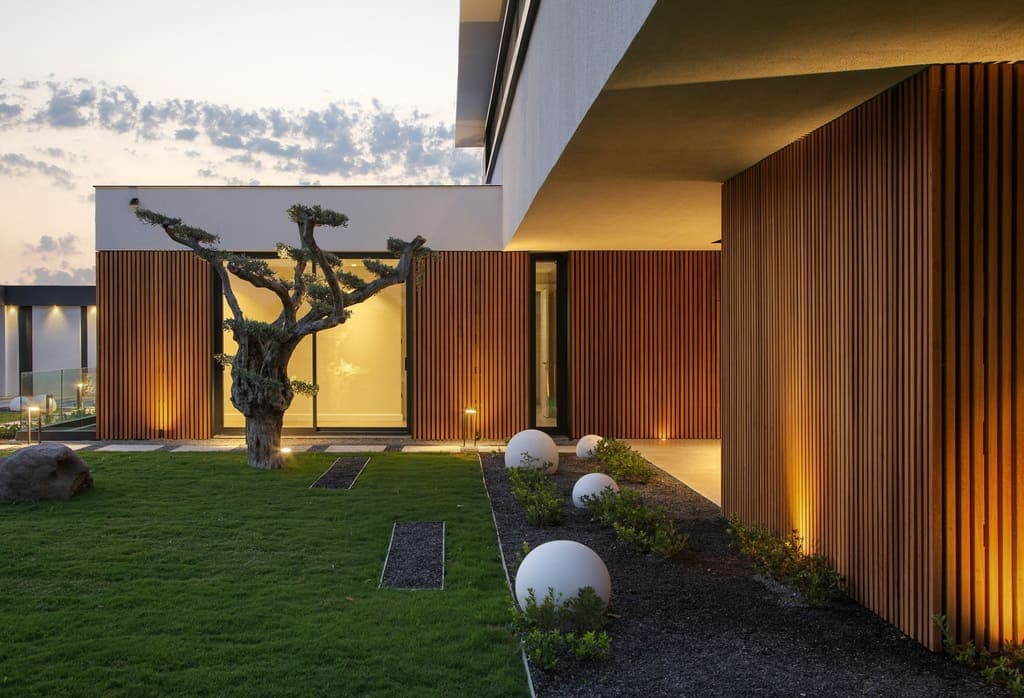
Understanding Thermally Modified Wood for Wall Applications
Thermally modified wood undergoes a high-heat treatment process that alters its cellular structure. This process typically uses heat and steam, without chemical additives, to make the wood more stable and less prone to expansion and contraction due to changes in humidity. For covered patio walls, this enhanced dimensional stability is a significant advantage, helping to maintain a consistent appearance over time.
The modification process also generally reduces the wood's ability to absorb moisture, which can contribute to its durability in outdoor settings. While covered patio walls are protected from direct rain, they are still exposed to ambient humidity. The reduced moisture absorption can help mitigate issues like cupping or warping that might otherwise occur with untreated wood.
Common species used for thermal modification include Ash, Poplar, and Pine, each offering different grain patterns and natural coloration. The thermal treatment typically imparts a rich, dark brown tone throughout the wood, which can vary in intensity depending on the species and modification parameters. This inherent color provides an attractive base, whether left natural to weather or enhanced with a finish.
Selecting the Right Profile and Species for Your Covered Patio Wall
The choice of profile for your covered patio walls significantly impacts the final aesthetic. Options typically include tongue-and-groove, shiplap, and square-edge boards. Tongue-and-groove profiles offer a tight, interlocking fit, creating a smooth, continuous surface with minimal visible fasteners. Shiplap creates distinct shadow lines, adding architectural interest and depth to the wall.
Square-edge boards can be installed with a visible gap for a more open, contemporary look, or butted tightly for a solid appearance. The specific dimensions and milling of each profile will influence the overall visual texture and ease of installation. Consider how the profile will interact with the scale of your patio space and other architectural elements.
For species, thermally modified Ash offers a prominent grain pattern and a deep, consistent color post-modification, making it a popular choice for premium applications. Thermally modified Poplar provides a more uniform grain and a slightly lighter brown hue, suitable for a refined look. Thermally modified Pine can be a cost-effective option, offering good stability and a distinct knotty appearance if desired. The NORX brand offers a range of thermally modified wood products suitable for cladding applications. The Maximo Accoya product is a high-performance option, though it uses acetylation rather than thermal modification, providing similar benefits in dimensional stability and durability for exterior use.
Design Considerations for Covered Patio Walls
When designing with thermally modified wood for covered patio walls, consider the orientation of the boards. Horizontal installation can make a space feel wider and establish clear lines, while vertical installation can draw the eye upward, enhancing height. Diagonal patterns can add a dynamic, unique touch.
Lighting plays a crucial role in highlighting the wood's texture and color. Integrate recessed lighting or sconces to create ambient illumination that emphasizes the wood grain and shadow lines. For a cohesive look, coordinate the wood's color and finish with other materials on your patio, such as flooring, furniture, and landscaping elements.
While covered, these walls are still part of an outdoor environment. Plan for adequate ventilation behind the cladding, especially in humid climates. A rainscreen assembly, even in a covered application, can help manage moisture and promote air circulation, contributing to the longevity of the wood. This typically involves furring strips to create an air gap behind the cladding.
Finishing and Maintenance for Lasting Beauty
Thermally modified wood can be left unfinished to weather to a silver-gray patina, or it can be treated with an exterior finish to preserve its natural color or achieve a desired hue. If you opt for a finish, choose a high-quality product designed for exterior wood, such as a penetrating oil or a UV-resistant stain. These finishes can help protect the wood from UV degradation and maintain its initial color.
Regular cleaning is essential to prevent dirt, pollen, and mildew buildup, especially in humid environments. A mild soap and water solution, applied with a soft brush or cloth, is usually sufficient. Avoid harsh chemicals or abrasive cleaning methods that could damage the wood or its finish. Inspect the walls periodically for any signs of wear or damage to the finish, and reapply as needed.
Even with a covered patio, some exposure to sunlight and ambient moisture will occur. The rate of weathering or finish degradation will depend on the specific exposure conditions. Consistent maintenance will help ensure the long-term appearance and performance of your thermally modified wood walls.
Hypothetical Project Example: Covered Patio Wall in Atlanta
Consider a homeowner in Atlanta, GA, planning to clad a covered patio wall measuring 12 feet long by 8 feet high. They desire a modern look with distinct shadow lines and choose thermally modified Ash shiplap siding, with individual boards measuring 5.5 inches wide (nominal) and 12 feet long. The shiplap profile has an effective coverage width of 5 inches.
To calculate the number of boards needed: First, determine the total wall area: 12 feet * 8 feet = 96 square feet. Next, calculate the lineal feet of boards required. Since each board covers 5 inches (or 5/12 feet) in width, the number of courses needed is 8 feet / (5/12 feet/course) = 19.2 courses. Rounding up to 20 courses to ensure full coverage. Each course is 12 feet long, so 20 courses * 12 feet/course = 240 lineal feet.
Since the boards are supplied in 12-foot lengths, this means 20 boards would be purchased (240 lineal feet / 12 feet/board = 20 boards). This calculation does not account for waste due to cuts, which should typically be factored in at 5-10% depending on the complexity of the installation and any required pattern matching. For this simple wall, 5% waste would add 1 more board (20 * 0.05 = 1 board), bringing the total to 21 boards.
The homeowner plans to apply a clear penetrating oil finish to highlight the rich brown tones of the thermally modified Ash and provide UV protection.
Before you order
- Confirm the specific species and profile of thermally modified wood suitable for covered exterior wall applications.
- Verify the dimensions and effective coverage of the chosen profile to accurately calculate material quantities.
- Consider the desired aesthetic: natural weathering vs. finished appearance, and select appropriate finishing products.
- Plan for a rainscreen or ventilation gap behind the cladding, especially in humid climates.
- Determine the fastening method appropriate for the chosen profile and substructure.
- Account for waste factor (typically 5-10%) when calculating material orders.
- Review local building practices or recommendations for exterior wood cladding in your area.
- Establish a maintenance plan, including cleaning and re-finishing schedules if applicable.
Confirm installation details, approved uses and warranty terms in the current instructions for the exact product and profile. Your installer should verify the substrate, structure and applicable project requirements.
This is a planning guide for projects in Atlanta, GA. Ask our team to confirm availability, delivery to your ZIP code and which branch can support your order.
Questions to help you decide
Can thermally modified wood be painted?
While thermally modified wood can be painted, it is often chosen for its natural beauty and rich, dark brown color. If painting is desired, ensure the surface is clean and dry, and use a high-quality exterior primer and paint system specifically formulated for wood. Always follow the paint manufacturer's instructions for application and curing.
Does thermally modified wood require a finish?
No, thermally modified wood does not strictly require a finish for durability. It can be left unfinished and will gradually weather to a silver-gray patina over time, similar to other wood species exposed to UV light. However, applying a finish, such as a penetrating oil or stain, can help preserve its original color, protect against UV degradation, and make cleaning easier. The choice depends on the desired aesthetic and maintenance commitment.
How does thermally modified wood perform in humid climates like Atlanta?
Thermally modified wood is well-suited for humid climates due to its enhanced dimensional stability. The thermal modification process reduces the wood's tendency to absorb and release moisture, which in turn minimizes swelling, shrinking, warping, and cupping. This makes it a more stable choice compared to untreated wood for exterior applications, even in areas with significant humidity fluctuations. Proper installation with a ventilation gap further enhances its performance.
Request a Material Quote for Your Covered Patio Wall Project
Ready to enhance your covered patio with thermally modified wood? Provide your project dimensions, desired profile, and ZIP code to request a material quote. We can help confirm current availability and service options for your project.
Request a material quote →