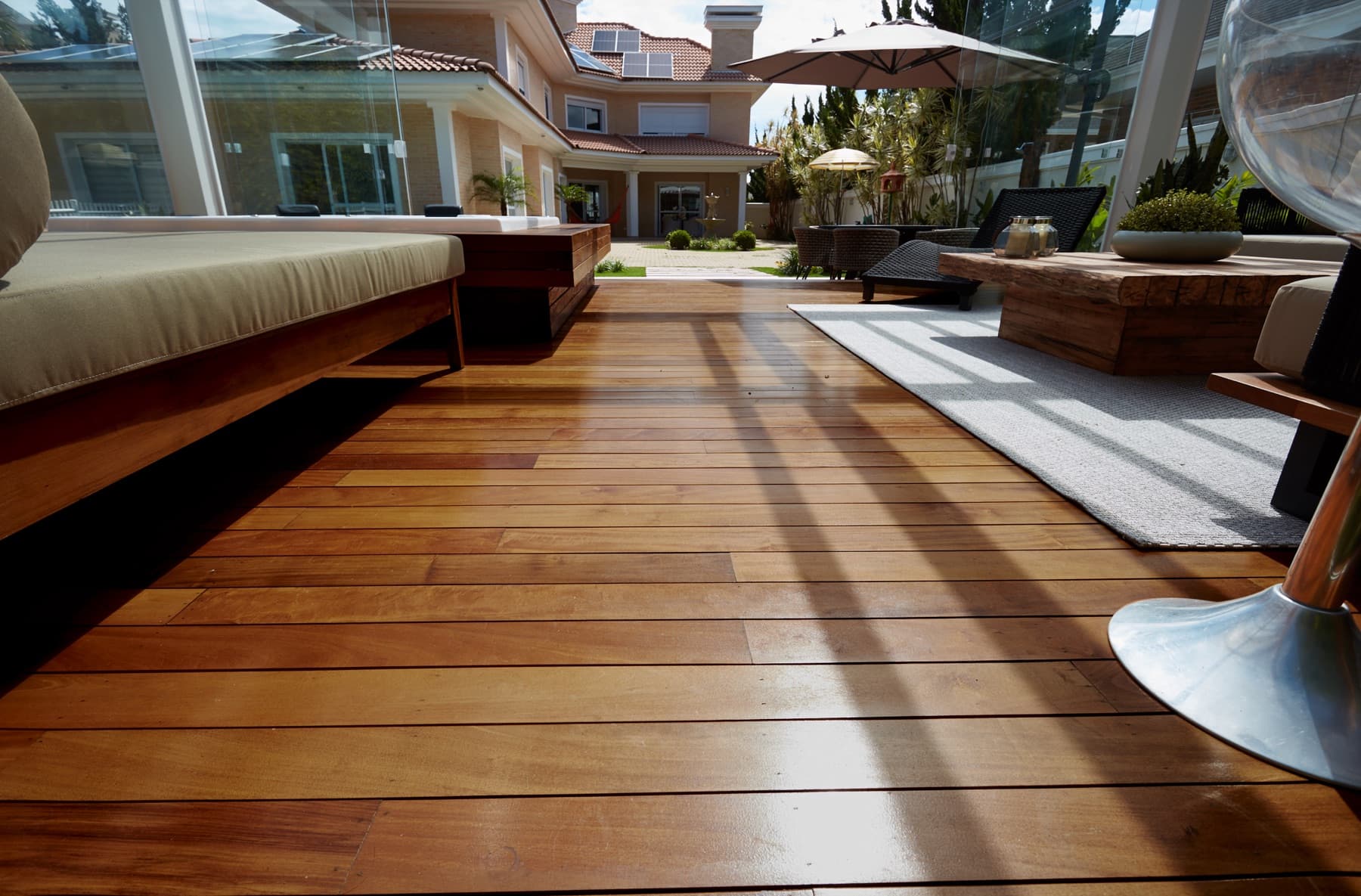
Assess Your Existing Deck Frame
Before selecting any new decking material, a thorough inspection of your current deck frame is essential. The condition and structural integrity of the joists, beams, and support posts will dictate what new decking options are viable. Hardwood decking species like Ipe and Cumaru are known for their density and weight, which can be greater than some alternative decking materials.
An experienced contractor can help determine if your existing frame can safely support the increased load of hardwood decking. They will check for rot, insect damage, proper spacing of joists, and adequate fastening. Joist spacing is particularly important; denser hardwoods may allow for wider joist spans than softer woods, but this must be confirmed by a structural professional based on your specific chosen material and local building codes. If the frame requires significant repairs or reinforcement, factor this into your project timeline and budget.
Hardwood Species for Atlanta Renovations
Lumber Plus offers a range of Brazilian hardwood decking species, each with distinct characteristics that may appeal to Atlanta homeowners. Ipe, Cumaru, Garapa, Tigerwood, Angelim, and Jatoba are among the options. When renovating, consider not only the aesthetic but also the practical aspects like density, durability, and maintenance.
Ipe, also known as Brazilian walnut, is a dense and durable hardwood. It is resistant to rot, insects, and mold, making it a robust choice for outdoor applications. Its color ranges from reddish-brown to olive-brown. It has a distinctive scent of cinnamon and vanilla when worked.
Garapa offers a lighter, golden tone and is considered a value pick, while Tigerwood provides a dramatic striped figure. Each species offers a different balance of appearance, durability, and maintenance requirements. Understanding these differences will help you choose the best fit for your renovation.
For more information on individual species, visit our main hardwood decking page: [Hardwood Decking](/decking/hardwood).
Considering Atlanta's Climate and Exposure
Atlanta's climate, with its hot, humid summers and occasional freezing temperatures in winter, requires decking materials that can withstand significant weather fluctuations. Hardwood decking, particularly species like Ipe and Cumaru, are known for their resistance to weather changes. Their natural oils and density contribute to their ability to resist warping, cracking, and insect damage, even in challenging environments.
If your deck is exposed to full sun for extended periods, some hardwoods will naturally weather to a silvery-gray patina if left untreated. If you prefer to maintain their original rich color, a UV-blocking sealer can be applied. For shaded decks, good ventilation beneath the deck is crucial to prevent moisture buildup, which can affect any decking material over time. Ensure your renovation plan includes proper airflow.
Maintenance Considerations for Hardwood Decking
While hardwood decking is known for its durability, understanding the maintenance involved is key to a successful renovation. A basic annual wash is recommended to keep the deck clean. If you wish to preserve the original brown color of species like Ipe or Cumaru, an annual application of a suitable oil is necessary. Without oiling, these hardwoods will naturally silver to a driftwood gray over time, a process that does not affect their structural integrity.
Compared to some alternatives, the maintenance for hardwood decking is often simpler and focused on aesthetic preservation rather than structural protection from rot or insects, as these woods have natural defenses. This long-term ownership perspective is important when comparing material options.
Worked Example: Renovating a 200 sq ft Deck in Atlanta
Let's consider a hypothetical 200 square foot rectangular deck (e.g., 10 feet by 20 feet) in Atlanta, GA, where the homeowner wishes to replace existing pressure-treated pine decking with Ipe.
Assuming the frame is sound and spacing is confirmed, the next step is material calculation. If using 5.5-inch wide Ipe boards, a 10-foot width would require approximately 22 boards (10 feet / (5.5 inches / 12 inches/foot) = 21.8 boards, rounded up). For a 20-foot length, this means 22 boards of 20 feet in length, or 44 boards of 10 feet in length if staggering seams. This is a simplified calculation and does not account for waste, specific layout patterns, or starter/end boards. Always add a percentage for waste, typically 10-15%, especially for cuts around obstacles or for optimal board selection.
For a 10' x 20' deck (200 sq ft), if using 1x6 (nominal, actual ~5.5" wide) Ipe boards, and assuming 20-foot lengths are available, you would need approximately 22 boards (10' width / (5.5" board width / 12" per foot) = ~21.8 boards, rounded up to 22 boards). With a 10% waste factor, you would order around 25 boards of 20-foot length. This example highlights the need for precise measurements and a detailed layout plan to minimize waste and ensure you purchase enough material. Consult with your installer for exact quantities and cut plans.
Before you order
- Have I had my existing deck frame inspected for structural integrity, rot, and insect damage?
- Is my joist spacing adequate for the chosen hardwood decking species' density and weight?
- Have I considered the specific aesthetic (color, grain) and maintenance requirements of Ipe, Cumaru, or other hardwoods?
- Does my budget account for potential frame repairs or reinforcement, in addition to the hardwood decking material?
- Have I confirmed the required lengths and profiles for my project with Lumber Plus?
- Do I have a plan for ongoing maintenance, including cleaning and optional oiling to preserve color?
- Have I accounted for proper ventilation under the deck, especially for shaded areas in Atlanta's humid climate?
Confirm installation details, approved uses and warranty terms in the current instructions for the exact product and profile. Your installer should verify the substrate, structure and applicable project requirements.
This is a planning guide for projects in Atlanta, GA. Ask our team to confirm availability, delivery to your ZIP code and which branch can support your order.
Questions to help you decide
Can I install hardwood decking over my existing deck frame?
Yes, in many cases, but it depends on the condition and structural integrity of your existing frame. A professional inspection is crucial to ensure the frame can support the weight and density of hardwood decking and meets local building codes. Joist spacing is a key factor to assess.
How do I choose between different hardwood species for my renovation?
Consider the desired appearance (color, grain), durability requirements, and your willingness to perform maintenance. Ipe offers high durability and a rich brown tone, while Cumaru is also very durable with a slightly different color range. Garapa is a value option with a golden hue. Reviewing samples and discussing your project with a Lumber Plus representative can help you decide.
What is the typical maintenance for hardwood decking in Atlanta's climate?
Regular cleaning with a mild detergent and water is recommended. To maintain the original rich color of species like Ipe or Cumaru, an annual application of a UV-blocking oil is needed. If left untreated, the wood will naturally weather to a silvery-gray patina, which does not affect its structural integrity. Good ventilation under the deck is important for all climates.
Ready to Renovate Your Atlanta Deck with Hardwood?
Request a material quote today. Provide your project dimensions, desired hardwood profile, and ZIP code to confirm current availability and service options. Our team can assist you in selecting the right hardwood decking for your Atlanta renovation project.
Request a material quote →