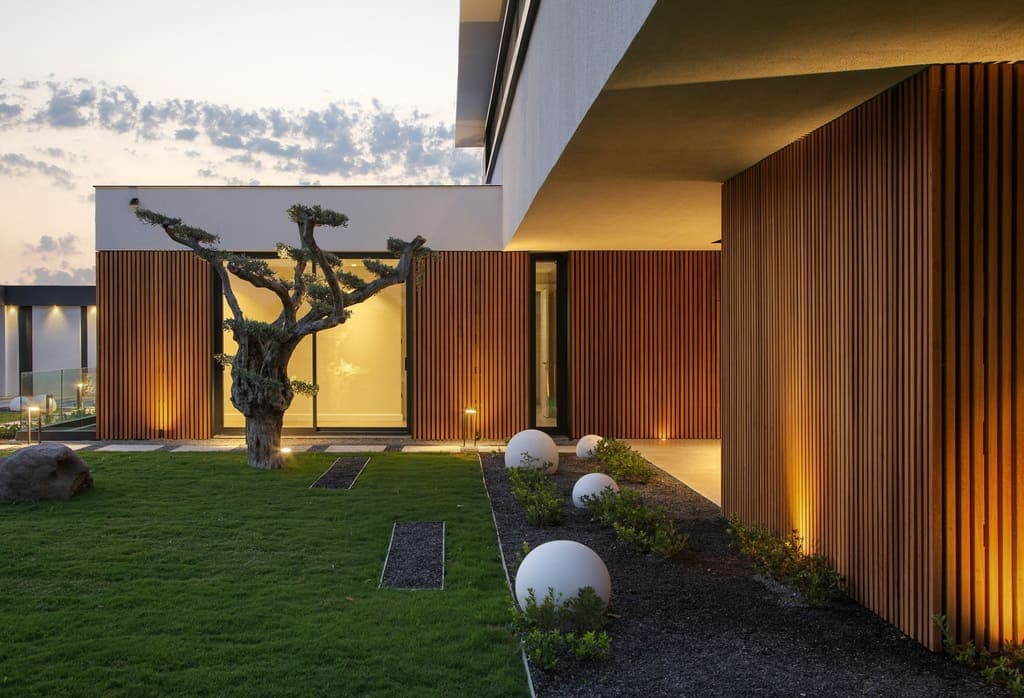
Understanding Thermally Modified Wood for Wall Applications
Thermally modified wood undergoes a controlled heating process that alters its cellular structure. This process typically enhances the wood's stability, making it less prone to shrinking and swelling when exposed to changes in moisture and temperature. For covered patio walls, this stability is a key advantage, helping to maintain a consistent appearance and reducing the likelihood of warping or cupping over time.
The modification process also generally improves the wood's resistance to biological degradation. While covered patio walls are not as directly exposed as open siding, they can still experience humidity and occasional moisture, making this enhanced durability beneficial. The natural wood aesthetic, often with a richer, darker tone resulting from the thermal treatment, can complement various patio designs.
Selecting the Right Species and Profile
Thermally modified wood is available in various species, each offering unique grain patterns and characteristics. Common options include thermally modified Pine or Spruce, which provide a balance of performance and aesthetics. When planning for covered patio walls, consider the desired visual impact and how the wood's natural tone will integrate with other materials in your outdoor space.
Profiles for wall applications typically include tongue-and-groove (T&G), shiplap, or square-edge boards. Tongue-and-groove and shiplap profiles offer a cleaner, more finished look with concealed fasteners and distinct shadow lines, which can be advantageous for covered patio walls where aesthetics are prominent. Square-edge boards can also be used, often with visible fasteners or specific detailing to create a desired aesthetic.
Finishing and Maintenance for Covered Patio Walls
While thermally modified wood is naturally durable, applying a finish can further enhance its appearance and offer additional protection. For covered patio walls, you have options ranging from clear sealers that highlight the wood's natural color to semi-transparent or opaque stains that introduce color while allowing the wood grain to show through.
The decision to apply a finish often depends on the desired aesthetic and the level of maintenance you are prepared for. Unfinished thermally modified wood will naturally weather to a silvery-gray patina over time, which some homeowners prefer. If maintaining the original color is important, regular application of a UV-protective finish will be necessary. For covered applications, the frequency of reapplication may be less than for fully exposed surfaces, but periodic cleaning and inspection are still recommended.
Attachment and Substructure Considerations
Proper attachment is crucial for the longevity and appearance of thermally modified wood walls. For most profiles, concealed fastening systems or face fastening with appropriate exterior-grade screws or nails are suitable. Always refer to manufacturer guidelines for specific fastener recommendations and spacing.
The substructure behind the thermally modified wood should be sound, level, and designed to manage any potential moisture. Even in a covered patio, ensuring proper drainage and ventilation behind the cladding can help prevent moisture accumulation. This often involves a rainscreen-like gap or furring strips to create an air space, allowing any trapped moisture to dry out.
Hypothetical Project Example: Annapolis Patio Wall
Consider a covered patio in Annapolis, MD, measuring 12 feet wide by 8 feet tall for a single feature wall. The homeowner desires a modern look with horizontal lines using a thermally modified Spruce shiplap profile, 5.5 inches wide with a 0.5-inch overlap, and 12-foot lengths. The shiplap profile allows for concealed fastening.
To calculate the material needed: the wall area is 12 ft x 8 ft = 96 square feet. The effective coverage width of each shiplap board is 5.5 inches - 0.5 inches (overlap) = 5 inches, or approximately 0.4167 feet. For an 8-foot tall wall, you would need 8 ft / 0.4167 ft/board = approximately 19.2 boards. Since boards are typically sold in full lengths, 20 boards would be purchased. For a 12-foot length, 20 boards x 12 linear feet/board = 240 linear feet of material. This calculation assumes minimal waste and straight cuts. It is always prudent to add 10-15% for cuts, waste, and future repairs. In this case, 20 boards x 1.15 = 23 boards, so 23 boards would be a safer estimate for purchase.
A semi-transparent stain with UV inhibitors would be chosen to protect the wood and maintain its warm tone against the Annapolis sun and humidity, with reapplication planned every few years based on visual inspection.
Before you order
- Determine the exact dimensions of your covered patio walls.
- Choose a thermally modified wood species that aligns with your aesthetic and performance needs.
- Select a profile (e.g., tongue-and-groove, shiplap, square-edge) suitable for wall application and desired visual.
- Decide on a finish: natural weathering or a protective stain/sealer.
- Plan the substructure, ensuring proper ventilation and attachment points.
- Confirm fastener type and spacing according to product specifications.
- Calculate material quantities, including an allowance for waste and cuts.
- Consider how the thermally modified wood will integrate with other patio materials and elements.
Confirm installation details, approved uses and warranty terms in the current instructions for the exact product and profile. Your installer should verify the substrate, structure and applicable project requirements.
This is a planning guide for projects in Annapolis, MD. Ask our team to confirm availability, delivery to your ZIP code and which branch can support your order.
Questions to help you decide
Can thermally modified wood be used for any exterior wall, or only covered ones?
Thermally modified wood is suitable for various exterior wall applications, including fully exposed siding. However, for covered patio walls, the reduced direct exposure to rain and sun can offer more flexibility in finish choices and potentially extend the maintenance cycle for applied finishes. Always confirm the specific product's suitability for your intended exposure level.
Does thermally modified wood require a specific type of fastener?
Yes, it is generally recommended to use corrosion-resistant fasteners, such as stainless steel screws or nails, for thermally modified wood applications. This helps prevent staining of the wood and ensures long-term structural integrity, especially in outdoor environments where moisture exposure is possible. Always follow the manufacturer's specific recommendations for fastener type, size, and spacing.
How does the Annapolis climate affect thermally modified wood on a covered patio?
Annapolis, MD, experiences a humid subtropical climate with warm, humid summers and mild winters. While covered patio walls offer protection from direct precipitation, they are still subject to high humidity and temperature fluctuations. Thermally modified wood's enhanced dimensional stability helps it perform well under these conditions, reducing the risk of movement. Periodic cleaning and inspection are advised to manage potential mold or mildew growth in humid environments, regardless of the material.
Plan Your Thermally Modified Wood Project for Covered Patio Walls
Ready to enhance your Annapolis patio with thermally modified wood? Request a material quote by providing your project dimensions, exact profile preferences, and ZIP code. We can help confirm current availability and service options for your project.
Request a material quote →