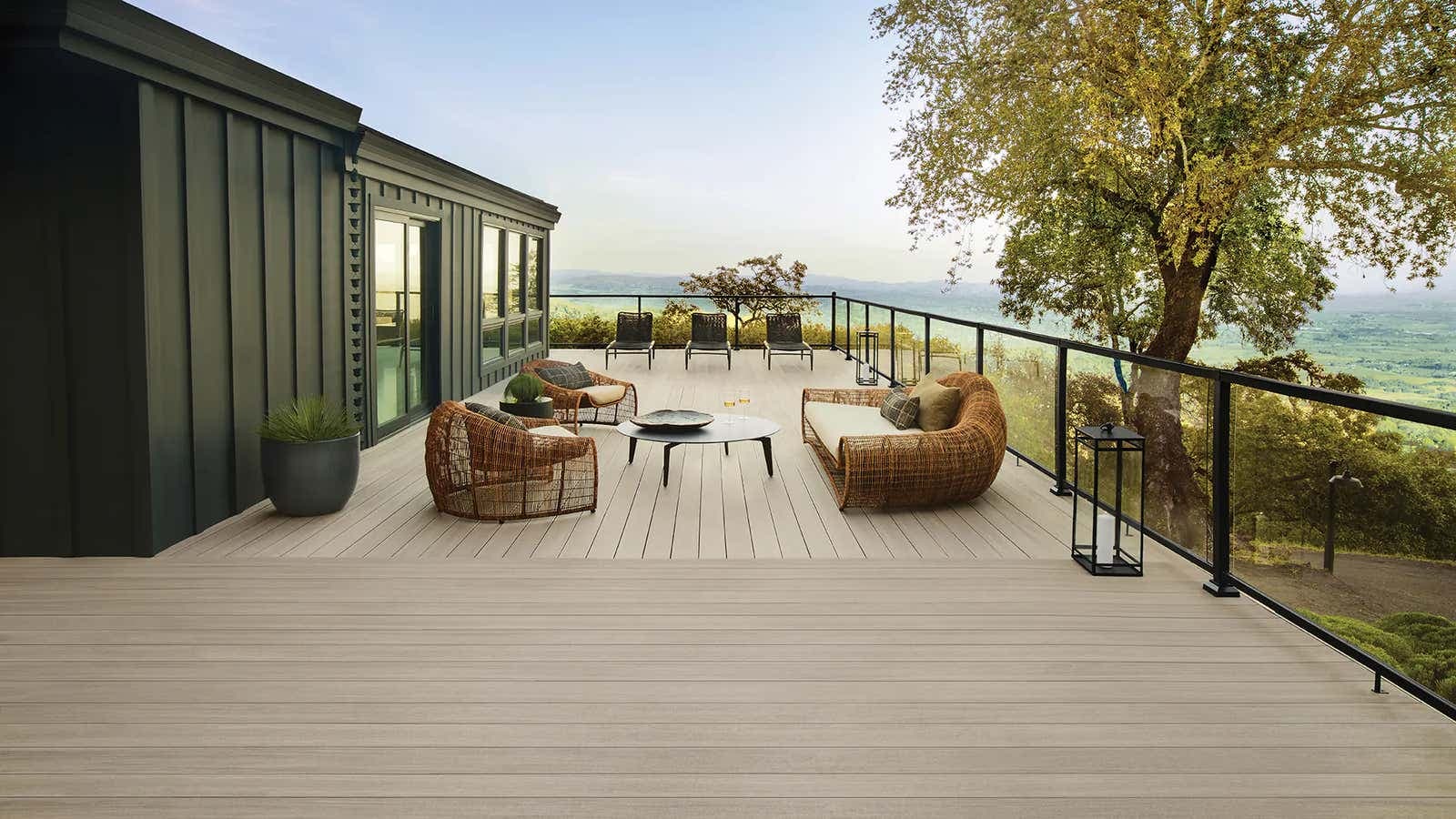
Understanding the Constraints of Compact Spaces
Compact outdoor spaces, common in many Annapolis neighborhoods, present specific design challenges and opportunities. The primary constraint is often the usable area, which necessitates careful planning to avoid overcrowding. Access to the project site can also be a significant factor, as narrow alleys or shared pathways might limit the size of materials that can be easily transported. Ventilation under the deck is particularly important in smaller, enclosed areas to prevent moisture buildup.
When selecting composite decking, consider how the material's properties interact with these constraints. For instance, boards that are too wide might visually shrink a small deck, while certain colors can make the space feel more open or enclosed. Understanding these nuances before purchasing can help you maximize your limited outdoor real estate.
Material Options: Trex, TimberTech, and Fiberon
Lumber Plus offers a selection of composite decking from leading manufacturers like Trex, TimberTech, and Fiberon. Each brand provides distinct collections with varying aesthetics, profiles, and performance characteristics that can influence your compact deck design.
Trex, for example, is known for its high recycled content, offering a sustainable choice. TimberTech often features advanced capping technology for enhanced durability and fade resistance. Fiberon provides a wide range of colors and wood-grain patterns, allowing for diverse design expressions. For compact spaces, consider collections that offer narrower board options or lighter colors to create a sense of openness. Reviewing the specific profiles and available lengths within each collection is crucial to minimize waste and optimize layout for smaller areas.
When comparing options, consider how the deck boards will be supported. While composite decking is durable, it requires a properly constructed subframe. For smaller decks, this might mean a simpler joist layout, but always refer to the manufacturer's installation guidelines for specific spacing requirements to ensure adequate support and ventilation.
Color and Finish Choices for Visual Impact
The color and finish of your composite decking play a significant role in how spacious or inviting your compact outdoor area feels. Lighter colors, such as grays, tans, or light browns, tend to reflect more light, making a small space appear larger and more open. They can also help the deck feel cooler underfoot, which can be a benefit during warmer Annapolis summers.
Darker colors, while elegant, can absorb more heat and may make a compact area feel more enclosed. However, they can also provide a striking contrast or a sense of intimacy, depending on the overall design. Consider the surrounding elements – your home's exterior, landscaping, and any existing fences or walls – to choose a color that integrates harmoniously. Many composite decking lines offer consistent color and grain, ensuring a uniform appearance across your compact deck.
The finish, whether a smooth surface or a textured wood-grain, also contributes to the visual and tactile experience. A subtle texture can add depth without overwhelming a small space, while a very pronounced grain might be better suited for larger areas.
Planning Your Layout and Board Orientation
For compact decks, the layout and orientation of your composite deck boards are critical for maximizing both usability and visual appeal. Running boards parallel to the longest dimension of your space can make it appear longer. Alternatively, a diagonal layout can add visual interest and create a perception of wider space, though it often involves more cuts and potential material waste.
Consider using picture-frame borders to define the edges of your deck. This can add a finished look and visually separate the deck from adjacent landscaping or structures. For very small spaces, a simple, straight lay might be the most efficient and aesthetically clean option. Always account for manufacturer-specified gapping between boards to allow for proper drainage and material movement.
When planning, think about how furniture or planters will be arranged. A layout that accommodates key pieces without feeling cramped will enhance the functionality of your compact deck. Remember that composite decking requires a stable, level subframe for installation, and proper support is essential, especially if you plan to place heavy items on the deck.
Worked Example: A 10' x 8' Townhome Deck
Let's consider a hypothetical 10-foot by 8-foot townhome deck in Annapolis, totaling 80 square feet. For this compact space, we aim for a clean, open feel.
We'll choose Trex Enhance Basics in 'Clam Shell' (a light gray) for its consistent color and lower maintenance. The boards are typically available in 12-foot, 16-foot, or 20-foot lengths. To minimize waste and seams for our 10-foot dimension, we would likely use 12-foot boards for the main deck surface. If we lay the boards along the 10-foot length, each board would run the full 10 feet. This means we would need 17 full boards to cover the 8-foot width. So, 17 boards at 12 feet long each for the main decking. Any offcuts from the 12-foot boards could be used for fascia or other small trim pieces, depending on the project. For the picture frame border, additional boards would be needed, cut to frame the 10x8 perimeter.
This example demonstrates how selecting appropriate board lengths and planning the layout can optimize material use and achieve a desired aesthetic in a compact area.
Before you order
- Measure your compact space precisely, noting all dimensions and any obstructions.
- Consider site access for material delivery and construction in Annapolis.
- Choose composite decking collections that offer suitable board widths and lengths for minimal waste.
- Select lighter colors and finishes to visually expand the space.
- Plan board orientation (straight or diagonal) to enhance the perceived size or add interest.
- Account for proper ventilation and drainage, especially in enclosed compact areas.
- Determine if a picture frame border or other design accents are feasible and desirable.
- Factor in any planned furniture or features to ensure adequate usable space.
- Confirm manufacturer-specific installation requirements for joist spacing and gapping.
- Request a material quote with exact dimensions, preferred profile, and your project ZIP code.
Confirm installation details, approved uses and warranty terms in the current instructions for the exact product and profile. Your installer should verify the substrate, structure and applicable project requirements.
This is a planning guide for projects in Annapolis, MD. Ask our team to confirm availability, delivery to your ZIP code and which branch can support your order.
Questions to help you decide
Can composite decking be installed over an existing concrete patio?
Installing composite decking directly over concrete requires specific considerations. You cannot typically lay composite boards directly on concrete. A proper subframe (joists) is necessary to provide ventilation, drainage, and a level surface for the decking. This subframe raises the deck surface, so ensure you have adequate vertical clearance. Consult the composite decking manufacturer's installation guidelines for specific recommendations on installing over concrete or other solid surfaces.
How do I maintain composite decking in a small, shaded Annapolis courtyard?
In shaded, compact areas, composite decking can be prone to mildew or moss growth due to reduced sunlight and air circulation. Regular cleaning with soap and water is generally sufficient to keep composite decking looking its best. Use a soft brush and follow the manufacturer's cleaning instructions. Ensuring adequate ventilation beneath the deck is also crucial. Avoid using harsh chemicals or pressure washers that exceed the manufacturer's recommended psi, as these can damage the deck surface. Unlike wood, composite decking does not require oiling, sanding, or staining.
Are there specific composite decking products better suited for high-traffic compact spaces?
For compact spaces that anticipate high foot traffic, such as a main entryway deck or a frequently used patio, consider composite decking lines with enhanced durability and scratch resistance. Many manufacturers offer 'capped' composite boards, which feature a protective polymer shell around the core. This cap provides superior resistance to stains, fading, and scratches, making them a robust choice for busy areas. Always review the specific product specifications and warranties for details on fade and stain resistance.
Ready to Plan Your Compact Deck Project?
To get started on your Annapolis composite decking project, request a material quote. Provide your project dimensions, desired composite decking profile, and your ZIP code to confirm current availability and service options. Our team can help you select the right materials for your compact outdoor space.
Request a material quote →