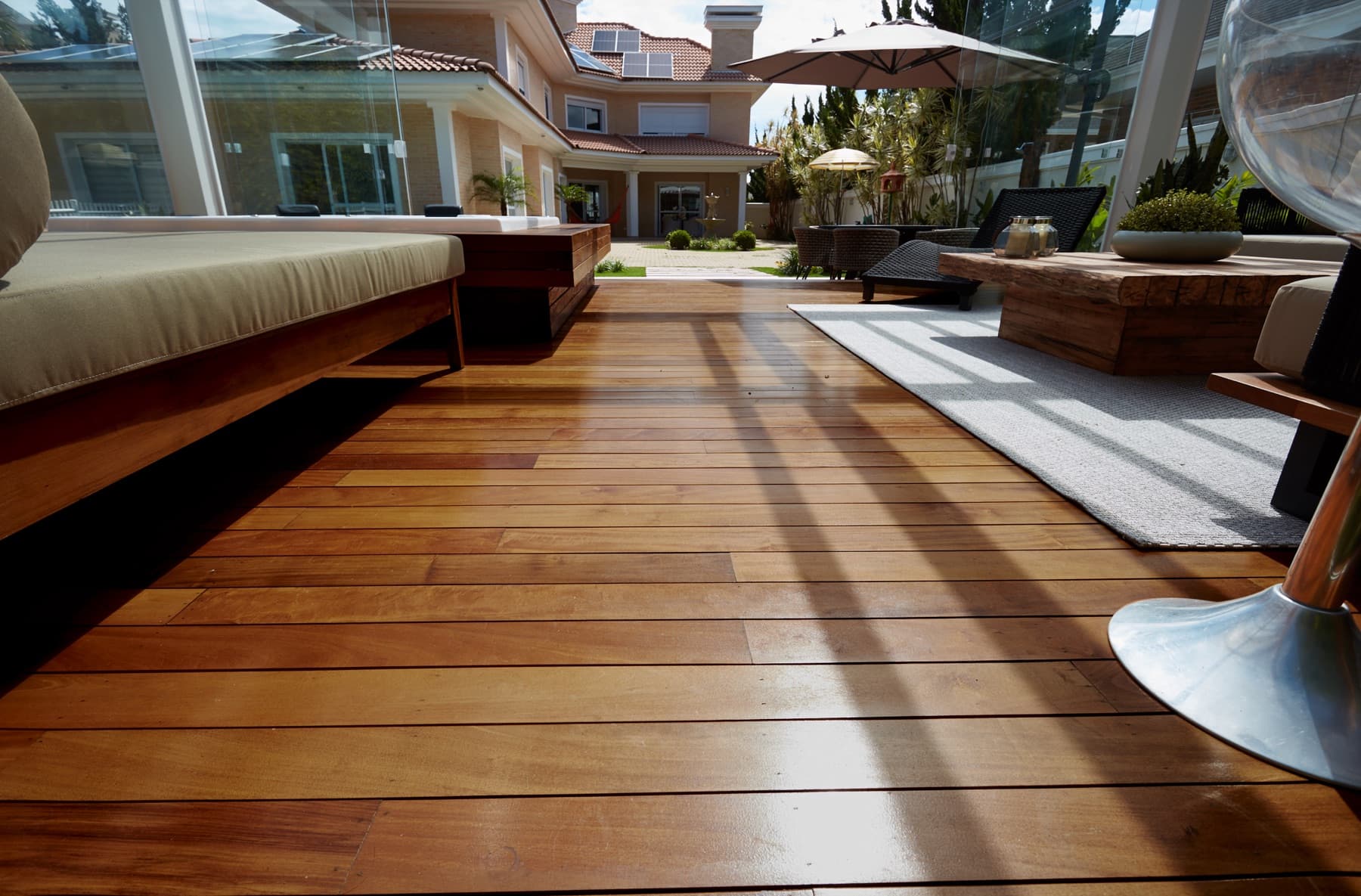
Assessing Your Existing Deck Frame for Hardwood
Before selecting any new decking material, a thorough inspection of your existing deck frame is crucial. Hardwood decking, known for its density, is heavier than many common decking materials. The existing joists, beams, and support posts must be in excellent condition and adequately sized to safely support the increased load. Look for any signs of rot, insect damage, or structural weakness. Joist spacing is particularly important; many hardwoods require tighter spacing than lighter materials to prevent deflection and ensure stability. While some existing frames may be suitable, others might require reinforcement or partial replacement.
A qualified contractor or structural engineer can provide an expert assessment, identifying any necessary upgrades to ensure your renovated deck meets safety standards and provides long-term stability. This initial evaluation helps prevent costly issues down the line and ensures the foundation is sound for your new hardwood surface.
Comparing Hardwood Decking Options: Ipe vs. Cumaru
When considering hardwood for your Annapolis deck renovation, Ipe and Cumaru are two prominent choices, each offering distinct advantages.
Ipe, often referred to as Brazilian Walnut, is a benchmark for outdoor decking. Its natural oils contribute to its resistance to rot, insects, and mold, making it a low-maintenance option that can last for decades. Ipe's color ranges from reddish-brown to olive-brown, which can be maintained with periodic oiling or allowed to weather to a silvery-gray patina. It is also noted for its minimal movement post-installation and resistance to warping. Ipe is available in various profiles and lengths, typically from 3 to 24 feet. For projects in Annapolis, Ipe's resistance to weather changes and high density make it a strong candidate for durability.
It is resistant to termites and weather changes, and like Ipe, it has natural resistance to insects, rot, and fungi. Cumaru can emit a scent of cinnamon and vanilla when worked. Cumaru provides a similar level of stiffness and strength to Ipe, and its color can also be maintained with oil or allowed to gray naturally. Cumaru offers a close alternative to Ipe for projects where budget might be a consideration, without significantly compromising on durability.
Both species provide natural defense without chemical treatments, making them suitable for outdoor applications. Their suitability for coastal environments, including resistance to salt air and spray, makes them particularly relevant for properties near the Chesapeake Bay.
Planning for Appearance and Weathering
Hardwood decking offers a unique aesthetic that evolves over time. Both Ipe and Cumaru feature rich, natural tones when new or when regularly treated with a UV-blocking sealer. Ipe typically presents reddish-brown to olive-brown hues, while Cumaru can also feature a range of brown tones. If left untreated and exposed to the elements, both species will gradually weather to a soft, silvery-gray patina. This natural graying process does not affect the structural integrity or durability of the wood; it is purely an aesthetic transformation.
When planning your renovation, decide whether you prefer to maintain the original wood color with annual oiling or embrace the weathered gray look. This decision will influence your maintenance routine and the overall visual integration of your deck with its surroundings. Consider how the chosen appearance will complement your home's exterior and landscaping in Annapolis.
Installation Considerations for Hardwood Decking
Installing hardwood decking, especially dense species like Ipe and Cumaru, requires specialized tools and techniques. These woods are very hard, which means pre-drilling is typically necessary for fasteners to prevent splitting. Professional installation is often recommended due to the density and specific handling requirements of these materials. Accurate board spacing is also critical to allow for natural expansion and contraction, which can vary slightly with environmental conditions.
For a renovation project, careful attention to the existing frame's condition and ensuring proper ventilation beneath the deck are important. Good airflow helps prevent moisture buildup and contributes to the longevity of both the hardwood and the underlying structure. Discuss fastening options, such as hidden fasteners or face-fastening, with your installer to determine the best approach for your project's aesthetic and structural needs.
Worked Example: Renovating a 12'x18' Deck with Ipe
Let's consider a hypothetical renovation of a 12-foot by 18-foot deck in Annapolis. The existing frame is confirmed to be sound and suitable for hardwood. The homeowner desires Ipe decking for its long-term durability and rich appearance.
**1. Deck Area Calculation:** The deck area is 12 feet * 18 feet = 216 square feet.
**2. Board Dimensions:** Assume Ipe decking boards are 5.5 inches wide (nominal 1x6) and available in lengths of 8, 10, 12, 14, and 16 feet. For a 12-foot by 18-foot deck, using 12-foot and 18-foot (or two 9-foot sections from 18-foot stock) lengths minimizes waste and seams.
**3. Calculating Board Coverage:** A 5.5-inch wide board is 0.458 feet wide. To cover 12 feet in width, you would need 12 feet / 0.458 feet/board = approximately 26.2 boards. Round up to 27 boards to ensure full coverage and account for cuts.
**4. Total Length Needed:** If using 12-foot boards for the 12-foot dimension, you would need 27 boards * 12 feet/board = 324 linear feet. For the 18-foot dimension, using 18-foot lengths (or two 9-foot pieces from 18-foot stock) for each of the 27 runs, you would need 27 boards * 18 feet/board = 486 linear feet. This assumes boards run parallel to the 18-foot length.
**5. Waste Factor:** Always add a waste factor, typically 10-15%, for cuts, mistakes, and potential board imperfections. For 486 linear feet, adding 10% waste means 48.6 linear feet, bringing the total to approximately 535 linear feet of Ipe decking.
**6. Ordering:** Based on current availability, you might order 30 boards of 18-foot Ipe decking (30 * 18 = 540 linear feet) to achieve the desired coverage with a buffer. This calculation is simplified and does not account for specific joist layouts, picture framing, or stair requirements, which would add to the material needed. Always confirm exact dimensions and quantities with your supplier and installer.
Before you order
- Assess existing deck frame for structural integrity and joist spacing.
- Determine if current frame can support the density of hardwood decking.
- Choose between Ipe or Cumaru based on durability, appearance, and budget.
- Decide on desired weathering: natural gray patina or maintained original color.
- Plan for professional installation due to hardwood density and specialized tools.
- Consider fastening methods (hidden vs. face-fastening).
- Confirm proper ventilation for the sub-deck structure.
- Calculate linear footage needed, including a waste factor.
- Request a material quote with exact dimensions and desired profile.
Confirm installation details, approved uses and warranty terms in the current instructions for the exact product and profile. Your installer should verify the substrate, structure and applicable project requirements.
This is a planning guide for projects in Annapolis, MD. Ask our team to confirm availability, delivery to your ZIP code and which branch can support your order.
Questions to help you decide
How long does hardwood decking typically last in Annapolis's climate?
With proper installation and care, Ipe decking can last up to 75 years, while Cumaru can last over 25 years. Their natural resistance to rot, insects, and weather changes makes them well-suited for the seasonal conditions in Annapolis, including moisture and temperature fluctuations.
Do I need to treat hardwood decking to maintain its color?
If you wish to preserve the original rich brown tones of Ipe or Cumaru, annual application of a UV-blocking sealer or deck oil is recommended. If left untreated, both species will naturally weather to a silvery-gray patina, which does not affect their structural integrity.
Can I install hardwood decking myself for a renovation project?
While it is possible, installing dense hardwoods like Ipe and Cumaru requires specialized tools and techniques, such as pre-drilling for fasteners. Professional installation is generally recommended to ensure correct handling, proper board spacing, and a durable, aesthetically pleasing finish. Mistakes can be costly due to the material's density and value.
Plan Your Hardwood Deck Renovation in Annapolis
Ready to upgrade your deck with durable hardwood? Request a material quote by providing your project dimensions, desired profile, and ZIP code. Confirm current availability and service options for your Annapolis, MD, project.
Request a material quote →