Understanding Garapa Hardwood for Terrace Applications
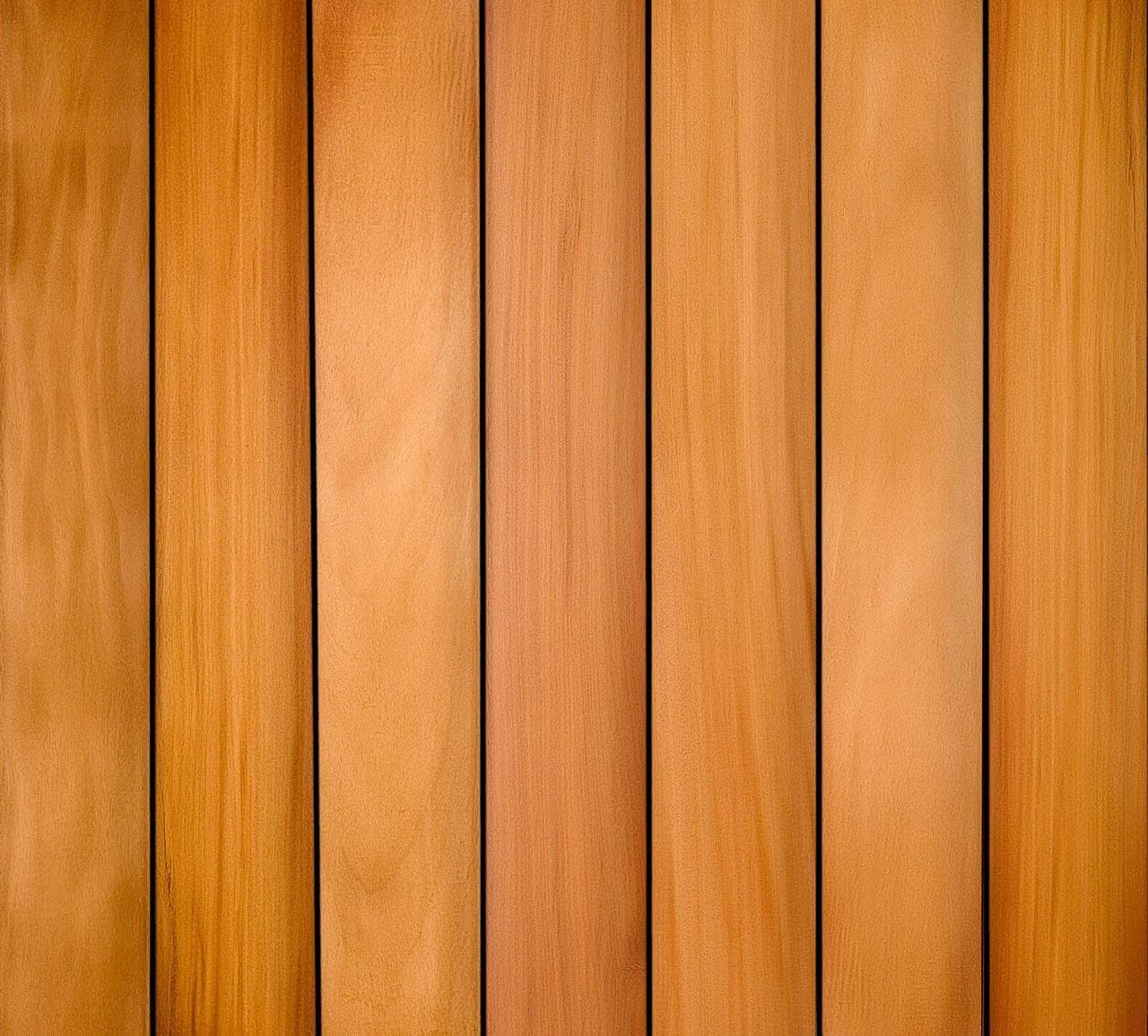
Garapa (Apuleia leiocarpa), often referred to as Brazilian Ash, is a tropical hardwood sourced from Brazil. It is characterized by its golden color, which can add a warm and inviting aesthetic to any outdoor area. This natural golden hue is a primary reason for its popularity in contemporary architectural designs. For a terrace, this color can complement various home styles and landscaping elements.
Beyond its appearance, Garapa is recognized for its durability. It has an air dry density of 4.11 lbs/bf and is naturally resistant to rot, decay, and insects, reducing the need for constant chemical treatments. These properties contribute to its reported lifespan, making it a suitable material for outdoor applications like terraces where exposure to weather is continuous. It is also described as being scratch and slip resistant, with minimal splintering, which are practical benefits for a high-traffic outdoor surface.
Understanding these inherent characteristics helps in evaluating Garapa as a material choice for your Annapolis terrace, considering both its visual appeal and its functional performance.
Designing Your Terrace Layout with Garapa Decking
A terrace often serves as an extension of indoor living spaces, requiring a thoughtful layout that integrates with the home and surrounding landscape. When designing with Garapa decking, consider the flow of foot traffic, placement of outdoor furniture, and potential areas for planters or other decorative elements. The golden color of Garapa can serve as a focal point or a complementary backdrop, depending on your design goals.
One common approach is to orient the decking boards to lengthen the visual perception of the terrace or to draw attention to a specific view. For example, running boards perpendicular to the house can make a narrow terrace appear wider, while running them parallel can emphasize depth. Garapa is available in profiles such as 5/4"x6" and 1"x5.5", with lengths ranging from 3 to 24 feet. These dimensions allow for flexibility in creating various patterns, from a straightforward linear lay to more intricate designs like a picture-frame border.
Careful planning of board lengths can also minimize waste and visible seams. While Garapa is described as easy to work with, its density and interlocking grain suggest using sharp tools for cutting. For fastening, it resists nailing and screwing, indicating that pre-drilling is a practical step for installation.
Choosing Garapa Profiles and Finishes
Garapa decking is typically available in standard profiles, such as the 5/4"x6" (actual 1"x5.5") board, which may also offer a grooved option. The choice between a smooth or grooved profile often depends on the desired fastening method and aesthetic. Grooved boards are commonly used with hidden fastening systems, which can provide a cleaner, screw-free surface appearance.
Regarding finishes, Garapa's natural golden color can be maintained with UV-inhibiting sealers, or it can be allowed to weather naturally to a silver-gray patina over time. The decision to seal or let it weather is a personal preference that should be considered during the planning phase. For a terrace, where the visual impact is significant, obtaining physical samples can help in visualizing how the material will look under different light conditions and how it will integrate with your home's exterior.
The "great value" aspect of Garapa for those seeking low-cost lumber is often weighed against its natural resistance properties, which reduce ongoing chemical treatment needs.
Worked Example: A 10x15 Foot Terrace Design
Consider a hypothetical terrace project for a home in Annapolis, measuring 10 feet by 15 feet. The homeowner desires a classic linear look with minimal visible fasteners. For simplicity, we will assume an average board length of 12 feet.
First, calculate the total area: 10 ft * 15 ft = 150 square feet. Each 12-foot board covers 1"x5.5" / 144 = 0.038 square feet per linear inch, or 1"x5.5" = 5.5 square inches. A 12-foot board is 144 inches long, so 144 inches * 5.5 inches = 792 square inches = 5.5 square feet. To cover 150 square feet, approximately 150 / 5.5 = 27.27 boards are needed. Accounting for cuts and potential waste, it is prudent to add a buffer, perhaps 10-15%. For this example, let's round up to 32 boards.
If the boards are laid parallel to the 15-foot length, you will need 10 feet / 5.5 inches (board width) = 120 inches / 5.5 inches = approximately 21.8 boards across the 10-foot width. These offcuts could be used for shorter sections or a picture-frame border, if applicable. If boards are laid parallel to the 10-foot length, you will need 15 feet / 5.5 inches = 180 inches / 5.5 inches = approximately 32.7 boards across the 15-foot width. Each board will be 12 feet long, requiring cuts and potentially more waste.
Instead, if we use 10-foot boards for the 10-foot width, we would need 15 ft / (5.5 inches / 12 inches/ft) = 15 ft / 0.458 ft = 32.7 boards. Let's assume 33 boards of 10-foot length. If 12-foot lengths are the primary available option, you would need 22 boards across the 10-foot width (120 inches / 5.5 inches per board) and each board would be 15 feet long, requiring 15-foot boards. If 12-foot boards are used for the 15-foot length, you would need 1.25 boards per run, meaning each run would require two 12-foot boards cut to fit, resulting in more cuts and potential waste. This highlights the importance of matching board length availability to project dimensions to optimize material use.
If 12-foot boards are the longest available, you would need to plan for seams. For the 10-foot width, you'd need 22 boards (120 inches / 5.5 inches). For the 15-foot length, if using 12-foot boards, each run would need one 12-foot board and one 3-foot section. This means for 22 runs, you'd need 22 x 12-foot boards and 22 x 3-foot sections. The 3-foot sections could potentially come from offcuts of other 12-foot boards if the cut plan is efficient. This yields 22 * 16 = 352 linear feet. At 5.5 square feet per 12-foot board, a 16-foot board is 7.33 square feet. 150 sq ft / 7.33 sq ft/board = 20.46 boards. Round up to 21 boards. This worked example illustrates the need for precise measurements and a detailed cut plan to optimize material ordering.
This calculation is simplified. Actual material requirements will depend on joist spacing, exact board dimensions, and waste factor. For hidden fasteners, consult the fastener manufacturer's recommendations for spacing and quantity.
Maintenance and Longevity for Annapolis Terraces
Its natural resistance to rot, decay, and insects means it does not require constant chemical treatments, simplifying ongoing maintenance. However, like all natural wood, it will benefit from periodic cleaning to remove dirt, mildew, and other surface contaminants.
For terraces in Annapolis, exposure to varying weather conditions, including humidity and seasonal changes, is a factor. While Garapa is resistant to weather changes, consistent exposure to moisture and UV radiation will influence its appearance over time. If the golden color is to be preserved, regular application of a UV-protective finish is recommended. If left untreated, the wood will naturally gray, which some homeowners prefer for a weathered aesthetic. Regardless of the finish choice, ensuring good ventilation beneath the deck is important for its long-term health.
Complementary Materials for Your Garapa Terrace
Integrating Garapa decking with other materials can enhance the overall design and functionality of your terrace. Consider incorporating elements that complement its golden tone and natural aesthetic. For railings, options range from classic wooden balusters (perhaps in a contrasting or complementary wood species) to modern metal or cable railing systems that offer unobstructed views. Stone or brick elements in retaining walls or planters can create a strong visual anchor and textural contrast.
Outdoor furniture in materials like teak, aluminum, or wicker can harmonize with Garapa's natural wood tones. Lighting is another key consideration; strategically placed deck lights, post caps, or string lights can extend the usability of your terrace into the evening hours and highlight the decking's warmth. Planters with diverse foliage can introduce color and soften the edges of the terrace, creating a more inviting atmosphere.
For additional decking options, you might explore other hardwood choices like Ipe, known for its density and dark brown tones, or consider composite and PVC decking for low-maintenance alternatives. These can be found at our main decking page, hardwood decking, Ipe decking, composite decking, and PVC decking.
Before you order
- Confirm the precise dimensions of your terrace area.
- Decide on the desired board orientation (e.g., parallel or perpendicular to the house).
- Choose between a smooth or grooved Garapa decking profile.
- Determine your preference for maintaining the golden color or allowing natural graying.
- Consider the type of fastening system (hidden or face-fastened).
- Plan for any borders, stairs, or multi-level sections.
- Research local building codes and permit requirements for outdoor structures.
- Estimate the quantity of decking boards, fasteners, and any finishing products.
- Consider complementary materials for railings, furniture, and lighting.
- Obtain physical samples of Garapa to visualize its appearance on your site.
Confirm installation details, approved uses and warranty terms in the current instructions for the exact product and profile. Your installer should verify the substrate, structure and applicable project requirements.
This is a planning guide for projects in Annapolis, MD. Ask our team to confirm availability, delivery to your ZIP code and which branch can support your order.
Questions to help you decide
How does Garapa decking perform in Annapolis's climate?
Garapa is known for its natural resistance to weather changes and decay, making it a suitable choice for outdoor applications. While it can withstand varying conditions, consistent exposure to UV and moisture in Annapolis will influence its appearance over time. Applying a UV-inhibiting finish can help maintain its golden color, or it can be allowed to weather to a silver-gray.
Is Garapa decking difficult to install?
Garapa is described as easy to work with, though its density and interlocking grain suggest using sharp tools for cutting. It is resistant to nailing and screwing, so pre-drilling is recommended for fasteners. Professional installation is always an option to ensure proper technique and adherence to manufacturer guidelines.
What maintenance does Garapa decking require?
Garapa has natural resistance to rot, decay, and insects, meaning it doesn't require constant chemical treatments. Regular cleaning to remove dirt and mildew is generally sufficient. If you wish to preserve its golden color, periodic application of a UV-protective oil or sealer is recommended. Otherwise, it will naturally fade to a silver-gray patina.
Request a Quote for Your Garapa Terrace Project
Ready to bring the golden beauty of Garapa decking to your Annapolis terrace? Provide your project dimensions, desired Garapa profile, and ZIP code to request a material quote. Our team can help confirm current availability and service options for your project.
Request a material quote →