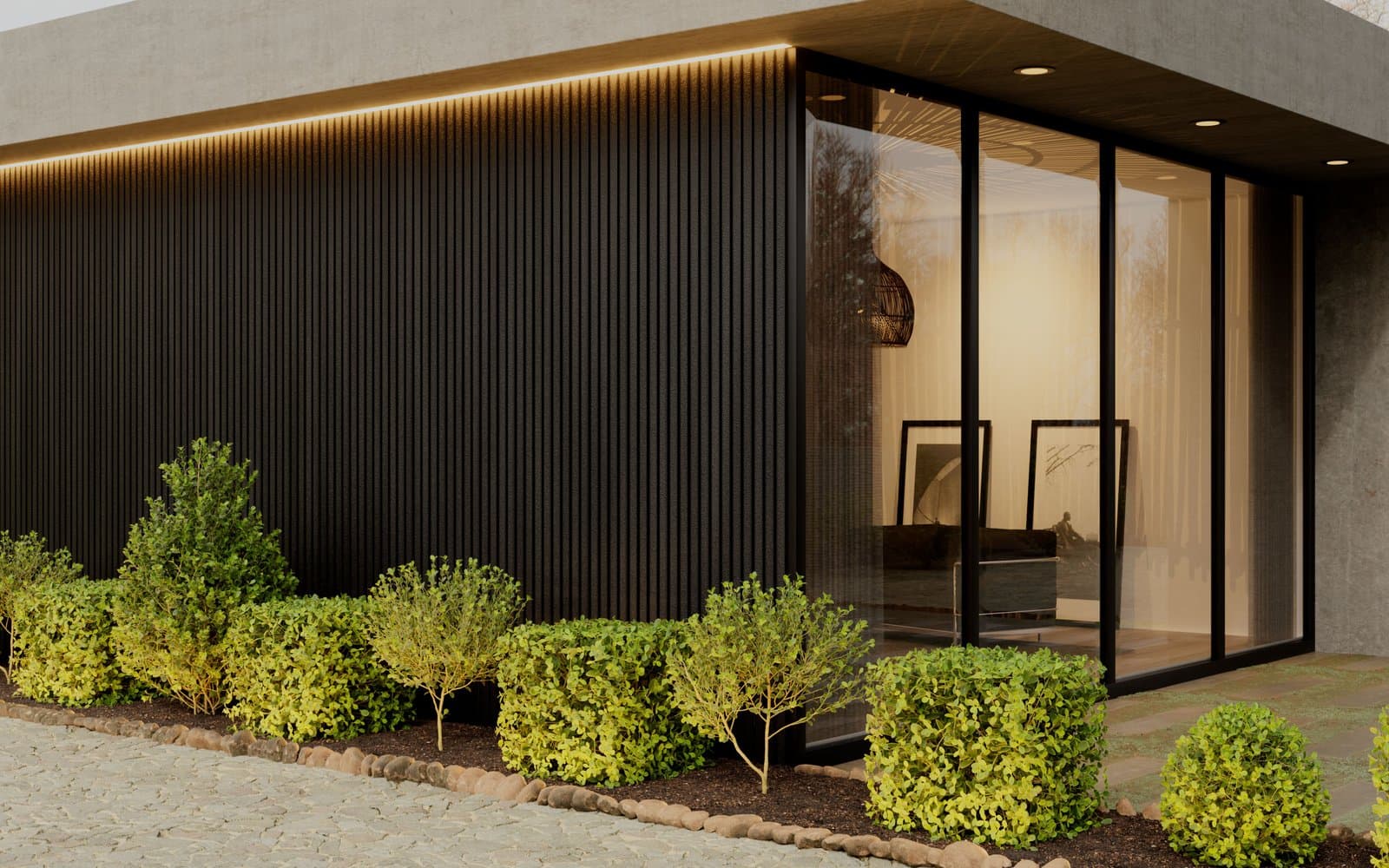
Evaluating Your Existing Facade Structure
The first step in any facade renovation is a comprehensive assessment of the existing wall structure. This goes beyond surface-level aesthetics. You need to understand the current sheathing, weather resistive barrier (WRB), insulation, and structural integrity. For properties in Atlanta, GA, consider factors like potential moisture intrusion, insect activity, and any existing damage that needs addressing before new materials are installed.
Documentation of the current wall assembly, if available, can provide valuable insights. If not, a professional inspection is recommended to identify any hidden issues. This initial evaluation will inform material selection, installation methods, and any necessary repairs or upgrades to the underlying structure. Addressing these foundational elements early can prevent costly problems down the line.
Understanding Climate Considerations for Atlanta, GA
Atlanta's climate presents specific considerations for exterior materials. The region experiences hot, humid summers and mild winters, with significant rainfall throughout the year. These conditions demand siding and cladding that can withstand moisture, resist fungal growth, and manage thermal expansion and contraction effectively.
Materials that offer good dimensional stability and inherent resistance to decay are often preferred. Proper ventilation and a well-designed rainscreen assembly are particularly important to manage moisture behind the cladding, preventing rot and mold in humid environments. Consider how different materials perform under these specific environmental stresses.
Material Spotlight: Thermally Modified Wood
Thermally modified wood, such as Scandinavian Thermally Modified Wood or thermally modified Ayous, offers enhanced durability and stability for facade renovations. The thermal modification process alters the wood's cellular structure, making it less susceptible to moisture absorption, decay, and insect attack. This makes it a suitable option for Atlanta's humid climate.
These materials often present a clean grain for contemporary facades and are engineered for stability. They can be a benchmark for rainscreen facades, providing an attractive and long-lasting exterior. Keep in mind that while the modification process improves performance, all wood products require proper installation and periodic maintenance to retain their appearance.
Explore our selection of <a href="/thermally-modified-wood">thermally modified wood</a> for more details.
Material Spotlight: Maximo Accoya
Maximo Accoya is an acetylated wood product known for its exceptional stability and durability. Acetylation is a non-toxic modification process that significantly reduces the wood's ability to absorb water, making it highly resistant to rot, fungi, and insects. This performance makes Maximo Accoya a robust choice for exterior applications in environments like Atlanta.
Maximo Accoya maintains its dimensional stability even with changes in humidity and temperature, which can help prevent warping, cracking, and swelling. It is available in various profiles suitable for modern and traditional facade designs, offering a premium, long-lasting solution.
Discover more about <a href="/products/maximo-accoya">Maximo Accoya</a> and its applications.
Material Spotlight: Norx Composite Cladding
Norx composite cladding offers an alternative to natural wood, providing a low-maintenance solution with consistent aesthetics. Made from engineered materials, Norx composite cladding is designed to resist moisture, fading, and insect damage, making it a practical choice for facades in Atlanta, GA, where humidity and pests can be concerns.
Norx composite cladding is available in various colors and profiles, allowing for design flexibility. Its uniform appearance and minimal upkeep requirements can be appealing for homeowners seeking a durable and hassle-free exterior. Consider the specific installation guidelines for composite materials to ensure optimal performance.
Learn more about <a href="/brands/norx">Norx composite cladding</a> options.
Worked Example: Facade Renovation on a 20-Foot by 10-Foot Wall
Consider a hypothetical facade renovation for a single wall section measuring 20 feet wide by 10 feet high, totaling 200 square feet. The goal is to replace existing deteriorated siding with a durable, low-maintenance material, specifically Norx composite cladding in a horizontal profile with 6-inch visible face boards.
First, determine the number of linear feet of cladding needed. For a 20-foot wide wall, each row of 6-inch (0.5-foot) boards will require 20 linear feet. With a 10-foot height, you'll need 10 feet / 0.5 feet per board = 20 rows. Thus, 20 rows * 20 linear feet/row = 400 linear feet of cladding.
Accounting for waste (typically 10-15% for cuts and errors), a conservative estimate would be 400 linear feet * 1.15 = 460 linear feet. If Norx cladding is sold in 16-foot lengths, you would need 460 / 16 = 28.75 boards. Rounding up, you would purchase 29 boards. This calculation helps ensure you have enough material for the project, including any necessary cuts around windows or doors (which would be subtracted from the total area before calculating linear feet).
Remember to also factor in the necessary furring strips for a rainscreen assembly, fasteners, and trim pieces for corners and openings. For this example, assuming a 16-inch on-center furring strip layout for a 20-foot wide wall, you'd need approximately 16 furring strips, each 10 feet long, totaling 160 linear feet of furring. Always consult product-specific installation guides for precise waste factors and support requirements.
Before you order
- Have you thoroughly inspected the existing facade for structural integrity, moisture damage, and pest issues?
- Is the current weather resistive barrier (WRB) in good condition, or does it need replacement/upgrade?
- Have you considered Atlanta's humid climate and its impact on material durability and moisture management?
- Which material best aligns with your aesthetic goals, maintenance preferences, and budget (thermally modified wood, Maximo Accoya, Norx composite, or other)?
- Have you reviewed the manufacturer's installation guidelines for your chosen siding/cladding, especially regarding rainscreen assemblies and fasteners?
- Have you calculated the required quantity of materials, including waste factor, for your project dimensions?
- Have you planned for necessary trim, corner details, and flashing around windows and doors?
- Will you require professional installation, or are you undertaking a DIY project with adequate preparation?
- Have you confirmed the availability of your selected profiles and dimensions?
Confirm installation details, approved uses and warranty terms in the current instructions for the exact product and profile. Your installer should verify the substrate, structure and applicable project requirements.
This is a planning guide for projects in Atlanta, GA. Ask our team to confirm availability, delivery to your ZIP code and which branch can support your order.
Questions to help you decide
What is a rainscreen assembly and why is it important for facade renovations in Atlanta?
A rainscreen assembly creates a ventilated air gap between the exterior cladding and the weather resistive barrier. This gap allows moisture that penetrates the cladding to drain away and promotes airflow, helping to dry out the wall assembly. In Atlanta's humid climate, a rainscreen is crucial for managing moisture, preventing mold, mildew, and rot, and enhancing the long-term durability of the facade.
How do I choose between thermally modified wood, Maximo Accoya, and Norx composite for my Atlanta facade?
The choice depends on your priorities. Thermally modified wood offers natural beauty with enhanced stability and decay resistance. Maximo Accoya provides exceptional dimensional stability and durability through acetylation. Norx composite cladding offers a low-maintenance, consistent appearance. Consider factors like desired aesthetic, maintenance commitment, budget, and specific performance needs related to Atlanta's climate when making your decision.
What kind of maintenance can I expect for different siding and cladding materials?
Natural wood products, including thermally modified wood and Maximo Accoya, may require periodic cleaning and reapplication of finishes (if desired) to maintain their appearance, though they are highly durable. If left to weather naturally, they will develop a silver-gray patina. Composite cladding like Norx typically requires less maintenance, usually just occasional cleaning with soap and water to remove dirt and grime. Always refer to the manufacturer's specific maintenance recommendations for your chosen product.
Ready to Transform Your Atlanta Facade?
Request a material quote today with your project dimensions, exact profile preferences, and ZIP code to confirm current availability and service options for your facade renovation.
Request a material quote →