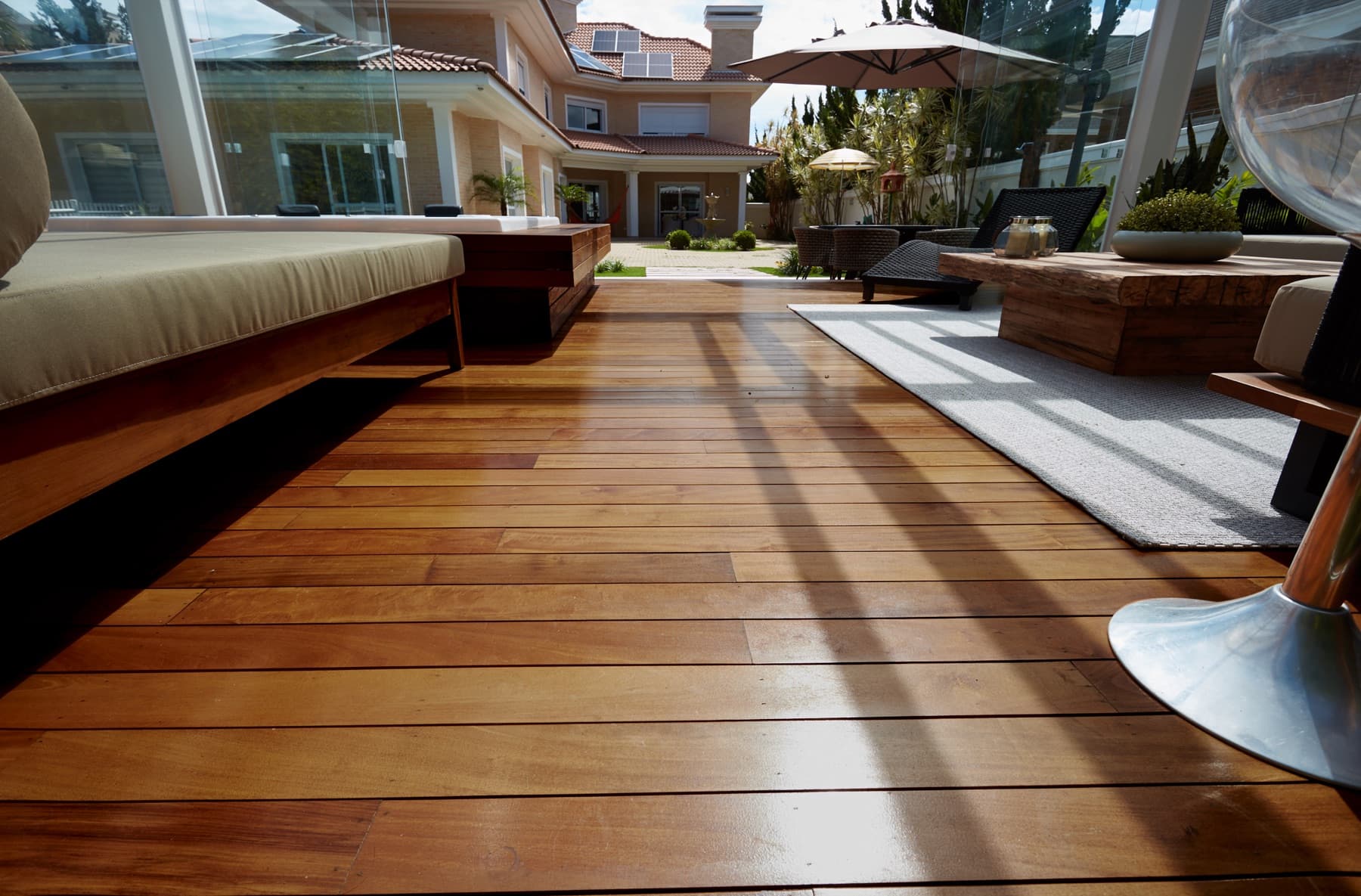
Understanding Sablewood Hardwood for Deck Stairs
Sablewood hardwood is a pre-finished, low-maintenance option designed for various outdoor applications, including decks, pergolas, boardwalks, and patios. Its authentic wood character and consistent starting appearance make it suitable for visible architectural elements like stair treads. While Sablewood is specified for decking surfaces, its application for stair treads requires verification of the exact profile and dimensions for structural suitability and local code compliance. The pre-finished nature helps reduce on-site decisions and contributes to a uniform look.
When considering Sablewood for stairs, it's essential to recognize that decking boards are primarily designed for horizontal surfaces on a deck frame. Stair treads, however, experience different load stresses and require specific support. Lumber Plus can assist in matching profiles and dimensions to project drawings, which is particularly important for stair components.
Tread Options and Considerations
There are typically two main approaches to using decking material for stair treads: single-board treads or multiple-board treads. For Sablewood, the choice will depend on the width of your stairs and the desired aesthetic.
Single-board treads offer a clean, monolithic look, but require Sablewood boards of sufficient width and thickness to span the stringers securely without excessive deflection. Multiple-board treads allow for wider staircases and can be assembled using standard Sablewood decking boards. This approach often involves routing or fastening boards together to create a solid tread surface. In either case, ensure the chosen method aligns with manufacturer recommendations for structural integrity and safe footing. The finished surface of Sablewood is designed to be walked on, making it suitable for the top surface of a tread.
Structural Support for Sablewood Stair Treads
Regardless of the tread configuration, robust structural support is paramount for deck stairs. Stair stringers, typically made from treated lumber, form the foundation of the stair system. The spacing of these stringers must be appropriate for the span rating of the Sablewood treads to prevent sagging or failure.
It is crucial to consult a structural engineer or a qualified builder to verify that the stringer design, spacing, and connection points are adequate for the intended use and local building codes. While Sablewood provides the walking surface, the underlying structure bears the load. Always ensure proper fastening methods are used to secure the Sablewood treads to the stringers, accounting for any potential movement of the wood.
Local Building Codes and Safety Requirements
Deck stairs are subject to strict local building codes that dictate dimensions such as riser height, tread depth, handrail height, and baluster spacing. These codes are in place to ensure safety and must be rigorously followed. Before finalizing your stair design, obtain a copy of your local building codes or consult with your local building department.
Key aspects to confirm include minimum tread depth and maximum riser height to ensure comfortable and safe ascent and descent. The application of Sablewood as a tread material must not compromise these critical dimensions. Also, consider the coefficient of friction for the pre-finished Sablewood surface, especially in areas prone to moisture, and plan for appropriate drainage or non-slip measures if necessary.
Worked Example: Designing a Sablewood Stair Tread
Let's consider a hypothetical deck stair with an intended finished tread depth of 11 inches. We plan to use Sablewood decking boards, which are available in a 5.5-inch nominal width (actual width may vary slightly).
To achieve an 11-inch tread depth, we would typically use two Sablewood boards. The challenge is securely joining these boards to create a single, stable tread unit. One common method involves routing a dado or groove along the mating edges and inserting a spline, then gluing and screwing the boards together from the underside to the stringers. Alternatively, a solid piece of treated lumber could be used as a sub-tread, with the Sablewood boards fastened on top, ensuring proper drainage and ventilation.
For a stair with an 11-inch tread depth and a 7-inch riser, using two 5.5-inch Sablewood boards would create a 11-inch tread width (assuming a tight fit). If the stringers are spaced at 24 inches on center, the Sablewood boards must be capable of spanning this distance without excessive deflection. This often means using a thicker board or adding additional blocking between stringers to reduce the span. Always consult product specifications for span ratings and ensure your chosen method meets or exceeds these requirements.
Before you order
- Confirm local building codes for stair dimensions (riser height, tread depth, handrail height, baluster spacing).
- Verify Sablewood board dimensions and profiles suitable for stair tread application.
- Determine if single-board or multiple-board treads are appropriate for your stair width.
- Plan for robust structural support for treads, including stringer spacing and sub-tread options.
- Select appropriate fastening methods for securing Sablewood treads to stringers.
- Consider drainage and potential non-slip measures for the finished tread surface.
- Review the overall design with a qualified builder or structural engineer.
Confirm installation details, approved uses and warranty terms in the current instructions for the exact product and profile. Your installer should verify the substrate, structure and applicable project requirements.
Questions to help you decide
Can I use standard Sablewood decking boards for stair treads?
Yes, standard Sablewood decking boards can be used for stair treads, but it requires careful planning to ensure structural integrity and code compliance. You will likely need to use multiple boards per tread to achieve the required depth, and they must be adequately supported by stringers and fastened securely. Always confirm the specific profiles and dimensions are suitable for load-bearing tread applications.
What is the best way to fasten Sablewood treads to stair stringers?
The best fastening method depends on your tread design and local codes. Common methods include face-fastening with screws specifically designed for exterior use, or using hidden fasteners if the tread design allows for it. For multiple-board treads, consider joining the boards together with splines or specialized connectors before attaching the entire tread unit to the stringers. Always ensure fasteners are corrosion-resistant and appropriate for hardwood.
Do I need special maintenance for Sablewood stairs compared to the deck surface?
Sablewood's pre-finished, low-maintenance nature applies to stairs as well. However, stair treads often experience more concentrated foot traffic and wear than a general deck surface. Regular cleaning to remove dirt and debris is important. If your stairs are exposed to specific weather conditions, you might consider more frequent inspection and cleaning to maintain their appearance and integrity. Refer to the general Sablewood maintenance guidance for the selected finish.
Plan Your Sablewood Deck and Stair Project
Ready to integrate Sablewood hardwood into your deck and stair design? Request a material quote with your project dimensions, desired Sablewood profile, and ZIP code. We can help confirm current availability and service options for your project.
Request a material quote →