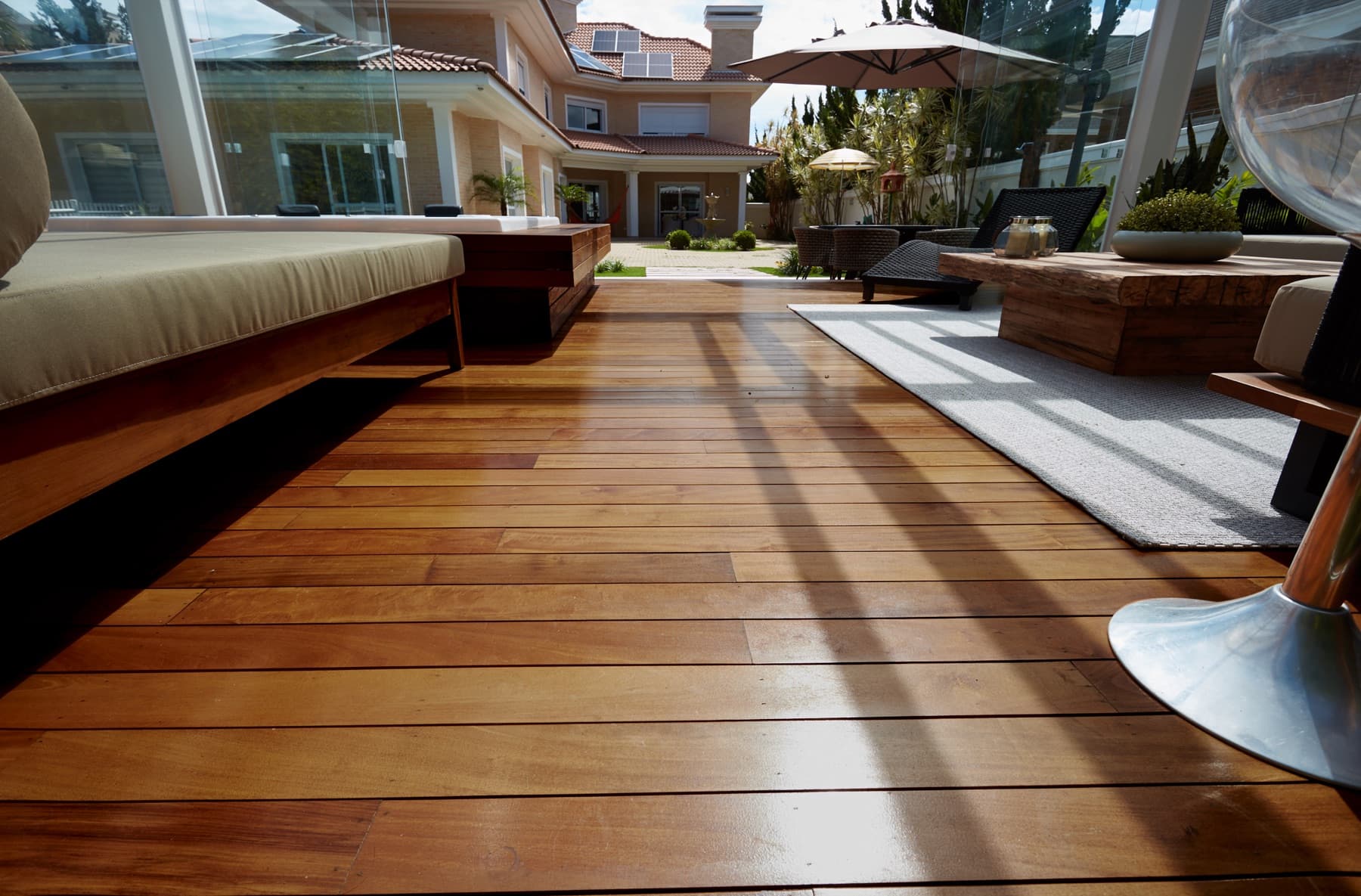
Understanding Sablewood Decking Materials
Sablewood decking is a pre-finished hardwood option designed for various outdoor applications, including decks, pergolas, boardwalks, and patios. It offers the character of real wood with a simpler care plan compared to some traditional hardwoods. The pre-finished nature means less on-site work for finishing, which can influence labor costs and project timelines.
When budgeting for Sablewood, consider the specific profiles and dimensions required for your project. Lumber Plus can assist in matching these to your drawings and installation approach. Sablewood is positioned as a blend between the demanding upkeep of natural hardwoods and materials that may lack the warmth of real wood, making it a practical choice for those seeking authentic hardwood with a managed maintenance schedule.
The primary material cost will be the Sablewood decking boards themselves. These are typically sold in linear feet or by the piece, and your project's dimensions will determine the quantity needed. Remember to account for waste due to cuts and potential errors, often adding 5-15% to the total material requirement.
Worked Example: Decking Material Takeoff
Let's consider a hypothetical 12-foot by 16-foot rectangular deck. For this example, we'll assume Sablewood decking boards are available in 1x6 (nominal, actual dimensions around 0.75 inches thick by 5.5 inches wide) and come in standard lengths of 12 feet and 16 feet.
First, calculate the total width to be covered: 16 feet, or 192 inches. Each 1x6 board covers approximately 5.5 inches in width. We also need to account for spacing between boards.
Number of boards needed: 192 inches / 5.625 inches/board 34.13 boards. Round up to 35 boards to ensure full coverage. Since we are using 12-foot long boards, the total linear footage for the decking surface is 35 boards * 12 feet/board = 420 linear feet.
For waste, add 10%: 420 linear feet * 1.10 = 462 linear feet. This will be your estimated purchase quantity for the decking boards. This calculation assumes minimal waste from cuts, as boards are used in full lengths. If your deck has complex shapes or diagonal layouts, the waste factor may need to be higher.
Beyond the Deck Boards: Essential Accessories
A complete Sablewood decking project requires more than just the surface boards. Consider these additional material categories:
Fasteners: Depending on your chosen installation method (e.g., hidden fasteners or face screws), the quantity and type of fasteners will vary. Hidden fastening systems often come with clips and screws, while face-fastening requires specific deck screws. Ensure compatibility with hardwood applications.
Substructure Materials: This includes lumber for joists, beams, and posts, as well as concrete for footings. The dimensions and spacing of these components are critical for structural integrity and will significantly impact material costs. Don't forget joist tape or flashing for protection.
Fascia and Trim: For a finished look, you may need additional Sablewood boards or complementary materials for fascia, stair risers, and other trim pieces. These are often specified separately and can add to the linear footage requirement.
Ventilation and Drainage: Proper ventilation beneath a deck is crucial, especially for hardwood. Consider any materials needed for an under-deck drainage system if applicable, or ensure adequate spacing and airflow are designed into the structure.
Railings and Stairs: If your project includes railings or stairs, these will be separate material and labor costs. Railing systems can range from simple wood designs to complex metal or composite options. Stair stringers, treads, and risers will add to your lumber list.
Estimating Labor Costs
Labor is a significant part of any decking budget. This includes site preparation, substructure construction, decking installation, and any finishing touches. The complexity of your deck design, site accessibility, and local labor rates will all influence the total cost.
Factors affecting labor include: site clearing and grading, excavation for footings, framing the substructure, installing the Sablewood decking (which can vary based on fastening method), building stairs and railings, and any cleanup. Obtaining multiple quotes from qualified contractors is recommended to get a realistic estimate for your specific project. Some contractors may provide a single project bid, while others break down costs by phase or hourly rate.
Because Sablewood is pre-finished, it can potentially reduce on-site finishing labor compared to raw hardwood. However, proper handling and installation of pre-finished material are still essential.
Contingency and Project Management
No project budget is complete without a contingency fund. Unexpected issues, such as unforeseen site conditions, material damage, or design changes, can arise. A common recommendation is to allocate 10-15% of your total estimated project cost for contingency.
Project management, whether handled by you or a contractor, also has a cost. This includes coordinating material deliveries, scheduling trades, and overseeing the overall timeline. Even for DIY projects, your time has value and should be factored in.
Consider other potential costs: permit fees (if required by local regulations), disposal of old deck materials, and landscaping restoration around the new deck. These items can add up and should be accounted for in your comprehensive budget.
Before you order
- Have I accurately measured my project area and accounted for waste in material quantities?
- Have I identified all necessary accessory materials (fasteners, substructure, trim, railings)?
- Have I obtained multiple labor quotes for the full scope of work?
- Have I included a contingency fund (10-15% of total cost) for unforeseen expenses?
- Have I considered permit fees, disposal costs, and other miscellaneous expenses?
- Have I confirmed the exact Sablewood profile and dimensions needed for my design?
- Do I understand the maintenance guidance for the selected Sablewood finish?
- Will Sablewood be used for other elements like pergolas or patios, and are those costs included?
Confirm installation details, approved uses and warranty terms in the current instructions for the exact product and profile. Your installer should verify the substrate, structure and applicable project requirements.
Questions to help you decide
How do I calculate the linear footage for my Sablewood decking project?
To calculate linear footage, first determine the total width of your deck in inches (e.g., 16 feet = 192 inches). This gives you the number of boards needed across the width. Multiply this number by the length of each board in feet to get the total linear footage. Always add a waste factor, typically 5-15%, depending on the complexity of your deck layout.
What are the advantages of Sablewood being pre-finished for budgeting?
The pre-finished nature of Sablewood means that the finishing process, which can be time-consuming and labor-intensive, is completed before the boards arrive on site. This can lead to a reduction in on-site labor costs associated with sanding, staining, or sealing. It also provides a consistent initial appearance, reducing variables in the final look and potential re-work. However, proper handling during installation to protect the pre-finish is still important.
Should I budget for specific Sablewood profiles or custom milling?
Yes, it is important to budget for the specific profiles and dimensions that match your project's design and installation requirements. Sablewood is available with custom milling through Lumber Plus, which can be beneficial for unique architectural applications or specific design elements. While custom milling offers flexibility, it may incur additional costs and lead times compared to standard profiles. Discuss your needs with a Lumber Plus representative to get accurate pricing for your chosen specifications.
Ready to Plan Your Sablewood Decking Project?
Request a material quote today! Provide your project dimensions, desired Sablewood profile, and ZIP code to confirm current availability and service options. Our team can help you identify the right quantities and compatible components for your build.
Request a material quote →