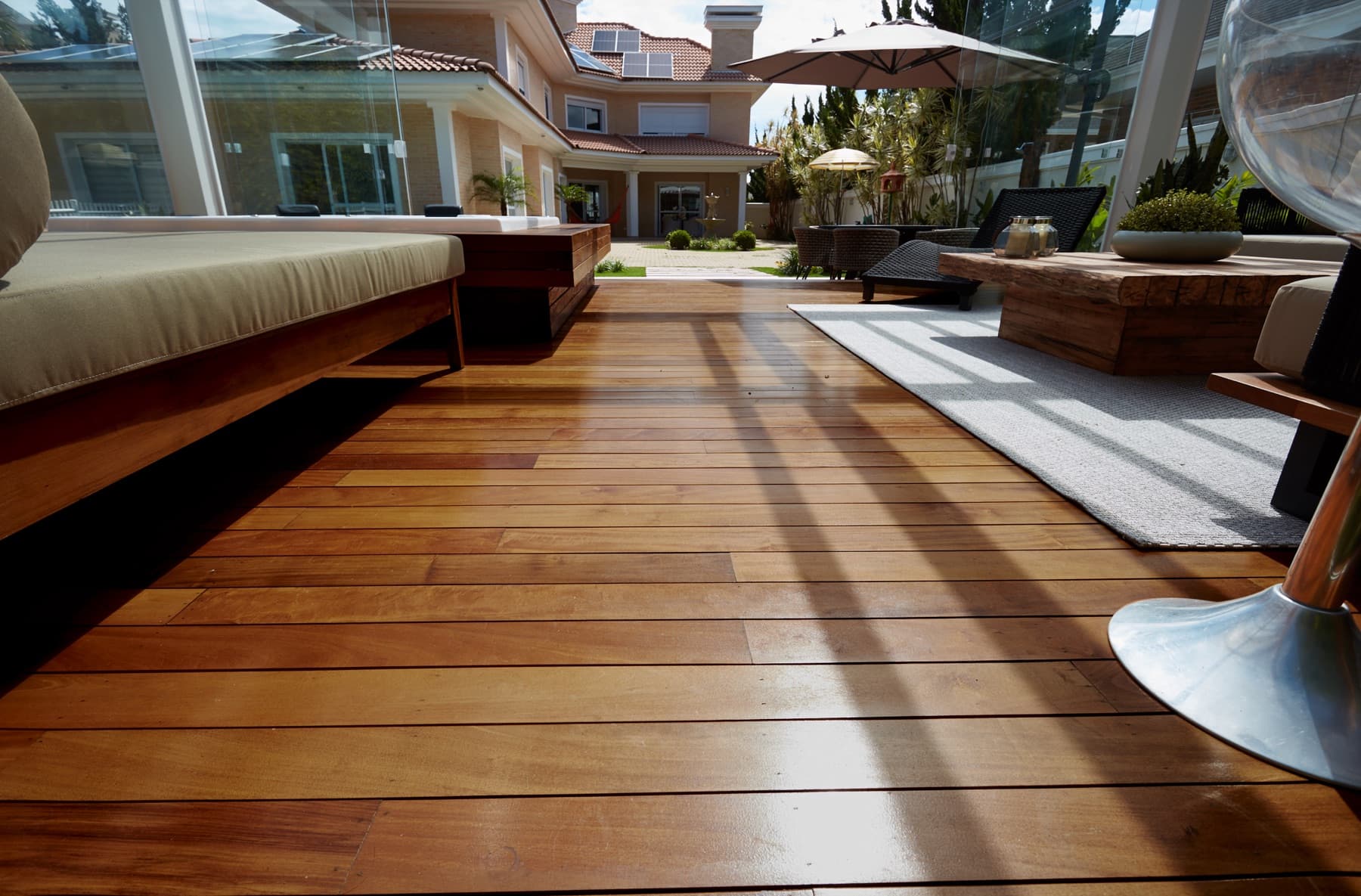
Understanding Sablewood as a Pre-Finished Hardwood
Sablewood is presented as a pre-finished hardwood option for outdoor surfaces. This means the material arrives with a factory-applied finish, aiming to reduce on-site decisions related to finishing and provide a consistent appearance from the start. This pre-finishing is a key characteristic that distinguishes Sablewood from raw hardwoods, which typically require finishing after installation.
The 'low-maintenance' aspect, as described, refers to a simpler care plan compared to some demanding natural hardwood options. While all outdoor materials require some level of care, the pre-finish is intended to contribute to a more manageable routine. It's important to understand that 'low-maintenance' does not imply 'no-maintenance,' and specific care instructions for the selected finish should always be followed.
Sablewood is positioned for projects where the character of real wood is desired, but with a more practical approach to upkeep. It aims to bridge the gap between traditional hardwood maintenance and synthetic materials that may not offer the same warmth or feel of natural wood.
Approved Applications and Project Suitability
Sablewood hardwood is specifically intended for use in a range of outdoor architectural applications. The documented uses include decks, pergolas, boardwalks, and patios. This guidance helps define the types of projects for which Sablewood is considered suitable, aligning with its design as an outdoor surface material.
When planning your project, confirm that your intended use falls within these specified applications. For instance, if you are designing a deck, Sablewood is an explicit fit. For a pergola, Sablewood can be considered for the structural elements or decorative accents, depending on the specific profile chosen. For boardwalks and patios, the material is also listed as appropriate.
Consider the context of your project. For example, a pool surround could be considered a type of patio or deck application, but specific considerations for moisture exposure and slip resistance would still apply and need independent review. The product's inherent properties as a hardwood, combined with its pre-finish, should be evaluated against the demands of the specific environment.
Key Specifications: Profiles and Dimensions
One of the most critical aspects of Sablewood specifications involves its available profiles and dimensions. The product is offered with custom milling options, which means that while there may be standard profiles, you can often request specific shapes and sizes to match your project's drawings and installation approach. This flexibility is valuable for unique designs or for matching existing architectural elements.
When requesting a quote or placing an order, you will need to specify the exact surface, profile, and finishing plan required. For decking, this typically involves selecting a board width, thickness, and length. For other applications like pergolas, the profiles might include larger beams or posts. The ability to customize milling suggests that a wide range of aesthetic and structural needs can potentially be met.
It is essential to have precise measurements and a clear understanding of your desired aesthetic before inquiring about profiles. For example, if you are designing a deck, you will need to know if you prefer a standard rectangular board, a tongue-and-groove profile, or a specific edge detail. Each profile is designed for particular installation methods and contributes to the final appearance and performance of the surface.
Worked Example: Specifying Sablewood for a Deck Project
Consider a hypothetical deck project for a residential backyard. The homeowner desires a rectangular deck, 12 feet long by 10 feet wide, with a clean, contemporary look. They plan to use Sablewood decking boards.
Step 1: Determine Board Dimensions. The homeowner decides on Sablewood decking boards with a nominal width of 5.5 inches (actual width may vary slightly) and a thickness suitable for standard deck framing. They prefer a consistent look, so they will ask for board lengths that minimize end-to-end seams.
Step 2: Select Profile. For a contemporary look, a standard square-edge profile is chosen, which allows for consistent gapping between boards. If a hidden fastener system is desired, they would confirm if the chosen profile is compatible or if a specific grooved profile is available through custom milling.
Step 3: Calculate Quantity. For a 12-foot by 10-foot deck, the area is 120 square feet. If using 5.5-inch wide boards, approximately 2.18 boards are needed per linear foot of deck width (120 inches / 5.5 inches per board = ~21.8 boards across the 10-foot width). For a 12-foot length, this means 21.8 boards * 12 feet = 261.6 linear feet. However, due to cuts and waste, it is prudent to add 10-15% for waste, bringing the total to around 288-300 linear feet. Given that custom lengths may be available, ordering precise lengths could reduce waste. For example, if 12-foot lengths are available, 22 boards (rounded up from 21.8) of 12 feet each would be 264 linear feet, plus waste. If 10-foot lengths are available, 22 boards of 10 feet each would be 220 linear feet, with the remaining 40 square feet covered by cutting 12-foot boards. This illustrates why exact board length availability and a cutting plan are important.
Step 4: Confirm Finish. The pre-finished nature of Sablewood means the finish is already applied. The homeowner would confirm the specific finish type and its characteristics (e.g., color, sheen, UV resistance) with the supplier to ensure it matches their aesthetic preferences and expected performance.
Step 5: Review Installation Details. Before ordering, the homeowner would verify recommended gapping between boards and fastening methods for the chosen profile, ensuring compatibility with their planned deck frame and local building practices. This includes understanding any specific requirements for ventilation beneath the deck surface.
Considering Custom Milling and Matching Profiles
Sablewood offers custom milling, which is a significant advantage for projects with specific design requirements or for matching existing architectural elements. This means you are not necessarily limited to a few standard profiles but can explore options that precisely fit your drawings and installation strategy. This level of customization can be particularly useful for intricate designs, unique edge details, or non-standard dimensions.
When considering custom milling, it is important to communicate your exact needs clearly. Providing detailed drawings or specifications for the desired profile will help ensure accuracy. This could include precise measurements for board width, thickness, and any specific milling details like grooved edges for hidden fasteners, custom chamfers, or other decorative elements. The branch should be consulted early in the planning process to discuss feasibility and lead times for custom orders.
Matching profiles is especially relevant in renovation projects or when integrating new Sablewood elements with existing structures. For example, if you are adding a new section of decking to an older Sablewood installation, custom milling might allow for a seamless transition by replicating the older board profile. This attention to detail helps create a cohesive and professional appearance across the entire project.
Before you order
- Have I clearly defined the intended application (deck, pergola, boardwalk, patio) for Sablewood?
- Do I have precise measurements for the project area to determine required board lengths and widths?
- Have I considered the desired profile (e.g., square edge, grooved for hidden fasteners, custom) and confirmed its availability or custom milling options?
- Have I accounted for potential waste (typically 10-15%) in my quantity calculations?
- Have I confirmed the specific pre-finish characteristics (color, sheen, maintenance guidelines) with the supplier?
- Am I aware of the recommended fastening methods and board spacing for the chosen Sablewood profile?
- Have I inquired about lead times for custom milled profiles, if applicable?
- Do I understand the maintenance requirements for the selected Sablewood finish?
- Have I confirmed current availability and service options with Lumber Plus for my project location and material needs?
Confirm installation details, approved uses and warranty terms in the current instructions for the exact product and profile. Your installer should verify the substrate, structure and applicable project requirements.
Questions to help you decide
What does 'pre-finished' mean for Sablewood decking?
Pre-finished means that Sablewood decking boards arrive with a factory-applied finish, eliminating the need for on-site sanding or staining after installation. This aims to provide a consistent appearance and simplify the initial project phase, contributing to a lower-maintenance profile compared to raw hardwoods.
Can Sablewood decking be custom milled to specific dimensions?
Yes, Sablewood offers custom milling options. This allows you to specify particular profiles and dimensions to match your project's unique drawings or to integrate seamlessly with existing structures. It is recommended to discuss your exact requirements with Lumber Plus to explore the available custom milling possibilities.
What are the approved applications for Sablewood hardwood?
Sablewood hardwood is approved for various outdoor architectural applications, including decks, pergolas, boardwalks, and patios. It is designed for projects where the aesthetic of authentic wood is desired, combined with the benefits of a pre-finished, lower-maintenance material.
Ready to Specify Sablewood for Your Project?
Request a material quote with your project dimensions, exact profile preferences, and ZIP code. Our team can help confirm current availability and service options.
Request a material quote →