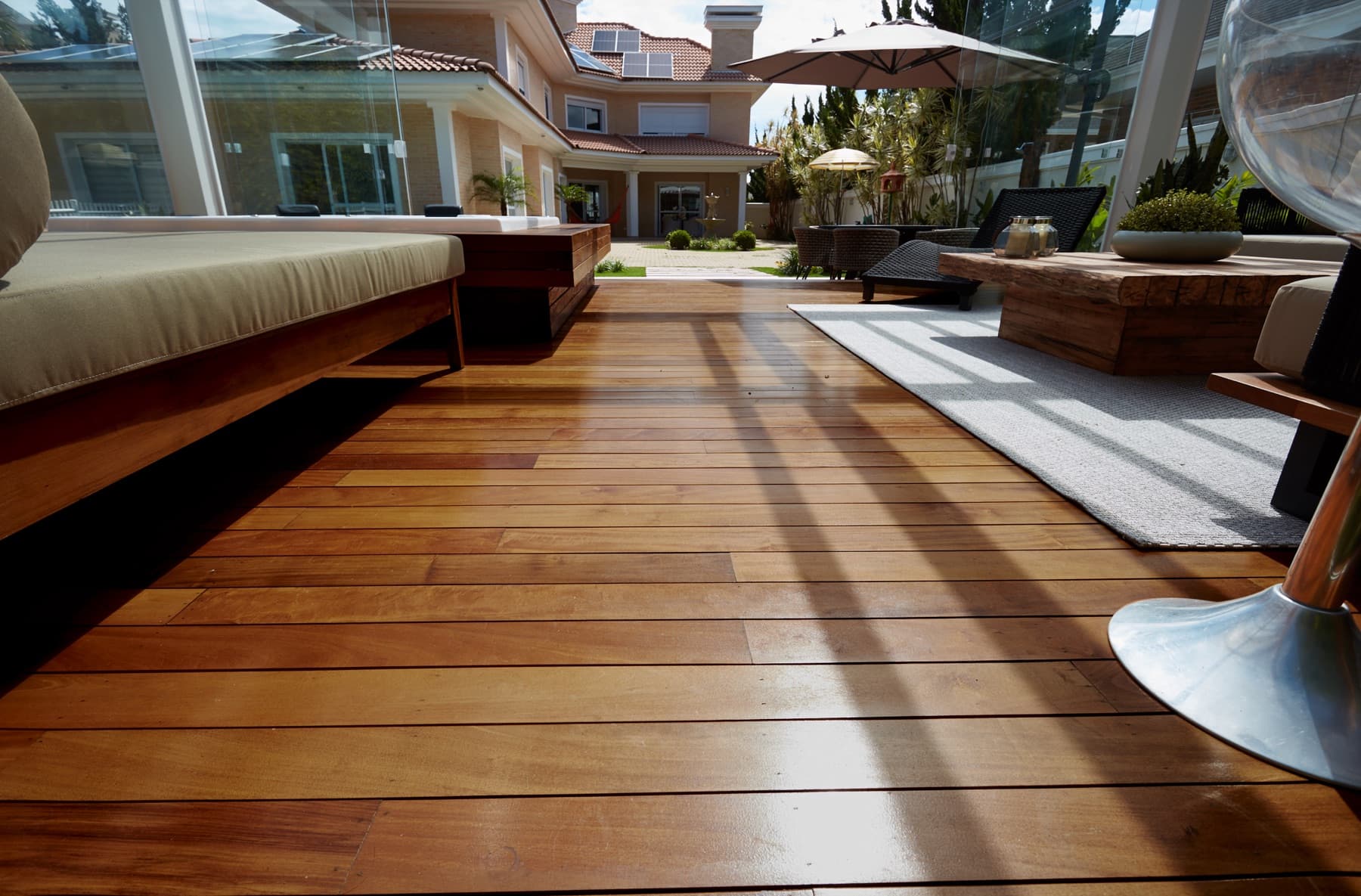
Why Board Spacing Matters for Sablewood Decking
Sablewood, as a pre-finished hardwood, will still experience natural expansion and contraction due to changes in moisture and temperature. Adequate spacing accommodates this movement, preventing boards from buckling, cupping, or creating undue stress on fasteners. Without proper gaps, boards can push against each other, leading to damage or an uneven surface.
Beyond material movement, spacing is crucial for water management. Gaps allow rainwater to drain through the deck surface, preventing pooling that could accelerate wear or create slippery conditions. Good drainage also helps air circulate, which is vital for preventing moisture buildup beneath the deck boards, contributing to a healthier deck structure overall.
Finally, consistent spacing contributes significantly to the finished aesthetic of your deck. Even gaps create a uniform, professional appearance, highlighting the natural character of the Sablewood hardwood.
Understanding Material Movement in Hardwood Decking
All wood products, including Sablewood hardwood, are hygroscopic, meaning they absorb and release moisture from their environment. This process causes wood to swell when it gains moisture and shrink when it dries out. The extent of this movement varies based on the wood species, board dimensions, and the ambient humidity and temperature.
While Sablewood is pre-finished to provide a more consistent starting appearance and simpler care plan, this finish does not eliminate the wood's natural tendency to move. Therefore, designing for this movement with appropriate board spacing is a fundamental part of a successful deck installation. Ignoring these natural characteristics can lead to performance issues down the line.
Factors Influencing Sablewood Decking Spacing
The exact spacing required for Sablewood decking is not a fixed number but rather a calculation based on several project-specific factors:
Board Dimensions: Thicker and wider boards generally exhibit more movement than thinner or narrower ones. The specific width of your Sablewood boards will directly influence the recommended gap.
Installation Conditions: The moisture content of the boards at the time of installation, and the expected local climate (e.g., high humidity, dry heat, coastal exposure, winter conditions) will impact how much the boards will expand or contract after installation. Boards installed in very dry conditions may expand more once exposed to normal humidity, requiring slightly wider initial gaps. Conversely, boards installed at a higher moisture content may shrink, requiring tighter initial gaps.
Fastener Type: Some hidden fastening systems are designed to create a specific gap between boards. If using such a system, the fastener's design will largely dictate the spacing. For face-fastened applications, spacers are typically used during installation to achieve the desired gap.
Referencing the Product Guide for Exact Spacing
The most authoritative source for Sablewood decking board spacing is the specific installation guide provided with your purchased product. This documentation will offer precise recommendations tailored to the material's characteristics, profile, and finish. Always consult this guide before starting your installation.
If you are ordering custom-milled Sablewood, ensure that spacing recommendations are part of the specification process. This will ensure that the milling and finishing consider the intended installation environment and required gaps. Lumber Plus can assist in matching profiles and dimensions to your drawings and installation approach, including spacing considerations.
Do not rely on generic decking spacing advice, as it may not be appropriate for Sablewood hardwood. Differences in wood species, density, and pre-finishing can significantly alter expansion and contraction rates compared to other decking materials.
Worked Example: Calculating Spacing for a Hypothetical Sablewood Deck
Let's consider a hypothetical project: a 12-foot by 20-foot deck using Sablewood boards that are 5.5 inches wide.
First, determine the number of boards needed across the 12-foot (144-inch) width.
For simplicity in this example, let's target the number of boards first and then verify the total width.
If we use 25 boards: 25 boards * 5.5 inches/board = 137.5 inches of board material. This calculation provides a starting point; actual layout will require precise measurement and adjustment.
This example illustrates that the number of boards and gaps must be coordinated to fit the overall deck dimensions while maintaining the recommended spacing. Always lay out a section of boards and gaps to verify your calculations before committing to cuts or fasteners.
Before you order
- Consult the specific Sablewood product installation guide for recommended spacing.
- Consider the width and thickness of your Sablewood boards.
- Evaluate the expected moisture content of the boards at installation and local climate conditions.
- Determine if your chosen fastening system dictates a specific gap.
- Calculate the total number of boards and gaps required for your deck dimensions.
- Plan for edge spacing and any picture-frame borders.
- Confirm your spacing plan with your installer or project manager.
Confirm installation details, approved uses and warranty terms in the current instructions for the exact product and profile. Your installer should verify the substrate, structure and applicable project requirements.
Questions to help you decide
Can I use the same spacing for all types of decking?
No, board spacing is highly dependent on the specific decking material, species, profile, and expected environmental conditions. Sablewood hardwood has different characteristics than composite or PVC decking, and even within hardwood, different species or milling can require distinct spacing. Always refer to the manufacturer's specific installation instructions for the product you are using.
What happens if the board spacing is too tight?
If the board spacing is too tight, the Sablewood boards may not have enough room to expand when they absorb moisture. This can lead to buckling, cupping, or lifting of the boards, potentially damaging fasteners or creating an uneven and unsafe surface. It can also impede water drainage.
What happens if the board spacing is too wide?
If the board spacing is too wide, it can create tripping hazards, allow small objects to fall through, and potentially compromise the aesthetic appeal of the deck. While wider gaps allow for drainage, excessively wide gaps can also make the deck feel less stable underfoot and may not be suitable for all applications or local codes.
Ready to Plan Your Sablewood Decking Project?
Request a material quote with your project dimensions, desired Sablewood profile, and ZIP code. We can help you confirm current availability and service options for your project.
Request a material quote →